Updated: 25.09.2026
One Sur musician once put it rather beautifully, ‘without drums, Sur would be like food without salt.’
That’s just the beginning. This historic seafaring town has surprising links to Zanzibar and is still very much alive. From fishermen landing their catch and families living around Al Ayjah to craftsmen still building traditional wooden dhows by hand, the connections to the sea appear at every turn.
Explore Sur in 5 stops
01
Lola bread at al Hawash
02
Sur Maritime Museum
03
The Dhow Ship Building Factory
04
Fresh fish at Sahari
05
Al Ayjah Fishing Quarter and Lighthouse
01
Lola bread at al Hawash
02
Sur Maritime Museum
03
The Dhow Ship Building Factory
04
Fresh fish at Sahari
05
Al Ayjah Fishing Quarter and Lighthouse
Where is Sur in Oman?
01
Lola at al HaWash Restaurant
A slightly sweet, puffed up flatbread


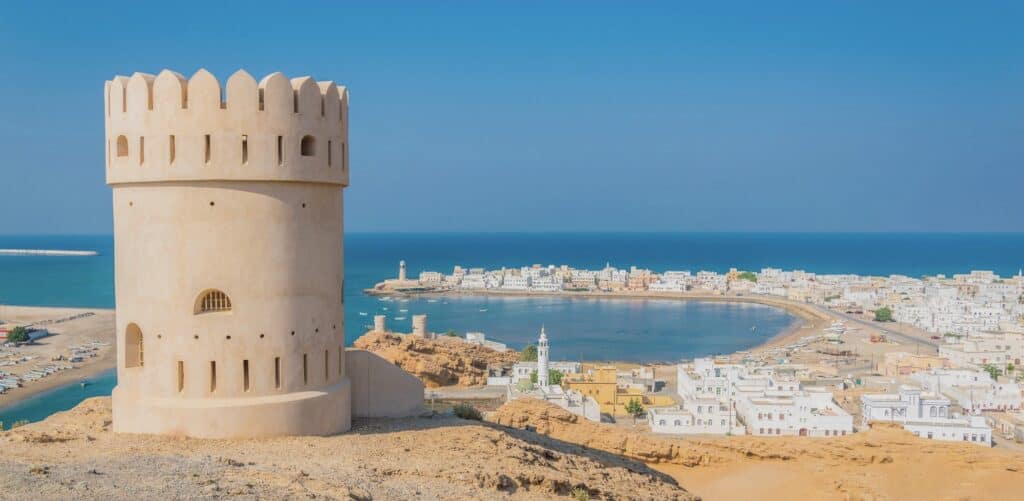
Breakfast with warm Lola bread (and honey and cheese!) is good for the soul and a perfect way to start a day in Sur. Al Hawash restaurant is right next to the beach, on the Corniche, and offers a beautiful view on the sea and Al Ayjah lighthouse.
It is even better accompanied with a walk along the Corniche before or after breakfast.
Insider tip!
You can eat Lola with cheese, eggs, or go for a sweeter version with honey. I actually like to eat it with a combination of cream cheese and honey. Delicious!
Origins: Lola comes from the commercial – and culinary – exchanges that happened between Oman and East Africa.
02
Sur Maritime museum
A glimpse of Sur’s seafaring history


After breakfast, time for a little visit to Sur Maritime Museum. Seeing the photographs of the faces of captains and sailors and a real dhow in the courtyard makes the town’s rich history feel alive.
The museum gives the fascinating context to truly appreciate Sur’s ancient trading links across the Indian Ocean.
A few facts about dhows
A dhow is a traditional wooden boat that used to be commonly found around the Persian Gulf and the Indian Ocean.
- The name ‘dhow’ is not Arabic but comes from a Swahili word (daw).
- Dhows were used for trade and are still used these days (mainly for tourists!). They are similar to the kind used by Sinbad the Sailor in ‘The Thousand and One Nights.
03
Sur’s Traditional Dhow Shipbuilding Factory


Visiting Sur Dhow Factory, helps to truly understand how these boats have been made. I was struck by how little depends on drawings and how much comes down to experience. The builders work by eye, shaping planks by hand, adjusting as they go, and reading the boat as it grows. It’s practical, skilled work — and very impressive to watch.
The dhow factory is just south of the western end of the Khor Al Batah suspension bridge.
By the way, it isn’t a museum but an actual working space.
04
Fresh fish at Sahari Restaurant
A taste of fresh locally caught fish and seafood.
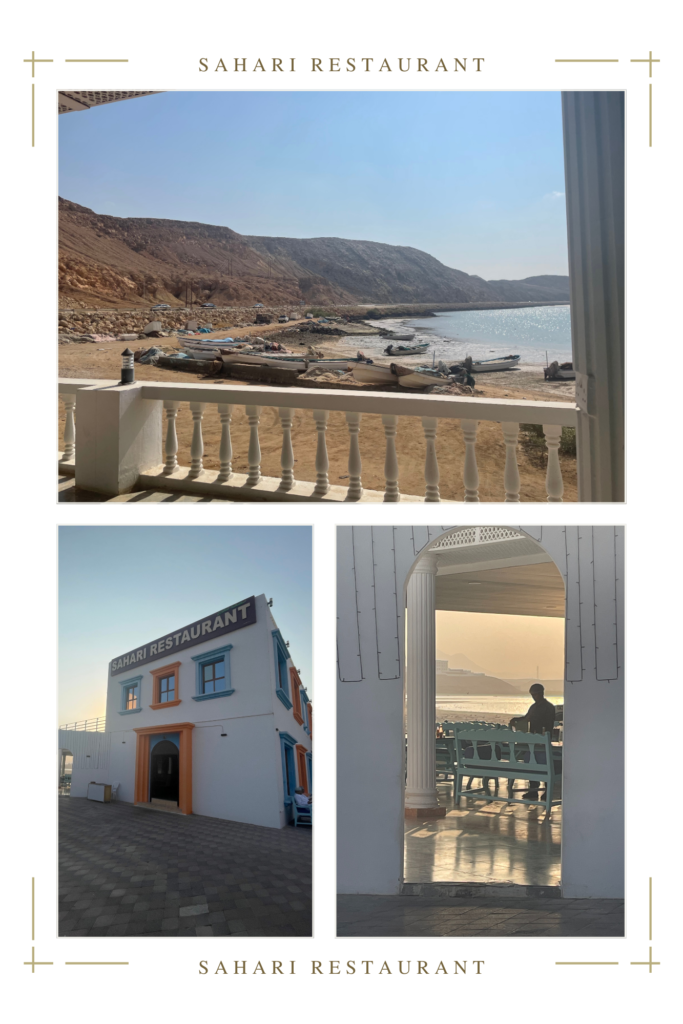
Eating at Sahari Restaurant is one of the easiest ways to enjoy Sur at its best. Enjoy beautifully grilled fish or seafood with a fresh salad.
This is very much a place to linger as the views are beautiful. You can also smoke shisha here.
Interesting fact: in Arabic, people say to drink shisha.
05
Al Ayjah, Sur’s Historic Fishing Quarter and Lighthouse
The beach in Al Ayjah, where daily life still revolves around fishing and the sea.

To discover Al Ayjah, just follow the lanes along the water and see what catches your eye. Lots of small houses with painted doors, fishing boats pulled up close to shore, and people going about their day, with the sea always just a few steps away.
The walk naturally draws you towards the lighthouse, which sits right at the edge of the village (based in a place called ‘Ras Almeel‘) and opens up wide views over the bay and the bridge crossing the water.

Best Day Trips from Sur: Nearby Nature, Villages & Coastal Stop
Wadi Shab – Hiking, Swimming & Canyon Scenery Near Sur

Wadi Shab is a stunning place! The wadi winds between high cliffs in a series of natural pools, with colours shifting from deep jade to bright turquoise depending on the light. It includes three pools leading to a narrow cave passage.
The experience begins with a short boat ride across the river (around 1 OMR per person, return), which brings you to the trailhead. From there, the hike is gentle and accessible for most people.
Swimming in the pools is very much part of the experience and incredibly refreshing.
Distance from Sur
45 minutes by car (approximately 60 km north).
Bimmah Sinkhole - meaning 'The Sinkhole of the Star.'

Hawiyat Najm — as it is called in Arabi — is a dramatic natural crater and its colour looks unreal against the rugged desert backdrop.
I love the legend that is connected with it! It states that this deep hole was formed when a meteorite fell from the sky, which is why locals call it “the deep well of the (falling) star.” Geologically it formed from limestone erosion, but the story adds an almost mythic quality when you’re looking at it.
There’s a sturdy stairway down to water level, toilets in the park, and plenty of space for a break before or after Wadi Shab.
Distance from Sur
About 1 hour by car (approximately 80 km north).
Ras Al Jinz Turtle Reserve – Turtle Nesting & Coastal Conservation Near Sur

I visited Ras Al Jinz once in August, right in the middle of the turtle nesting season, and it’s a very different experience from simply turning up at a beach.
The Nesting season: Adult green turtles nest mainly between May and September.
Hatchling (baby turtle) season: Eggs usually hatch from August to October, with September often being one of the best months to see baby turtles making their way to the sea — though sightings are never guaranteed.

Some Practical info to help you plan
How to get to Sur

Getting to Sur By Car
Getting to Sur is straightforward and works best if you’re travelling independently. Most people arrive by car from Muscat, which takes around two hours along a well-maintained coastal road that passes beaches, small villages, and rocky headlands. Renting a car gives you the most flexibility, especially if you plan to continue on towards Wahiba Sands or explore nearby coastal stops.
Distances to Sur
Muscat → Sur
≈ 200 km
⏱️ About 2.5–3 hours by car (via the coastal highway)Nizwa → Sur
≈ 290 km
⏱️ About 4–4.5 hours by car (via Ibra)Salalah → Sur
≈ 950 km
⏱️ About 11–12 hours by car
Getting to Sur by bus
If you’re travelling without a car, it is possible to reach Sur by public bus — just plan ahead.
The service is run by Mwasalat, Oman’s official bus company. The bus to Sur leaves from Azaiba Bus Station in Muscat and usually runs once a day in the morning. The journey takes around five hours and goes inland via Ibra, so you won’t get the scenic coastal views — but it’s reliable and very affordable.
Tickets cost around 4–5 OMR, and it’s best to double-check times on the Mwasalat app or website before you go, as schedules can change. If flexibility or timing is important, renting a car is still the easier option — but for slow, independent travel, the bus works just fine.
Accommodation in Sur
Mid-range: I would particularly recommend Sur Grand Hotel. Great service and spotless rooms – some of which have views on the sea.
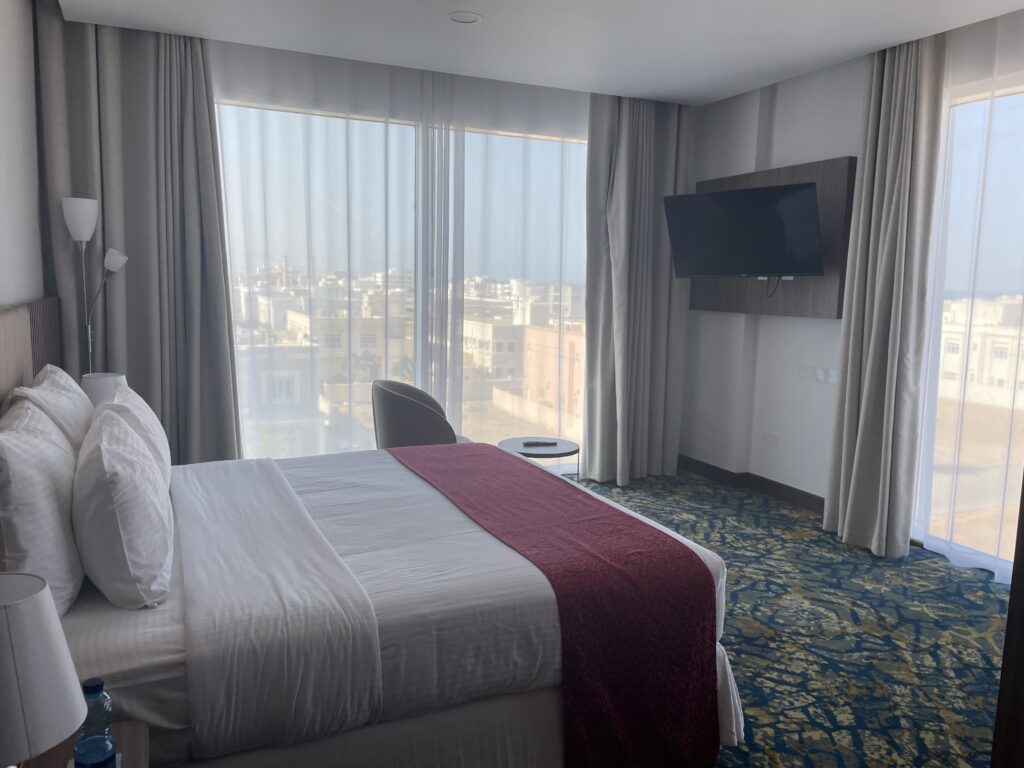
Some other places include:
Mid-range hotels:
- Best Western Sur. Friendly staff and comfortable rooms.
- Al Ayjah Plaza Hotel. Very well located hotel with beautiful interior decoration.
Budget Hotel:
- Bait Al-Afia Hotel. Clean and centrally located.
Food and drinks in Sur
Apart from the places mentioned above, other choices include:
- Zaki restaurant. Based on local knowledge, this is a very popular place in Sur. Offers delicious curries and fresh juices.
- Sedrah Restaurant. Specialises in sea food and is located next to the sea.
A few final words on Sur
Sur is the kind of place that stays with you because of how it feels.
It’s shaped by the sea, by craft, by food cooked simply and eaten with a view, and by neighbourhoods that are still lived in rather than staged.
Whether you’re watching a dhow take shape, walking through Al Ayjah, or sitting down to fresh fish by the bay, Sur will give you a unique experience that will help you to understand Oman’s special connection with the sea.

Frequently asked questions
Is Sur worth visiting in Oman?
Yes — Sur is absolutely worth visiting if you enjoy cultural travel that goes beyond the headline sights. Unlike some larger destinations in Oman, Sur still feels rooted in everyday life. This is a place where traditional dhow building continues by hand, where fishermen shape the rhythm of the corniche, and where meals revolve around fresh fish rather than polished dining concepts.
Sur is especially rewarding for independent travellers who like to slow down, observe, and connect small details into a fuller picture. Walking through Al Ayjah village, watching boats take shape in the shipyards, or sharing a simple meal by the sea offers a deeper understanding of Oman’s maritime heritage.
When is the best time to visit Sur?
Late October to early April is the best time to visit Sur, when temperatures are comfortable for walking, coastal drives, and outdoor cultural experiences. For a detailed, month-by-month breakdown of weather, festivals, and cultural events across the country, see my guide Best Time to Visit Oman, which helps you time Sur within a wider Oman itinerary.
What are the best things to do in Sur with a family?
Sur is a great stop for families who enjoy hands-on cultural discovery and outdoor adventure. Children love watching wooden dhows take shape in the boatyards, spotting fishing boats along the corniche, and wandering through the lanes of Al Ayjah village. Nearby turtle-watching beaches, short boat trips, sandy shorelines for beach time, and sunset walks by the sea turn Sur into an engaging and memorable family experience.
How much time do you need to visit Sur?
Most travellers find that one full day or an overnight stay is ideal for visiting Sur. This gives you enough time to explore the dhow yards, walk along the corniche, visit Al Ayjah village, and enjoy fresh seafood by the sea. Staying overnight allows you to experience Sur at a gentler pace and catch early morning activity along the coast.
What should you wear when visiting Sur, Oman?
When visiting Sur, it’s best to dress modestly and comfortably, especially in public spaces and local neighbourhoods. Lightweight clothing that covers shoulders and knees works well for both adults and children. This isn’t about strict rules, but about blending in and showing respect for local life, particularly when walking through Al Ayjah village, along the corniche, or visiting markets.
Meet Christine
Christine is a teacher, watercolourist and trained as a journalist. She has been living in Oman for six years and has travelled around the country extensively – from the capital, Muscat, to desert camps to remote mountain villages. Read more about Christine.