Birkat al Mouz: Follow the Water to Palm Gardens and Coffee
Updated: 13.09.2026
The name ‘Birkat al Mouz’ translates as ‘the pool of bananas’ – and that’s the least surprising thing about this stunning village.
Often portrayed as a ghost town, Birkat al Mouz is in fact home to about 10,000 people, with trendy specialty coffee shops operating in the midst of active date palm groves and a 2,000-year-old UNESCO-listed Falaj irrigation system still in daily use.
Follow the walk, in 5 stops
01
Sibani district
02
Palm Plantations
03
Banana Cafe
04
Falaj Water
05
Sunset Terrace
01
Sibani District
02
Palm plantations
03
Banana Cafe
04
Falaj Waterway
05
Sunset Terrace
01
Harat Al Sibani
The historic neighbourhood
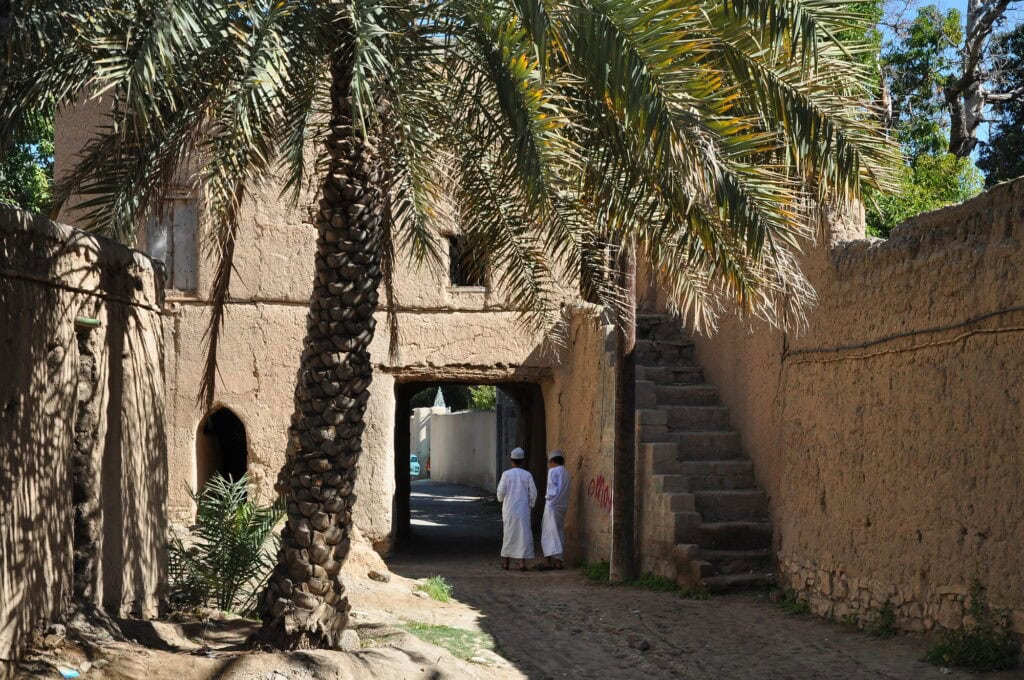
Your walk begins at a traditional gateway leading into Harat Al Sibani. Pass through the gate and follow Sibani Lane into the heart of the historic neighbourhood.
Birkat al Mouz was historically divided into three neighbourhoods, including Harat al Sibani and Harat al Wadi. Walking through these old quarters, you’ll see abandoned mud-brick houses and beautiful traditional doors offering a glimpse into the village’s past.
Insider tip!
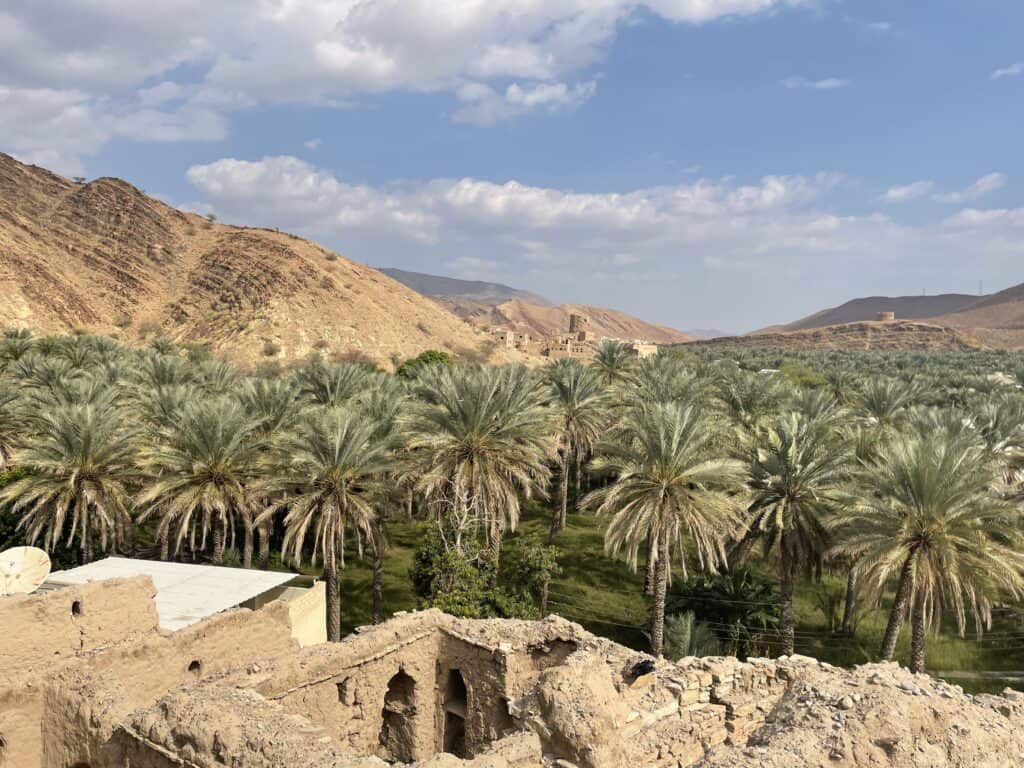
Look for the path leading uphill toward the old watchtower. Continue to the top – it will take some clambering – for a view over Birkat al Mouz, its palm plantations and the mountains beyond. Make sure you are wearing comfortable, closed shoes to do this.
02
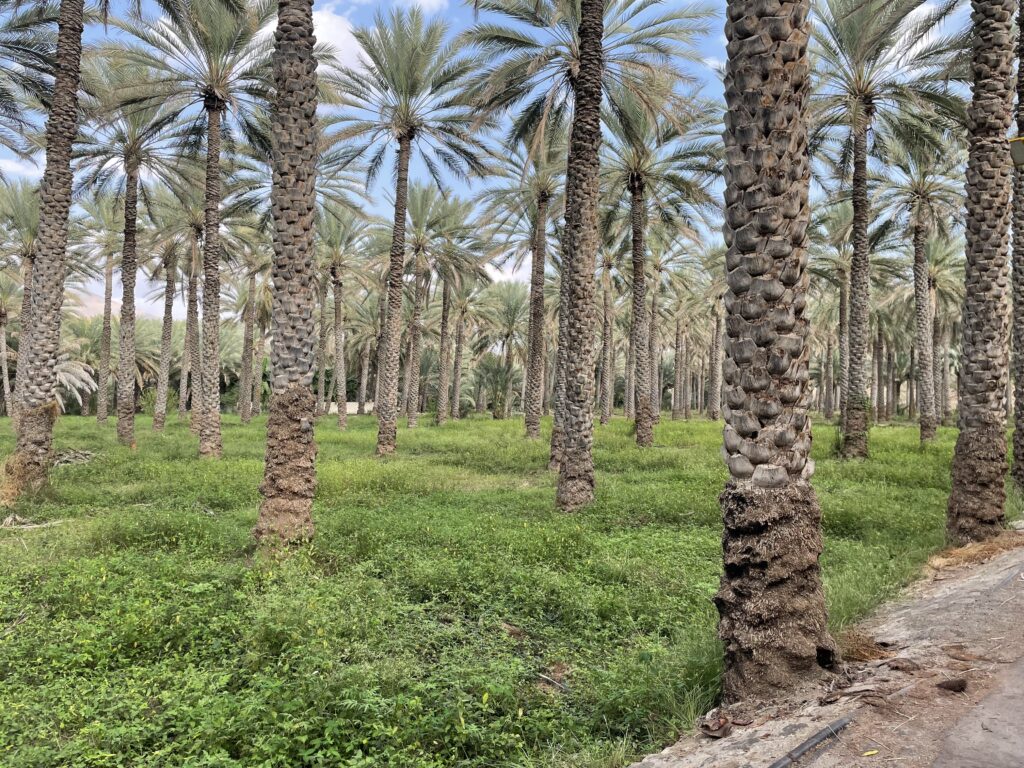
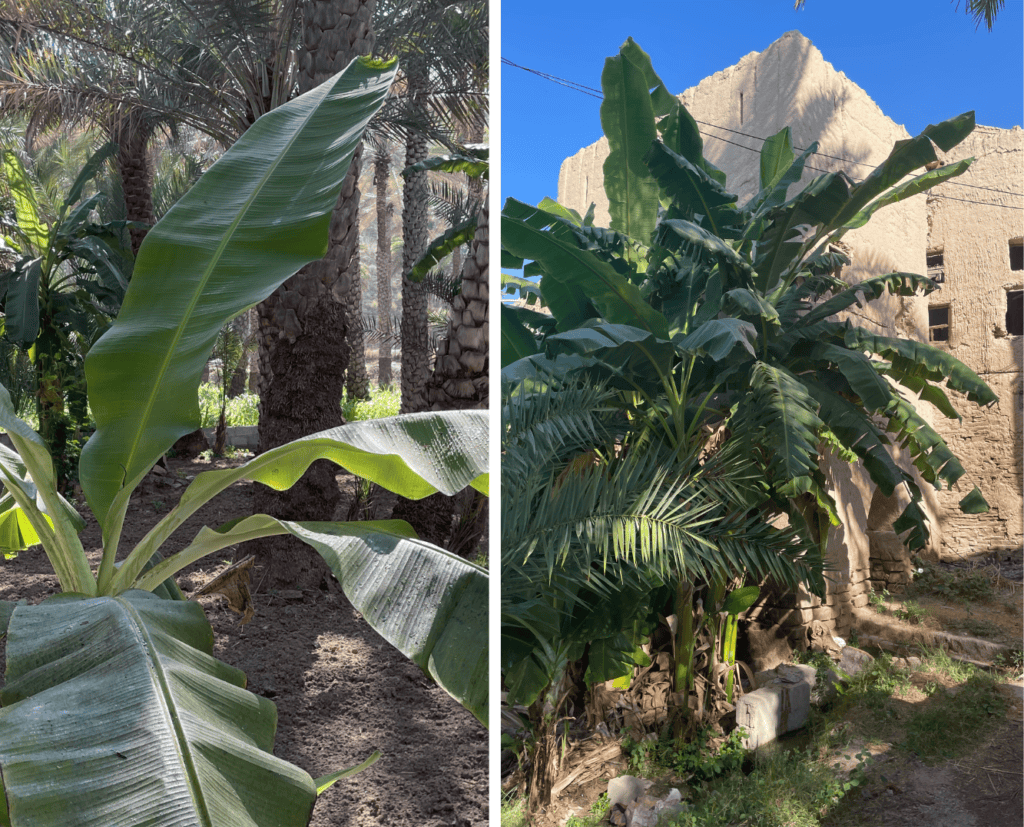
The Lush Banana and Date Palm Plantations
From mud-brick lanes to green groves.
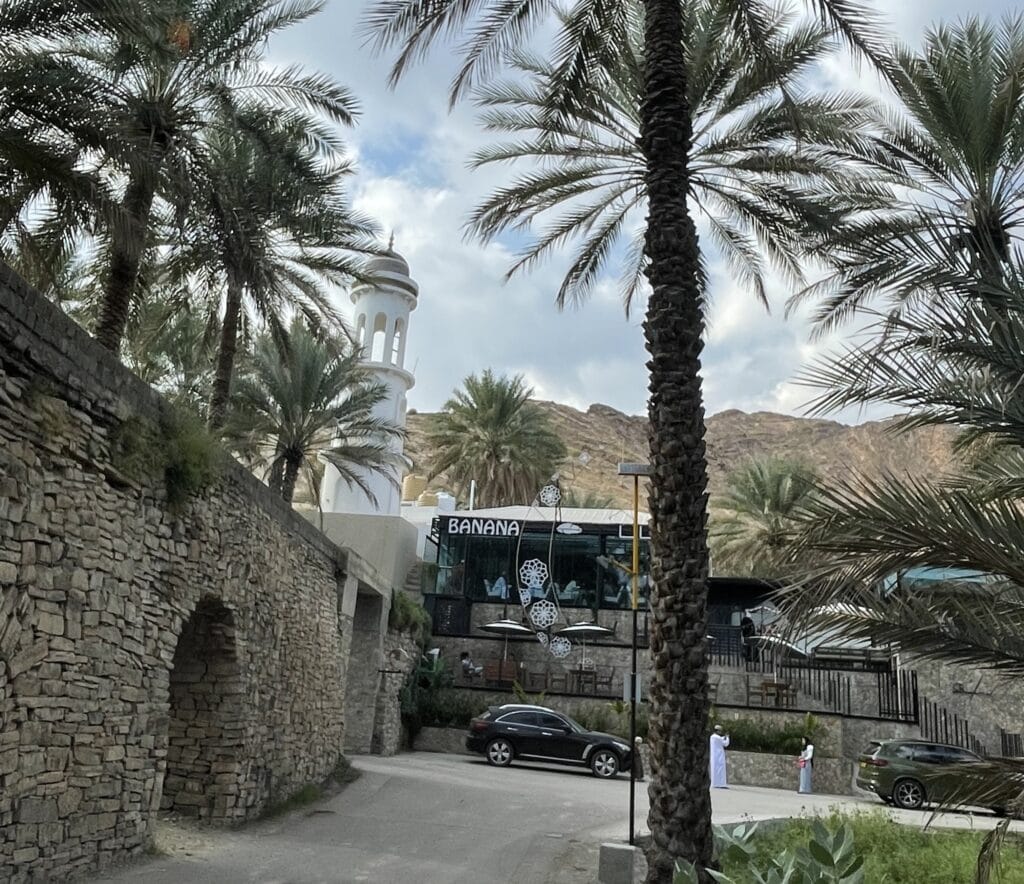
Walk down al Sibani lane. You’ll come across some houses on both sides with large shady gardens full of palm trees. Eventually, you will see a small white mosque on the left, built over the elevated falaj.
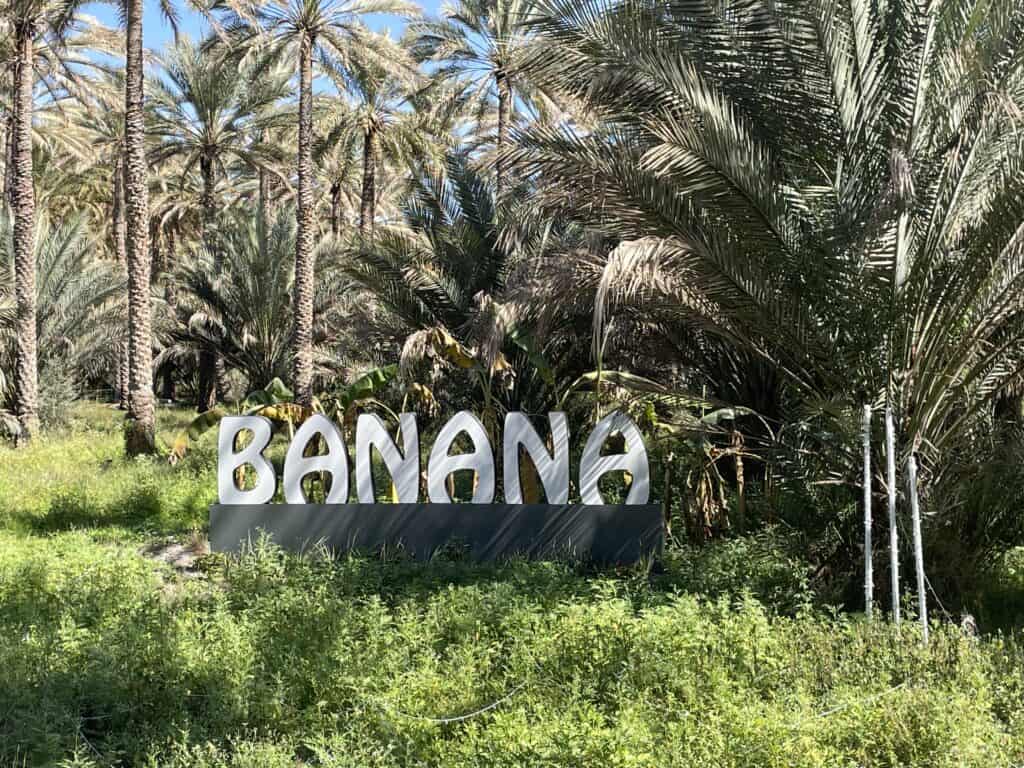
Go under the archway and you will see a modern cafe on your left called – you have it! – ‘Banana Cafe.’
A little story about an unusual hobby
Birkat’s name combines 2 of Oman’s great loves: water…and bananas. It is, of course, a humourous comment but consider the following true story.
When I first started teaching English in Oman, we had to give a level test to our prospective students. One of the questions on this test was ‘what are your hobbies?’. To which, I would find the answer, ‘Eating bananas.’ At first, I didn’t pay attention. But, as it occurred over and over again, it started to intrigue me. Was eating bananas really a hobby in Oman? As in, at the weekend, when someone wants to relax, they stay at home and indulge in a bowl of plantains? Really?
I was curious and spoke with some of my Omani friends about this. They thought the mysterious answer was due to it being an ‘easy answer’ to write in English. I understood and it made me smile.
03
A Specialty Coffee at the Banana cafe
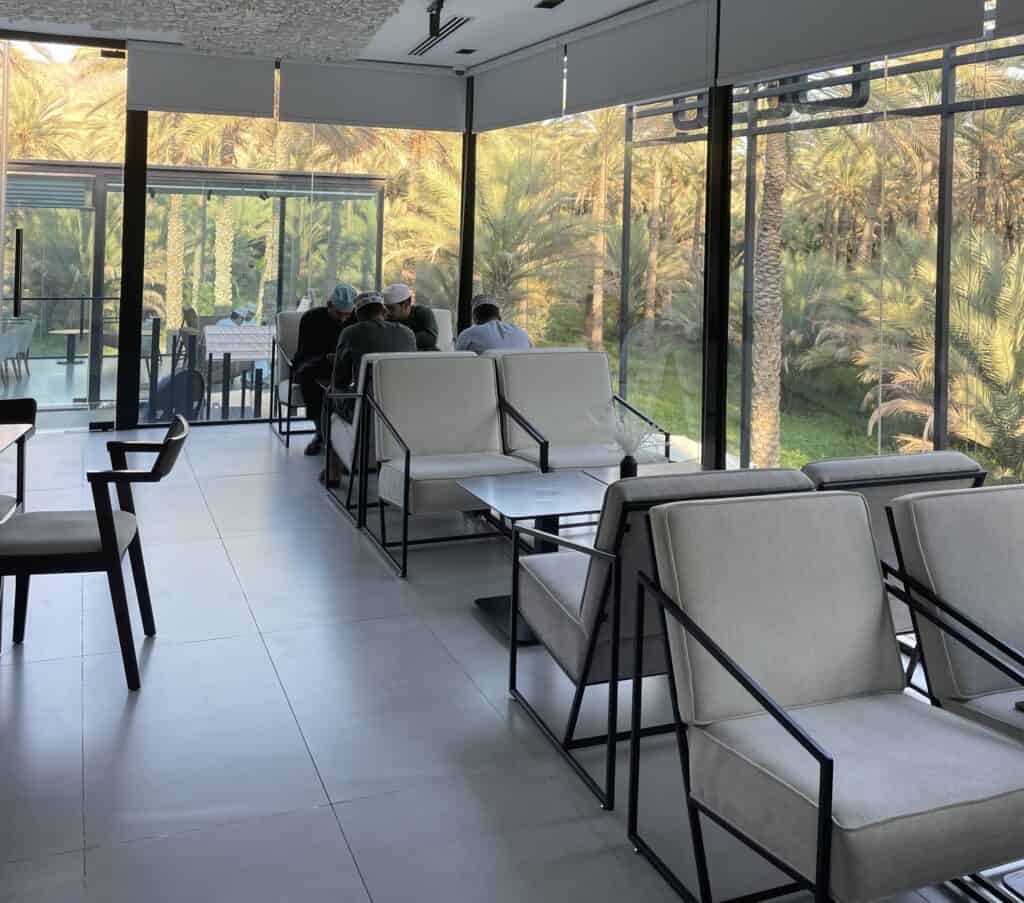
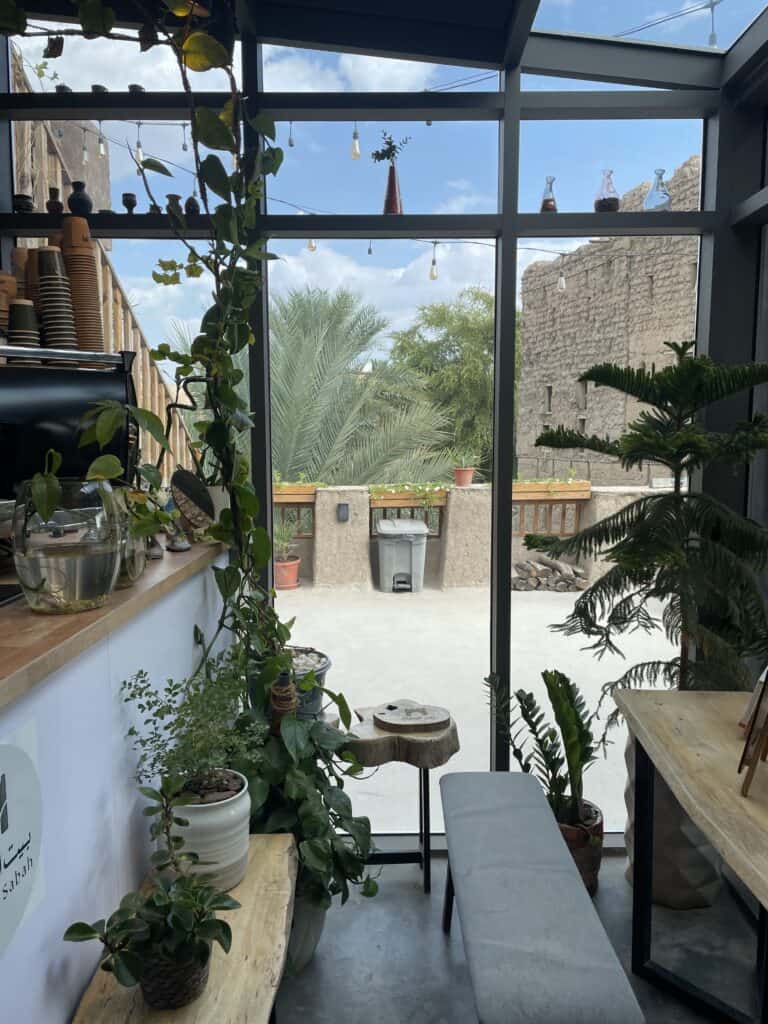
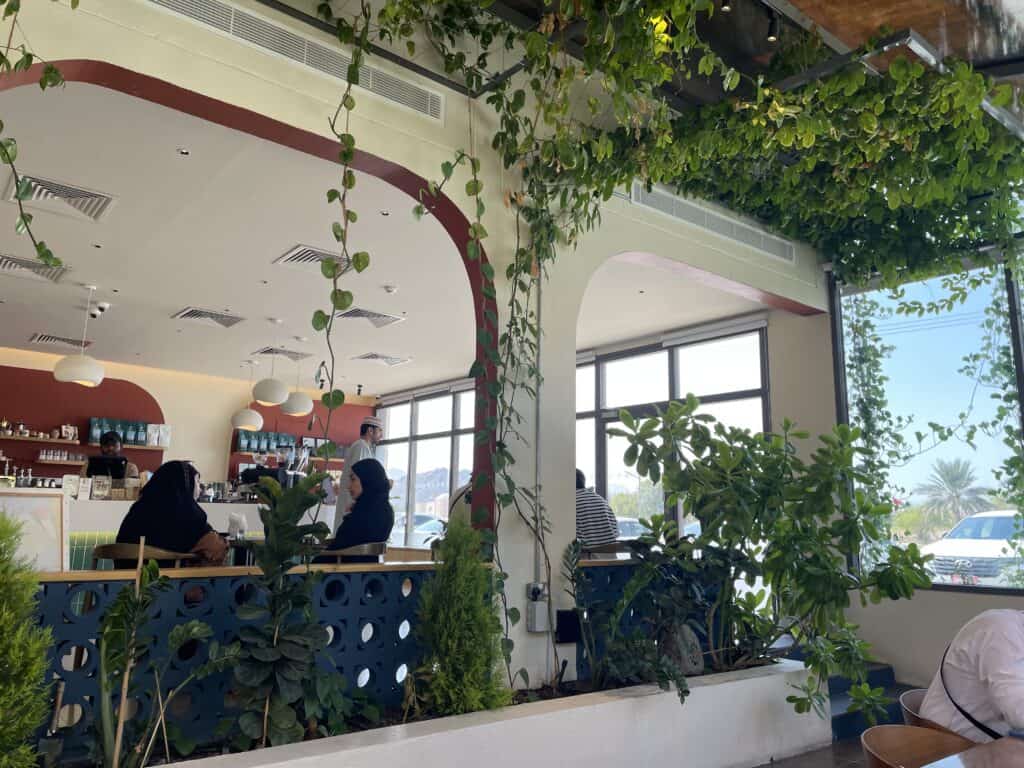
The Banana Cafe‘s large glass windows look out over date palm plantations and the menu includes a lot of items with its namesake fruit. Try the banana booster or a banana dream smoothie. It’s also a very popular specialty coffee spot with locals, part of a trend that’s taken off across Oman in recent years.
From the cafe, you can walk out onto a small terrace to stand above the long wall built to carry the falaj – the traditional Omani irrigation system.
04
Al Jazzera Al Waled Wall and Falaj Al Khatmain
A 2,000-year-old water system, still at work.
After Banana Cafe, follow the Falaj irrigation system along the wall. Falaj Al Khatmain has irrigated the area for around 2,000 years. The word ‘falaj’ actually means ‘split into parts’ referring to how the water gets divided between gardens and farms on a very precise fixed system. It’s still run today by a local Falaj Committee (Lajnat al-Falaj), the same system explained to me by my hosts in Bahla.
Our local guide, Saeed, the channel is fed by Wadi Al Mu’aidin and winds through the village in ways that even defy gravity! In 2006, it was named a UNESCO World Heritage Site– one of the Omani aflaj (plural of ‘falaj’) with that status.
The water source is also why the village exists at all: nine tribes settled here, drawn by the water, including the Bani Riyam tribe. Many of the families present today are still from this tribe.
05
THE SUNSET ON THE TERRACE of Bait Al SabaH
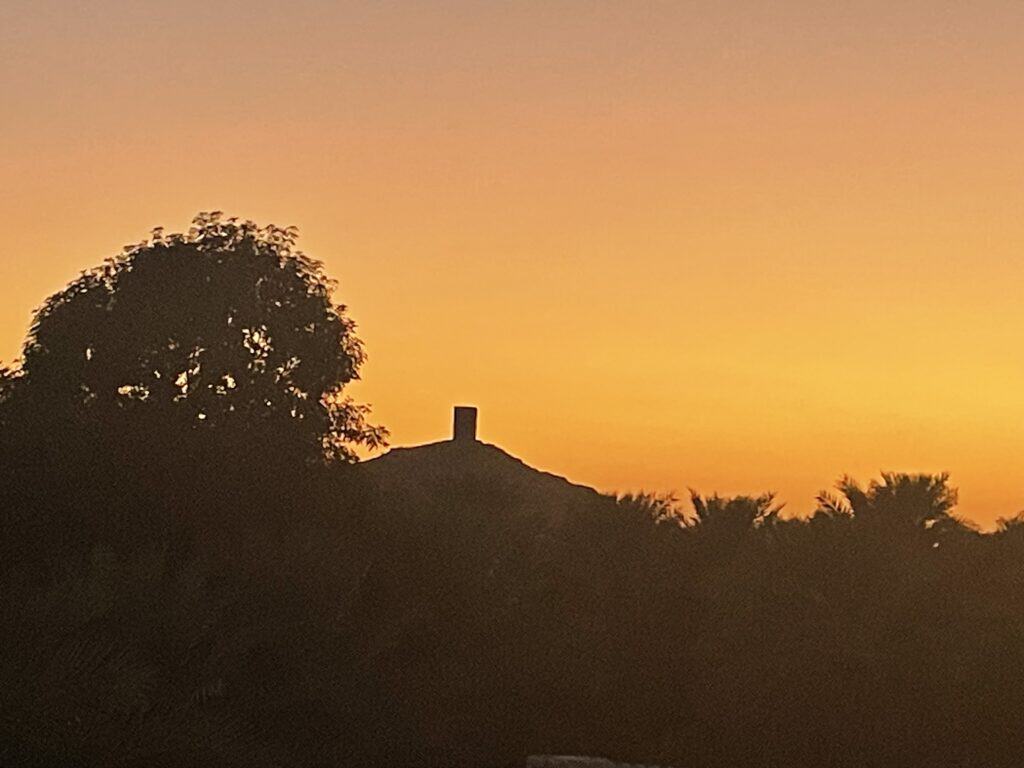
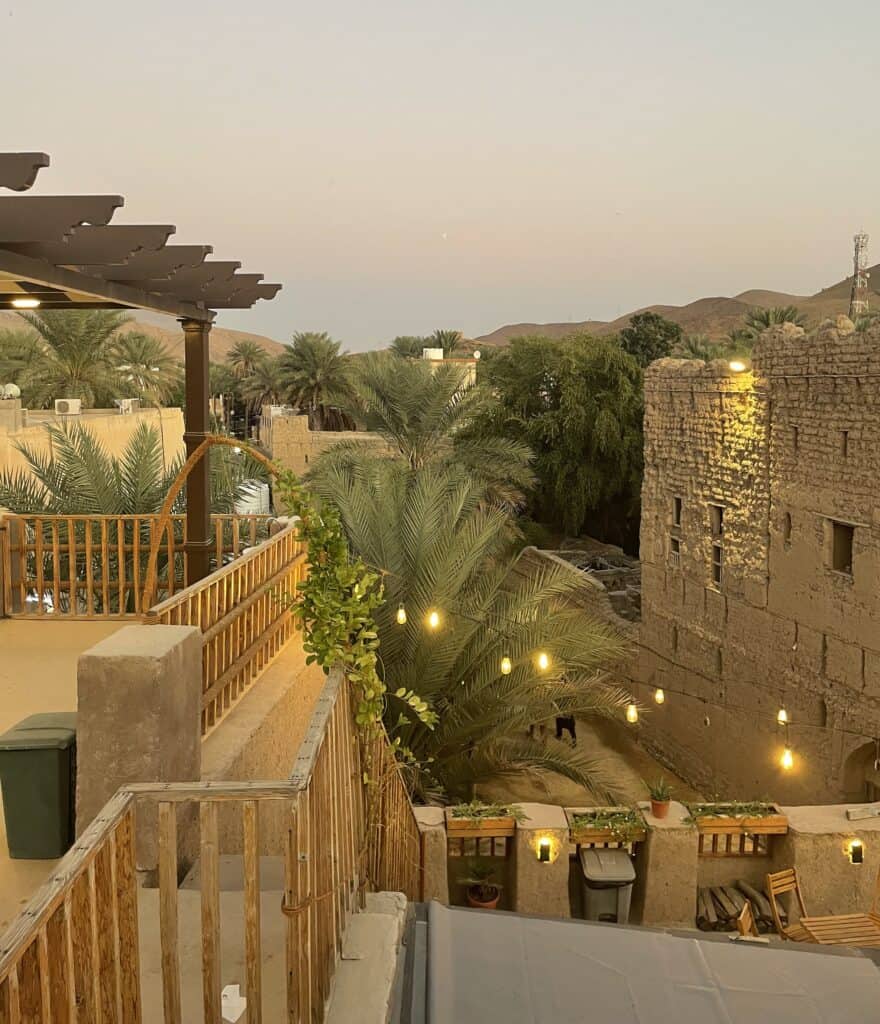
From Banana Café, it takes about 10-15 minutes to walk back down Sibani lane to Bait al Sabah Heritage Inn & Café. It is situated next to the Sibani gate where you first started your walk. Climb up to the top terrace and watch the village get bathed in a golden light as the sun sets. This will make for a beautiful end to your day in Birkat al Mouz.
What to See in the Newer Neighbourhood
If you have time, you may also want to check out the newer part of Birkat al Mouz. It has a few important landmarks that are worth a short stop, especially if you’d like to understand the village beyond its old mudbrick quarters.
Al Ya’aribah Mosque
Al Ya’aribah Mosque is a 17th-century mosque in Birkat al Mouz, known for its simple architecture, carved wooden doors, and long-standing place in the village’s history.
One of the beautiful wooden doors of Al Ya’aribah Mosque, showing the traditional carved details that make this 17th-century mosque so distinctive.
Bait al Ridaydah Castle
Bait al Ridaydah Castle is located just a short walk from Al Ya’aribah Mosque. Originally built in the 17th century and fully restored, it now serves as a small weapons museum showing traditional Omani arms and how they developed over time. The layout is simple, the rooms are easy to explore, and the fort gives a clear picture of everyday defensive life in this part of Oman.
Some Practical info to help you plan
How to get to Birkat al Mouz from Muscat or Nizwa
Rental Car
Driving to Birkat al Mouz—whether in your own car or a rental—is the easiest and most flexible way to get there from Muscat or Nizwa.
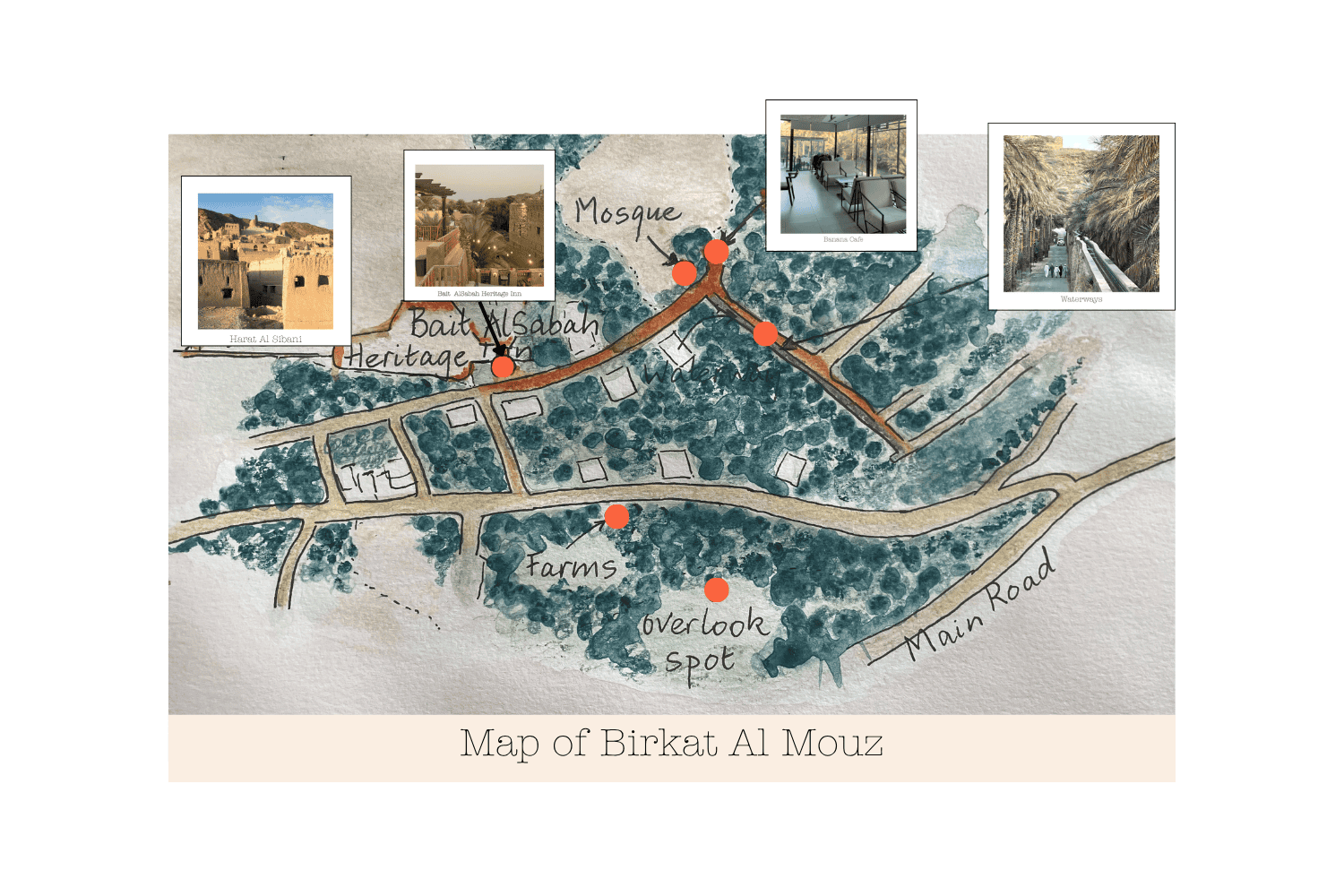
From Muscat: Take the Muscat–Nizwa Highway (Route 15) and stay on it for about an hour and a half. It’s a straightforward, well-maintained road the entire way. When you get close to Nizwa, follow the signs for Birkat al Mouz and Jabal Akhdar—both turn-offs are clearly marked. Once you arrive in the village, follow the map included in the blogpost (see above).
From Nizwa: It’s a quick 10–15 minute drive south to Birkat al Mouz along Route 21, making it one of the simplest nearby stops to reach by car.
Where to Park: There are no car parks. The best place to park is just near the Sibani gate.
Need to rent a car? Check out EasyTerra – a website that allows you to compare prices of different rental car agencies.
You can also see all my tips in my guide on renting a car in Oman — it explains how it works, what to expect, and how to choose the right vehicle.
Accommodation in birkat al mouz
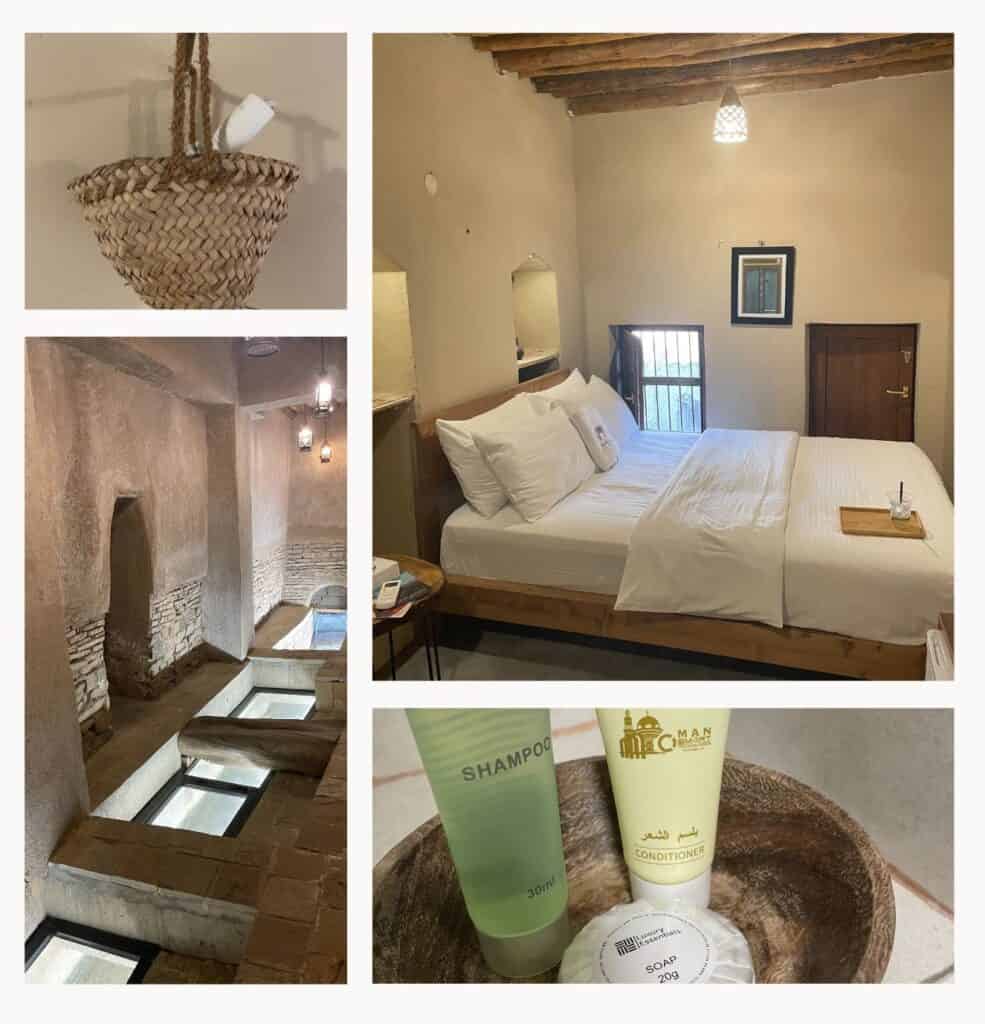
Mid-range: Bait Al Sabah Heritage Inn & Café (which translates ‘The morning heritage inn’) is the only hotel in Birkat al Mouz. I stayed there and found this charming renovated mud-brick house to be wonderfully situated in the old part of the village. It offers 8 small double rooms that are basic but beautifully refurbished.
The café in Bait al Sabah Heritage Inn & Cafe: a selection of coffee as well as cakes (try the date cake! Excellent!). The terrace offers amazing views of the historic part of the village. Magical in the evening.
Alam Caféis also an excellent choice to enjoy high quality coffee (honestly, the best coffee I’ve had in Oman!), quality food and a relaxing atmosphere. Very popular with local people. For more information, see my blog post about it.
Banana Café: See my earlier comments about this beautiful café which offers excellent coffee and a stunning view over a date grove and the falaj.
Meet Christine
Christine is a teacher, watercolourist and trained as a journalist. She has been living in Oman for six years and has travelled around the country extensively – from the capital, Muscat, to desert camps to remote mountain villages. Read more about Christine.