Bahla Oman: A Complete Guide to what to Do (2026)- With Map

01/11/2025

Often overlooked by travellers or simply labelled ‘The City of Magic’, Bahla is so much more. This oasis town boasts a majestic UNESCO-listed fort, exquisite pottery, and city walls that span 13 kilometres.

This step-by-step guide to Bahla (بهلاء) in Oman leads you through this town steeped in history and culture. The Bahla Fort, ancient city walls, and life-giving falaj form an outstanding example of a fortified oasis city from the medieval Islamic period. Let’s dive in!

Why Visit Bahla

Why Visit Bahla

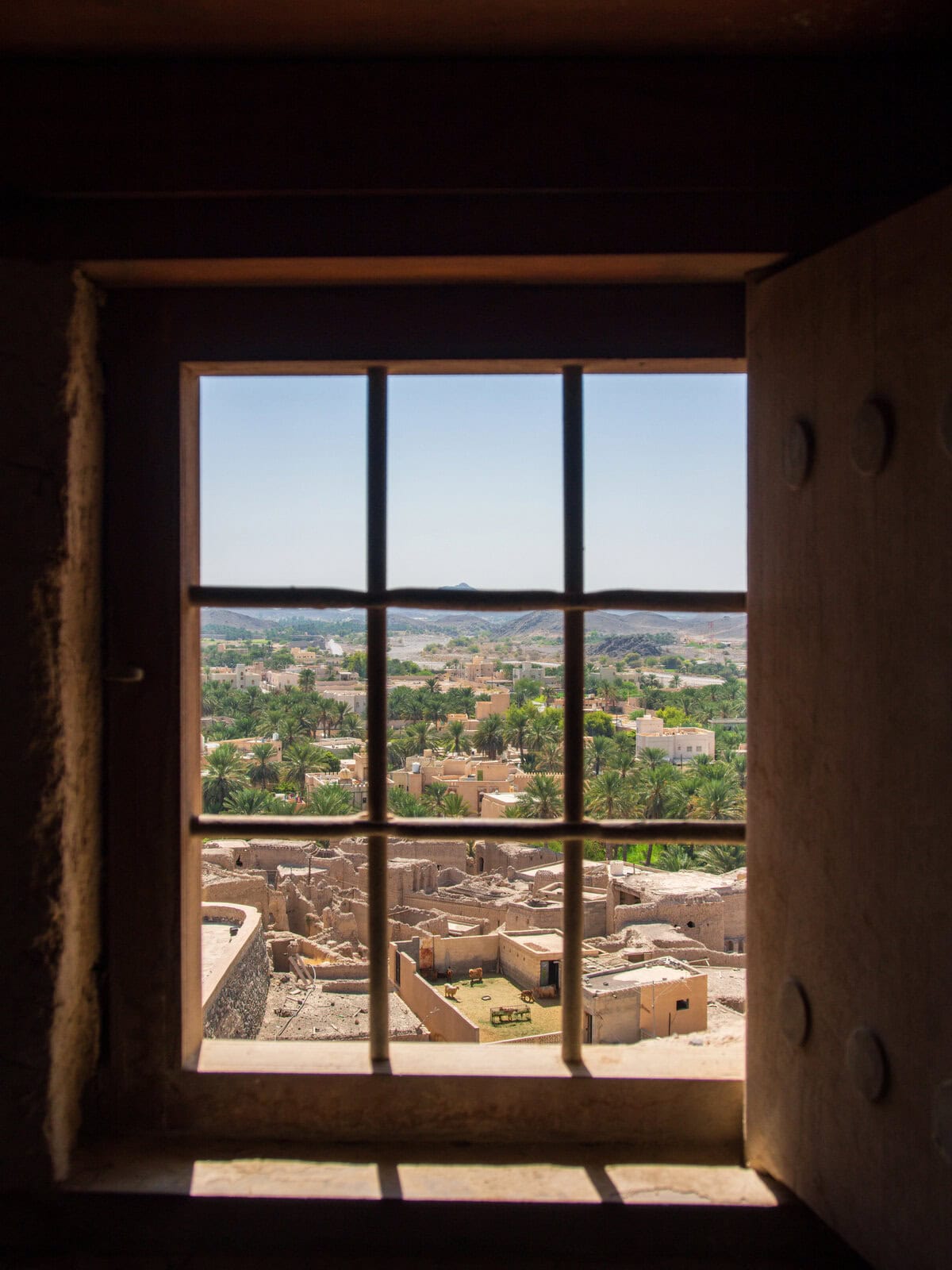
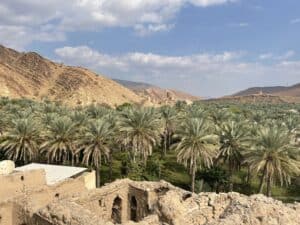
Panoramic view of the town of Bahla taken from the Fort

“You know how he came to class today? He just drew a line on the floor and crossed it! People in Bahla can fly and go wherever they want this way!”
I had only been teaching in Nizwa for a month… and already I’d heard about the legendary “super powers” of Bahla’s inhabitants.

Bahla. Swirling down the centuries as the ‘City of Magic’, its puzzling legends have both fascinated and terrified. It is nestled in the heart of Oman, about 40 kilometres away from Nizwa. It is actually situated in the Ad Dakhiliyah Governorate, lying at the foot of the Jebel Akhdar mountain range.

However, the time I spent with people from there allowed me to see that Bahla is much more than a story about magic. Its buildings and engineering reveal its determination to thrive in a harsh environment while its pottery points to its creativity.

A view of Bahla from one the barred windows of its UMESCO-listed Fort
A glimpse of the oasis from Bahla Fort

First Steps in Bahla: Sharing Coffee and Conversation in the Majlis

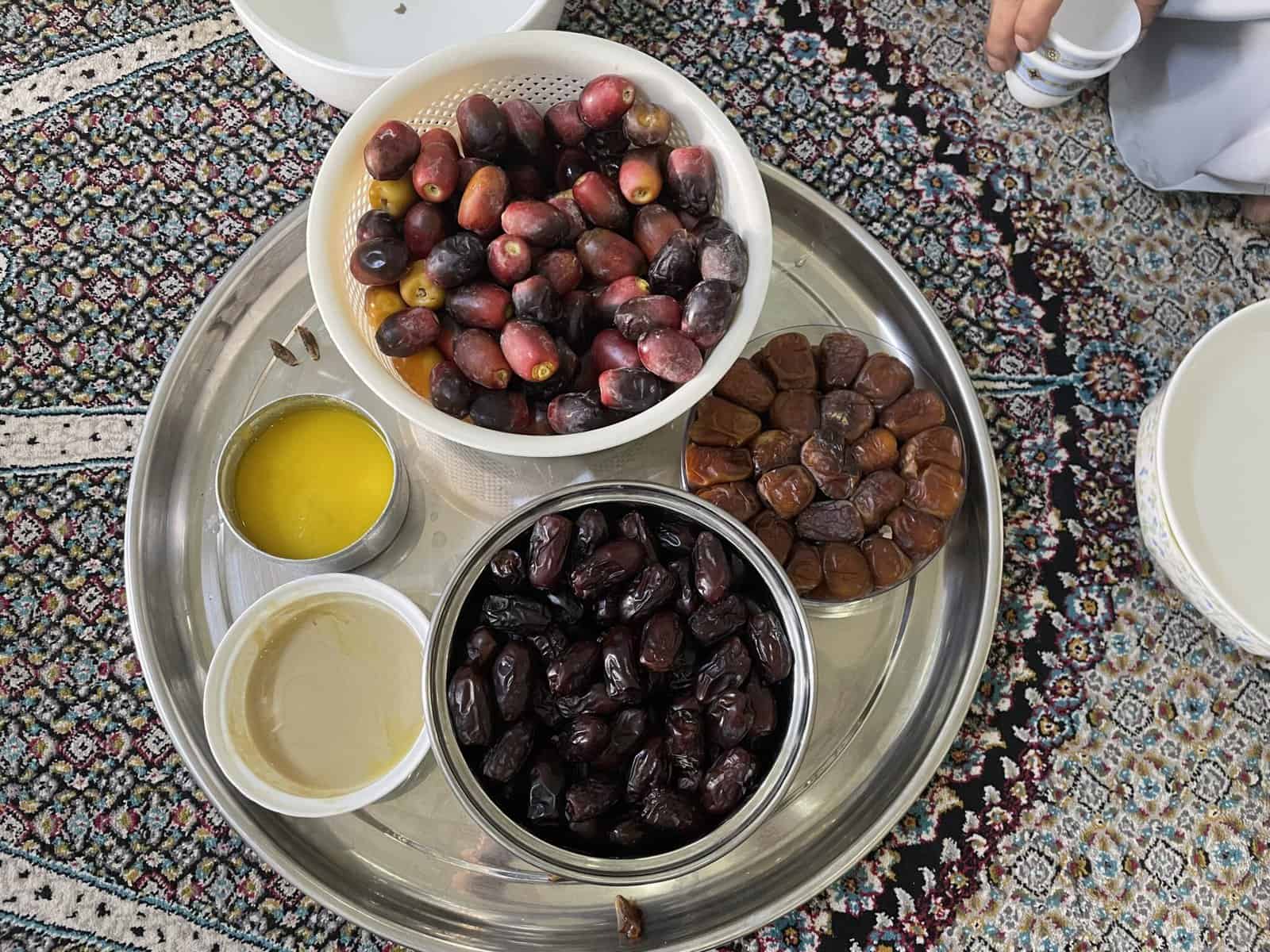
3 kinds of dates on a tray
A sweet Omani welcome: three kinds of dates

My visit to Bahla began with my hosts offering me a warm welcome with the familiar spread of dates, cardamom coffee, and fruit in their majlis. As we all sat on the carpet, I tried (and failed) to fold myself into the traditional cross-legged position like everyone else.

I loved the dates — three kinds, each with a different texture. I particularly liked the salty-sweet surprise when dipping them into tahina, the sesame paste that’s often served alongside. It’s such a simple combination, yet it connects with an intrinsic part of Omani culture – dates and palm trees.

The dates in a garden in Bahla are looked after
The dates in the farm are looked after with great care.

5 REASONS TO VISIT BAHLA

1. Uncover The Ingenious Falaj System: Bahla's UNESCO-Recognized Water Heritage

A walk through Bahla’s lush farms will reveal to you what has always really mattered here: water. In a place surrounded by desert, this is the true treasure.

And, just like in Birkat al Mouz (another beautiful place to visit!), one of the most ingenious ways people here have learned to share and protect it is the falaj. The falaj is an irrigation system that goes back centuries and is still running today. Its intricate engineering even allows the water to run upwards at certain points!

My hosts explain to me in great detail how the falaj is managed by the Falaj Committee in the community. The inhabitants bid for ‘time shares’ (a number of hours) of access to water in a complex auction system. The price rises and falls depending on the season and the rain fall. 

The ingenuity of the falaj system in the numerous farms in Bahla
The Falaj in Bahla's Farms
One of my hosts showing me an irrigation point in the farm
One of my hosts showing me an irrigation point in the farm.
The lush greenery of the farms in Bahla
The lush greenery of the farms marks a strong contrast with the dry mountains surrounding the town

2. Explore the impressive Bahla Fort

When I visited Bahla, I went to the Fort later in the afternoon, around 4 pm. By then, the sun was lower, and the heat was easier to handle. From the parking area, it is only a short walk to the main entrance of the fort.

In 1987, Bahla Fort became the first site in Oman to be recognised by UNESCO for its cultural and historical value. It was constructed by the Banu Nebhan tribe, who ruled the area from around the mid-1100s to the 1400s. Its massive scale clearly reflects their influence.

In fact, it is huge and simple in the best way. No fixed path — just stone walls, staircases, watchtowers, and views. You are free to explore at your own pace. The steps are uneven in places, so comfortable shoes are a good idea.

From the top, you can see the palm trees, the old mudbrick houses, and the mountains in the distance. It gives you a clear sense of how people once watched over and protected the town.

Opening Hours: In general, it is open from 8.00 a.m to 7.00 p.m. This may vary seasonally.

Cultural Note/Story: It is a popular belief among some Omanis that the Bahla Fort is a ‘haunted location’ and is home to a jinn. This is part of the local folklore that has earned Bahla the nickname ‘City of Magic.’ During my visit, we saw some bats that – eerily – only huddled around the prison, adding to the mysterious atmosphere.

Exterior of Bahla Fort with the car park at the foot.
The Mysterious Fort
Ancient wooden doors displayed inside the Doors Museum that is in Bahla Fort
Oman is famous for its carved wooden doors. Inside Bahla Fort, you will find the Doors Museum

3. Enjoy a refreshing drink in Kamakan heritage Cafe - with a great view

A beautiful heritage cafe next to Bahla Fort
The beautiful Kamakan Heritage Cafe,
Kmkan Cafe

Right next to the Fort, up a dirt road, you will find a beautiful heritage cafe: Kamakan. Its adobe walls, orginal ceiling, and wide-ranging views over the town and the fort make this a great place to relax and cool down. I particularly recommend their cold ginger drink. It’s one of their best sellers – and I understand why!

4. Wonder at the remains of the old city walls

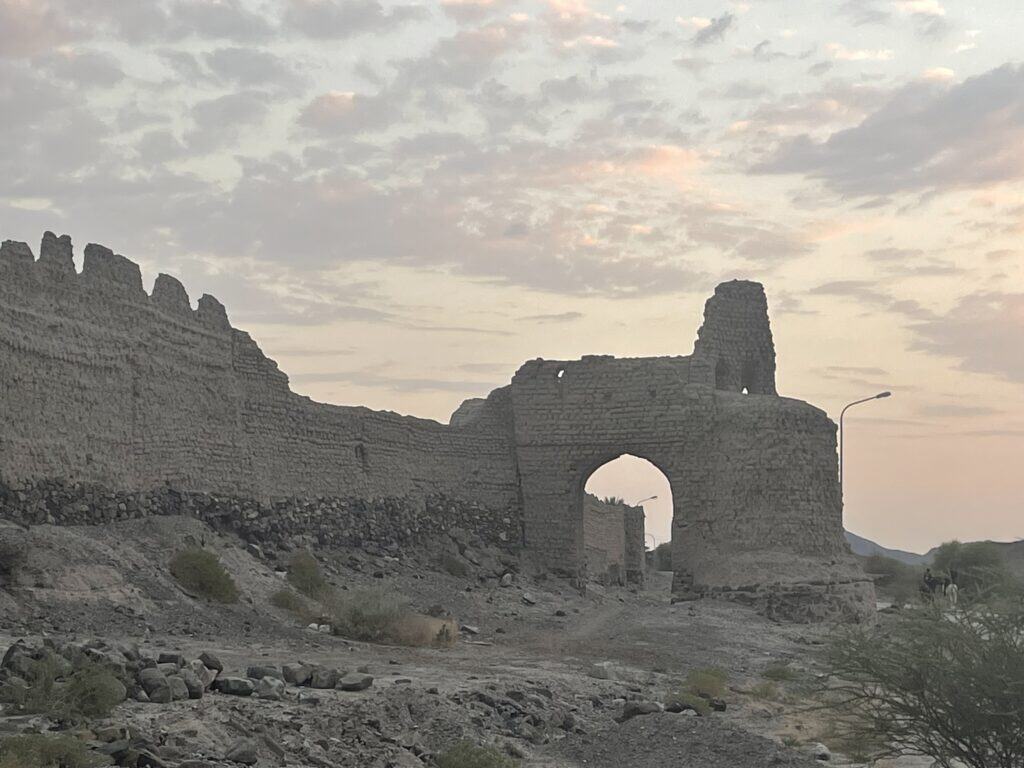
The ancient city walls of Bahla
One of the gates in Bahla's old city walls.

I was amazed to discover that the old city walls around Bahla extended 13 kilometres! As we arrived at the remains of one of the gates, some people rode past on horses as the sun set.

The city walls used to form a ring around the town with around 132 watch towers and 7 main gates such as Bab Badi.

The walls, the Fort, even the stories of magical powers all made me reflect on the need for Bahla’s inhabitants to protect themselves throughout history. I could see how their water supplies and rich vegetation would attract invaders. 

Local Legend: One of the most famous legends connected with these walls is the belief that they were built in a single night. The story goes that two sisters, Maitha and Gaitha, used their magical skills to conjure jinn, who then built the defensive walls to protect the town.

5. Discover Bahla Pottery and the Traditional Souq

Pottery displayed in a stand in Bahla souq
Bahla’s souq is open in the morning and after 4.00 p.m. It is situated just opposite the Fort.
 
Bahla is famous for its pottery. Just outside the old souq, you’ll find workshops where you can buy clay pots. These are still shaped by hand and fired in traditional kilns.
 
In fact, this is a living link to Bahla’s ancient past. The town’s rich, reddish clay and the nearby wadis have made it a center for ceramics for centuries, with evidence of pottery production flourishing during the medieval era, particularly under the Banu Nebhan dynasty (12th to 15th centuries), who also oversaw the construction of the great fort.
 
The techniques have been passed down for generations, and many families in Bahla still use the same methods to create the distinctive Bahla red pottery—from large storage jars to the small, unglazed vessels used for cooking.
 
The souq itself is small but full of useful things — pots, silver jewellery, woven baskets, spices, tools, and old-style coffee pots. It isn’t made for tourists; it’s where locals still come to buy what they need, which is exactly what makes it worth visiting.
 
Another famous place where you can find Bahla pottery is in Nizwa Souq.

Planning Your Trip to Bahla

Here are some key points and quick links to my favourite cafes, accommodation and services.

Nearest City
Nizwa (~40 km / 30-40 minutes drive)
Distance from Muscat
~200 km (1 hour 45 minutes drive)
Key Attractions
Bahla Fort , Falaj System, Traditional Pottery Workshops, Ancient City Walls
Best Time to Visit
November to March (for cooler temperatures)
Recommended Cafes & Places to stay
Mid-range: Kamakan Heritage Cafe & Inn 
Luxury: The View in Al Hamra (about 20 minutes away)
Local Tip
Wear comfortable shoes; the fort steps are uneven.

How to Get to Bahla (From Muscat or Nizwa)

Rental Car

You can easily reach Bahla by car and it makes a good day trip from both Muscat and Nizwa.

From Muscat: it takes around 1 hour 45 minutes (about 200 km) along Route 21. The road runs past Bidbid and Izki before continuing towards Nizwa and then Bahla. The good news is that the road is fully paved and, after extensive works, is now in good condition most of the way.

From Nizwa: it’s a short 30–40 minute drive (around 40 km), and you don’t need a 4×4.

Need to rent a car? Check out EasyTerra – a website that allows you to compare prices of different rental car agencies.

If you plan to drive, you might also like my guide on renting a car in Oman — it explains how it works, what to expect, and how to choose the right vehicle.

Bus

There are no direct public buses to Bahla, but you can take a Mwasalat bus from Muscat to Nizwa and then a taxi to Bahla.

 Most travellers prefer renting a car because it gives more flexibility to also visit nearby places like Jabrin Castle, Misfat al Abriyeen, or Al Hamra on the same trip.

Free parking is available next to the fort, and from there you can easily walk to the old souq and pottery workshops.

Best time to visit Bahla

The best time to go to Bahla is between November and March as you will be able to wander around and climb up and down the Fort with ease.

Accommodation in Bahla

Mid-range: Kamakan Inn. As well as its Cafe (see above), I also recommend the inn that is connected. It is small, ideally located next to the Fort and near the Souq. ‘Kamakan’ used to be a group of mud-brick homes and was restored using the same traditional materials. In fact, its name means ‘as it was’.

Kamakan Inn has a terrace from which you can admire the Fort and sip a coffee during the cooler winter months

Food in Bahla

A Wahat Al Tabiya TRAD. Restaurant. offers local Omani and Indian dishes in a setting that honours heritage. The menu includes Biryani, Kabsa, tandoori, and a variety of sandwiches. 

Kadm Cafe, traditional cafe located in the Souq. More than a cafe – an experience!

What to wear and what to bring with you

  • A bottle of water: Even if you decide to visit Bahla in winter, it is a good idea to bring this along.
  • Comfortable shoes: Comfortable sandals or trainers. Visiting Bahla and especially Bahla Fort requires a lot of walking and climbing up and down uneven stairs (I recommend it if you want the best views!)
  • Sunscreen and sunglasses: Oman having a sub-tropical climate, it is important to protect yourself from the sun.
  • For women:
    • Light, loose trousers or a long skirt

    • A breathable top that covers shoulder

  • For men:
    • lightweight trousers

    • A T-shirt or short-sleeved shirt

f you want a full, year-round packing guide for Oman, you can check out my blogpost: What to Pack for Oman: The Ultimate Year-Round Packing List.

My overall impressions of Bahla

Bahla is a place that stays with you. It offers so much history and culture in one small town — the fort, the pottery workshops, the old souq, the farms, and the ingenious falaj that still feeds life into the oasis.

Speaking with my hosts and friends from Bahla helped me understand how much thought and cooperation lie behind all this. 

It also opened a door into the town’s many stories about the unseen. Bahla’s connection to magic remains mysterious to me, but I do know this: the real magic I found there was in the kindness of its people.

By the way, I consider Bahla Fort to be one of the 15 most beautiful sites in Oman. Want to check out the other 14 sites? See my blogpost about this.

WELCOME to JOUSSOUR to OMAN!

Hi! I’m Christine, a Franco-British writer and watercolourist living in Oman for the past four years. I share my first-hand experiences to help independent travellers plan an immersive and authentic trip to Oman.

Search the blog
Popular posts
Coming soon

Discover Your Unique Cultural Travel PERSONALITY

Take this quiz to get insight into which of the 12 cultural traveller archetypes you are.
Picture of Author: Christine van den Hogen

Author: Christine van den Hogen

Hi, I’m Christine. I’ve lived in Oman for over four years and spent that time travelling across the country - from desert camps to remote mountain villages. Joussour to Oman is where I share practical guides and honest tips for experiencing Omani culture, nature, and daily life. This list is based entirely on places I’ve visited myself - often more than once.

Share it!

Leave a Reply

Your email address will not be published. Required fields are marked *

This site uses Akismet to reduce spam. Learn how your comment data is processed.

Recommended Reads