What to do in Nizwa (2026) | Four one day itineraries for Independent travellers

Updated: 13/12/2025

Wondering how to spend one day in Nizwa? This guide offers independent travellers four different one-day itineraries — from heritage and historic landmarks to local markets, natural surroundings, and a relaxed family-friendly day.

Each itinerary explores a different angle so you can choose the itinerary that best suits your interests. If you are staying a few days in Nizwa, you can of course combine them.

Table of Contents

Seeing Nizwa Through Different Lenses

Historical, cultural, traditional, and business-savvy — these are the words I came to associate with Nizwa during the year I lived there. Even now, after moving on, they still shape how I understand the town and the way it reveals itself to visitors.

Located in Oman’s Ad Dakhiliyah region, Nizwa is one of the country’s most historically significant cities. Famous for its 17th-century fort and traditional souq, it draws many travellers for a quick stop — often centred around the fort and the Friday Goat Market. Photos taken, boxes ticked, and then it’s on to the next destination.

Tick. Tick.

Collage showing the city walls, Nizwa Souq, and a palm-lined mountain path in Misfat al Abriyeen near Nizwa, Oman
Nizwa reveals itself differently depending on where you choose to spend your time.

Why is Nizwa Famous?

I can honestly tell you that Nizwa is worth more than a quick visit.

As a city that served as Oman’s capital on several occasions throughout history, Nizwa is rich in heritage buildings — including a fortified wall restored in Harat Al-Aqr, one of the town’s oldest neighbourhoods. Walking along it is one of the most atmospheric ways to connect with that past.

What’s more, you can enjoy a specialty coffee in one of the many beautiful cafes that have appeared in this area.

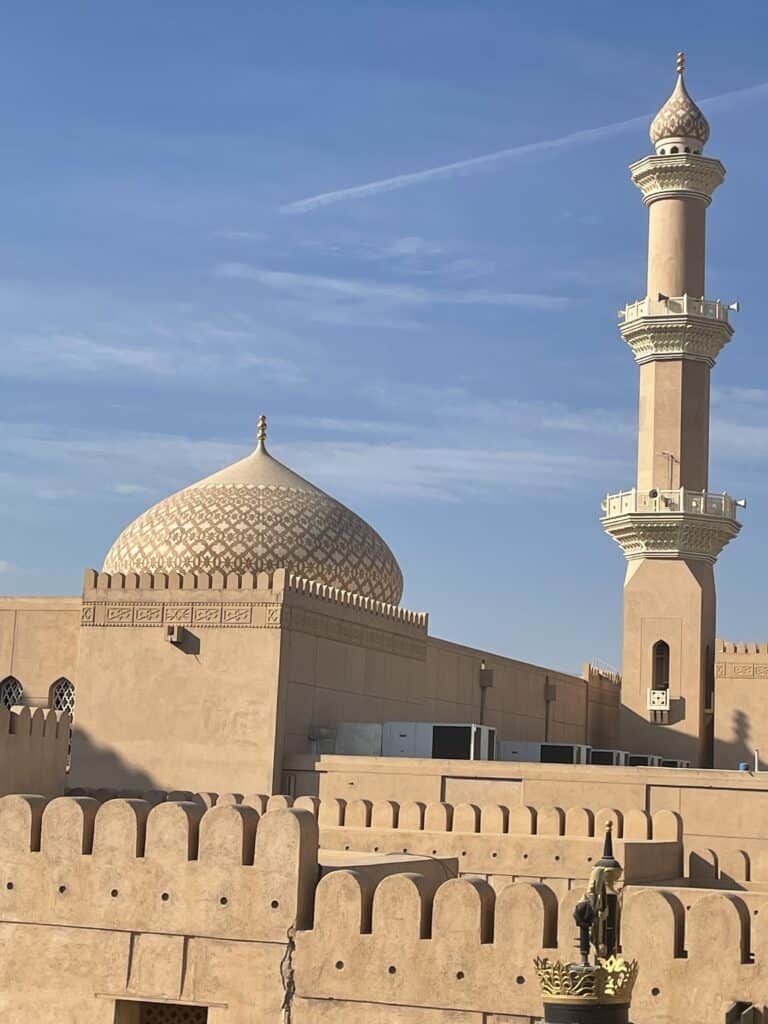
Al Qala’a Mosque near Nizwa Fort, showing its patterned dome and tall minaret rising above sand-coloured fort walls under a clear blue sky.
Al Qala’a Mosque, set right beside Nizwa Fort, echoes the town’s fort-like architecture through its earth-toned walls, geometric details, and commanding minaret.
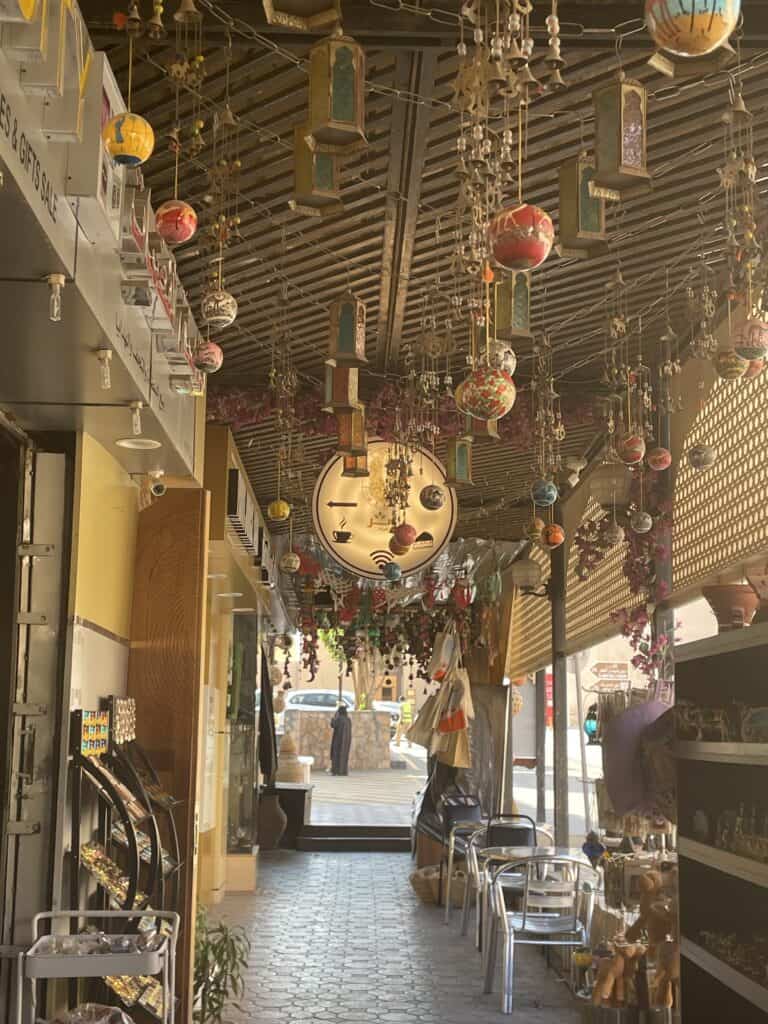
Covered walkway lined with small shops on the street leading to Nizwa Fort, decorated with hanging lanterns, bells, and colourful ornaments.
A covered walkway beside the shops on the street leading to Nizwa Fort
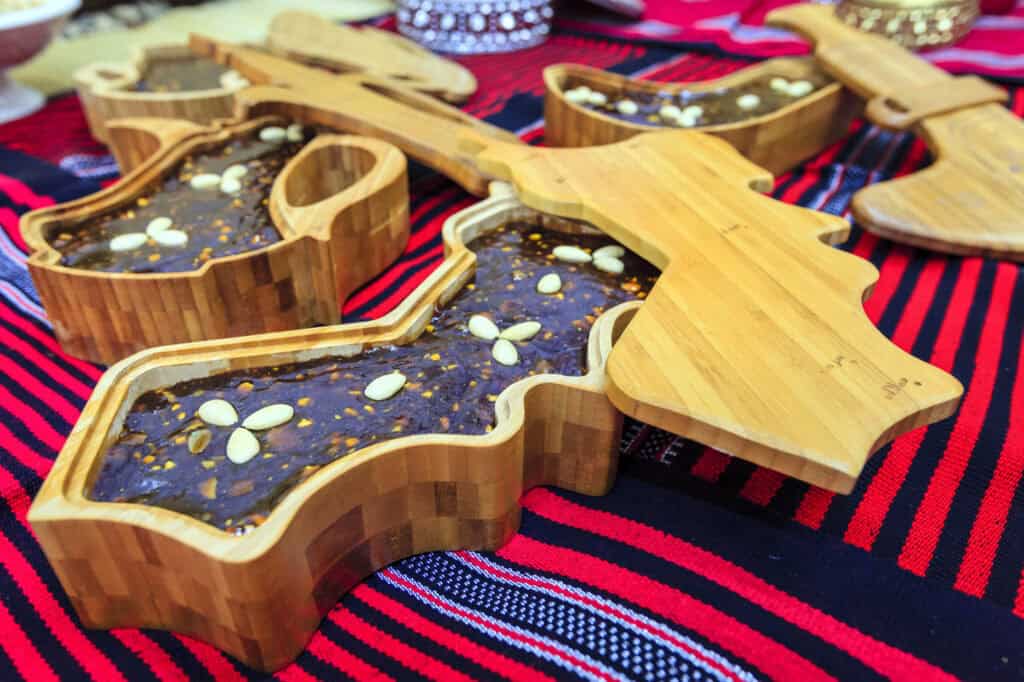
Omani Halwa
Omani halwa (joussourtooman.com)

If you want to try Oman’s famous halwa, sample a wide range of local dates, or browse for authentic souvenirs, Nizwa is one of the best places in the country to do it. Just to give you ONE example, the tiny cultural shop inside the fort is a hive of incense, rose water, and hand-made perfumes. It’s one of the best places in Oman for authentic souvenirs.

Within a short drive of Nizwa, you can visit the mountain villages around Jebel Akhdar (the Green Mountain). You can also have a stroll round the date-palm gardens of Birkat Al Mouz or explore the crumbling ruins of Tanuf.  I’d also recommend Misfat al Abriyeen, one of my favourite Omani villages, known for its stone houses, terraced gardens and stunning views.

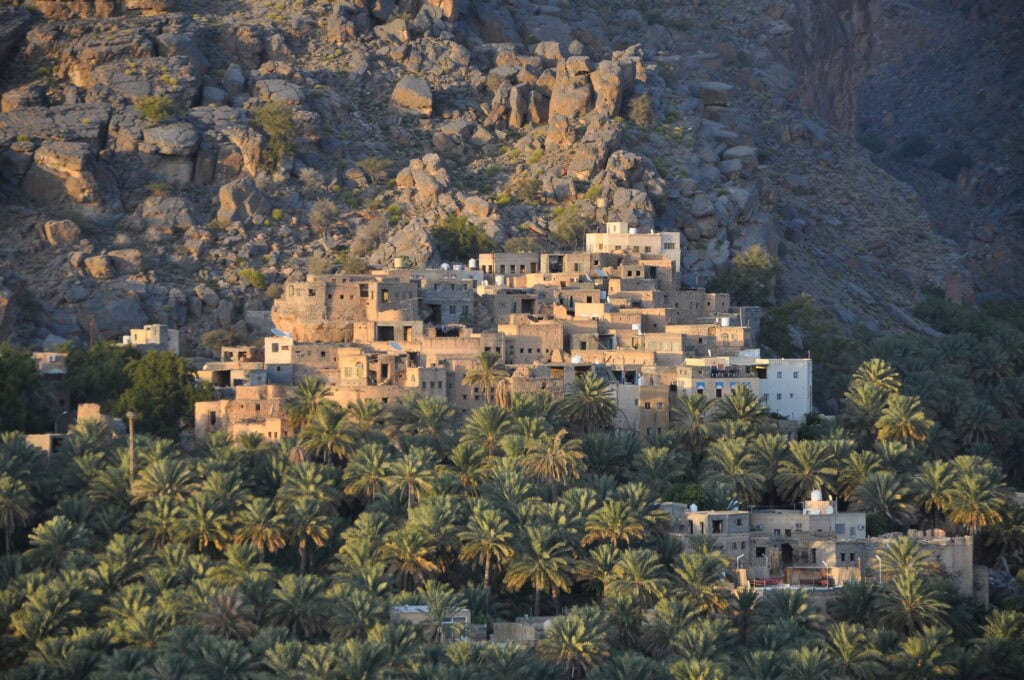
Aerial view of Misfat al Abriyeen, a traditional mountain village in Oman with stone houses built into rocky slopes above dense palm groves.
Misfat al Abriyeen, a traditional mountain village set among palm groves and steep rocky slopes.

Planning Your Visit to Nizwa: Practical Information

How to get to Nizwa

🚗 By Car: Most flexible, ideal for day trips and nearby villages. 

Nizwa is around a 1.5-hour drive from Muscat on good, well-marked roads. Renting a car is the simplest option and gives you the most flexibility, especially if you plan to explore nearby villages or mountain viewpoints. If your day includes Jebel Akhdar, you’ll need a 4×4 due to the police checkpoint — alternatively, you can hire a driver for the day.

If you’re considering this option, I share practical advice on what to expect in my guide to renting a car in Oman and a separate post with essential tips for driving in Oman, covering road conditions, local driving habits, and things that often surprise first-time visitors.

🚕 By Taxi/driver: Easy from Muscat, no navigation needed

If you’re not renting a car, taxis and private drivers are a practical alternative. In Muscat, travellers commonly use ride-hailing apps such as OTAXI, Taxi Muscat, or Marhaba Taxi. These allow you to see the fare in advance, choose your vehicle, and pay securely in the app. You can also pre-book a pickup time if you prefer a more organised arrangement, or opt for a guided day visit.

🚌 By Bus: Budget option, but less flexible for a one-day visit

For a budget-friendly option, Mwasalat buses run regularly between Muscat and Nizwa, with several departures each day from Muscat’s main bus station.

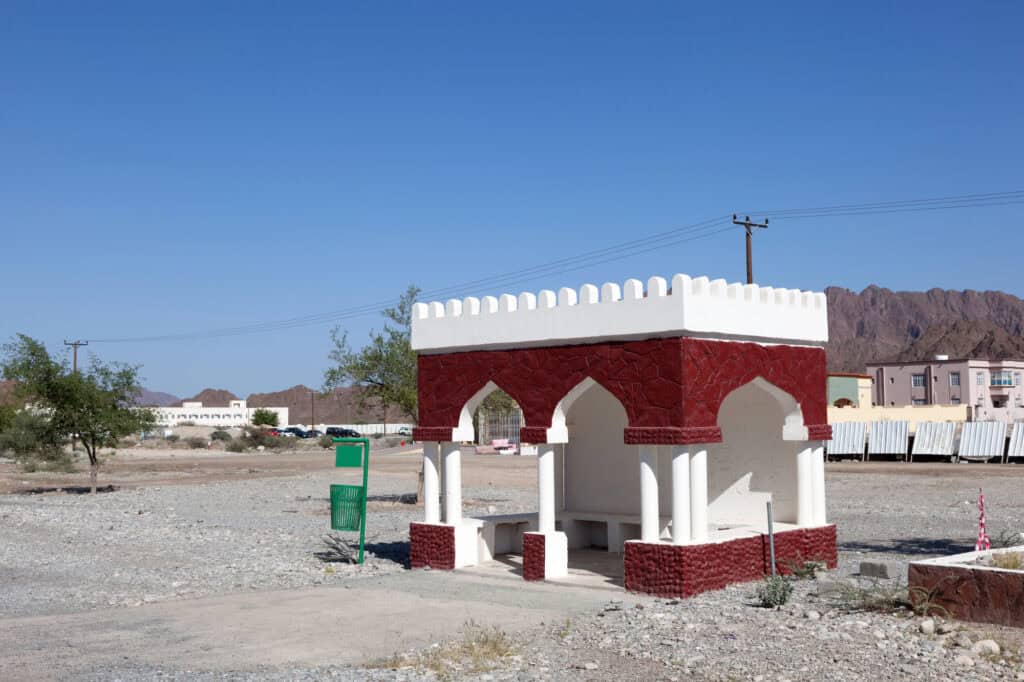
Traditional Omani bus stop with arched architecture and red-and-white stonework
I’ve seen these little Omani bus stops hundreds of times, yet their design still makes me pause — tiny roadside shelters with the unexpected elegance of a fort.

Getting around the city

Nizwa’s historical centre — the fort, souq, and Harat Al-Aqr — is compact and the best way to explore it is on foot. There’s a large car park right in front of the souq (market area), which makes it convenient to leave your car and wander through the old town.

For anything further out, such as hotels on the outskirts or day trips to villages, having a car makes things much easier.

When to visit

The best time to visit Nizwa is between November and April, when daytime temperatures are comfortable for walking around the fort, souq, and old neighbourhoods.

Nizwa’s climate is quite different from Muscat’s — it’s drier, surrounded by desert, and tends to be hotter in summer and cooler in winter, especially in the evenings.

Rain is rare, but when it does, it really pours! If you’re visiting in the hotter months, plan your outdoor exploring for early morning or late afternoon, and keep indoor or shaded activities for midday.

For more in-depth information about the weather in Oman – with a month by month account, you can check out my blogpost ‘When to Travel to Oman: A Practical Guide by Season.

What to wear

Nizwa is more traditional than Muscat, so modest clothing is recommended: shoulders and knees covered. Comfortable shoes are useful for walking on uneven paths in the old quarters.

I’d also recommend you take a light jacket for the evening if you are visiting during the winter months.

If you want full details of what to pack for your trip, you can see my full list here.

Where to stay

A whole range of renovated heritage hotels have opened in Nizwa. I’d recommend:

  • Al Jalilain Inn: Small heritage hotel situated close to Al Aqr city wall. The location is ideal to visit the Fort, the Souq and the older neighbourhood of Nizwa. Rooms have views on a garden.

  • Intercity Hotel Nizwa: A hotel with modern facilities. Easy to find with free car park and a roof-top swimming pool. This hotel is located in the newer part of Nizwa. Important to book ahead of your trip to get a good rate.

First Itinerary in Nizwa: Experience Heritage & History

Want to discover Nizwa’s historic heart and enjoy some traditional food? This itinerary is for you!

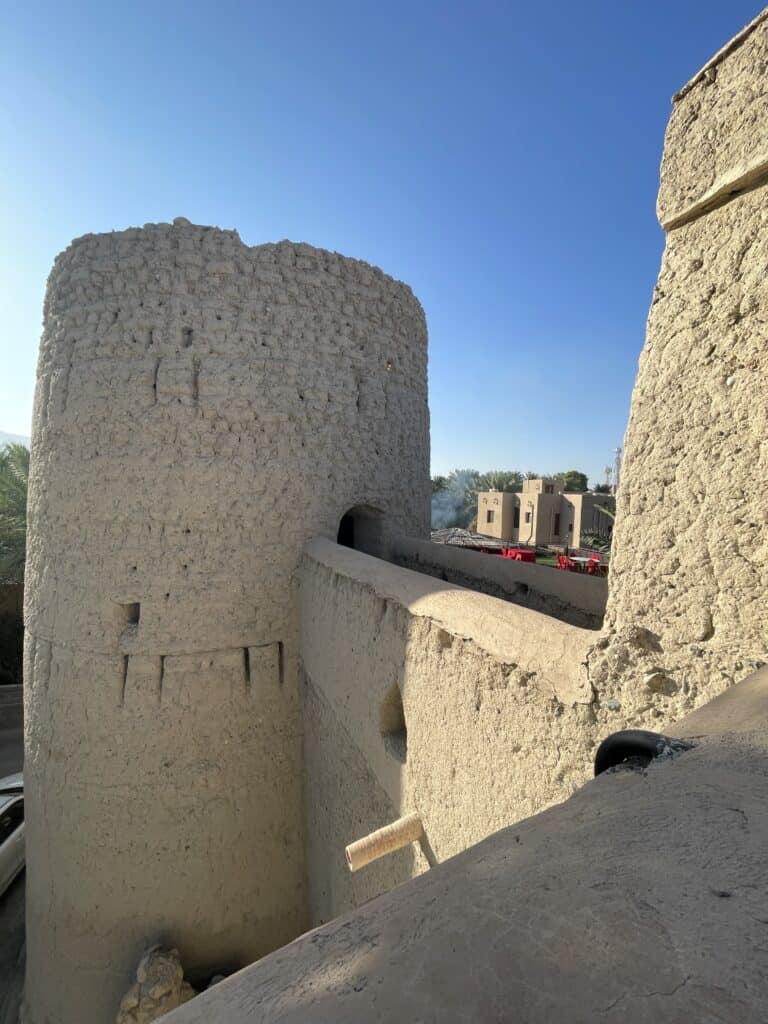
One of the watch towers on Al Aqur city walls
Walking on the restored city walls in Al Aqur will give you a real feel of Nizwa's history

Main steps in the First itinerary

1. Morning at Nizwa Fort + Gardens: Start your morning at Nizwa Fort, Oman’s most-visited monument and home to well-curated exhibits. Climb up its iconic round tower and don’t miss the cultural shop inside. Also take a moment to browse the traditional stalls outside for pottery, Omani bread-making, and a fresh ‘Omani sandwich’ (try it! Simple and delicious!). Allow at least 1 hour for this visit. Fort Timings: Sat-Thu 8 AM – 4 PM; Fri 8 AM – 11 AM 

2. Wander around Harat Al-Aqr: Stroll through the narrow alleys of Harat Al-Aqr, one of Nizwa’s oldest neighbourhoods, where renovated mud-brick houses offer a glimpse into traditional Omani life.

3. Walk the Restored Fortified Wall: Continue to the restored fortified wall for an easy walk with lovely views over the old town and its date-palm gardens.

4. Lunch at Al Aqur Traditional Restaurant: Enjoy a relaxed lunch at a traditional restaurant, where you can try dishes like Shuwa, Mandi, or Orsiya in an authentic Omani setting.

5. Nizwa Museum: Stop by this Museum for a short visit, then unwind with a coffee in their beautifully decorated café, which also has a terrace overlooking the old town.

6. The bustling Souq: Head to the souq, a lively maze of pottery, silverwork, dates, spices, and everyday market life — a perfect place to browse or pick up local gifts.

7. Have coffee in one of Nizwa’s beautiful cafes in the old part of town.

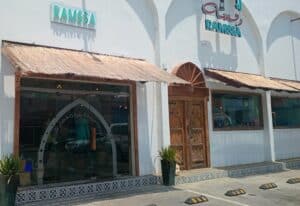
8. Dinner (optional) at Tamrah Restaurant & Cafe. If you’re staying in Nizwa overnight, you can end your day with a relaxed dinner. Located opposite Nizwa Fort, you can enjoy delightful views of the city from the rooftop terrace. Enjoy tasty Omani food such as lentil soup, halwa, dates with tahina.

Nizwa Fort: Where History and Ingenuity Meet

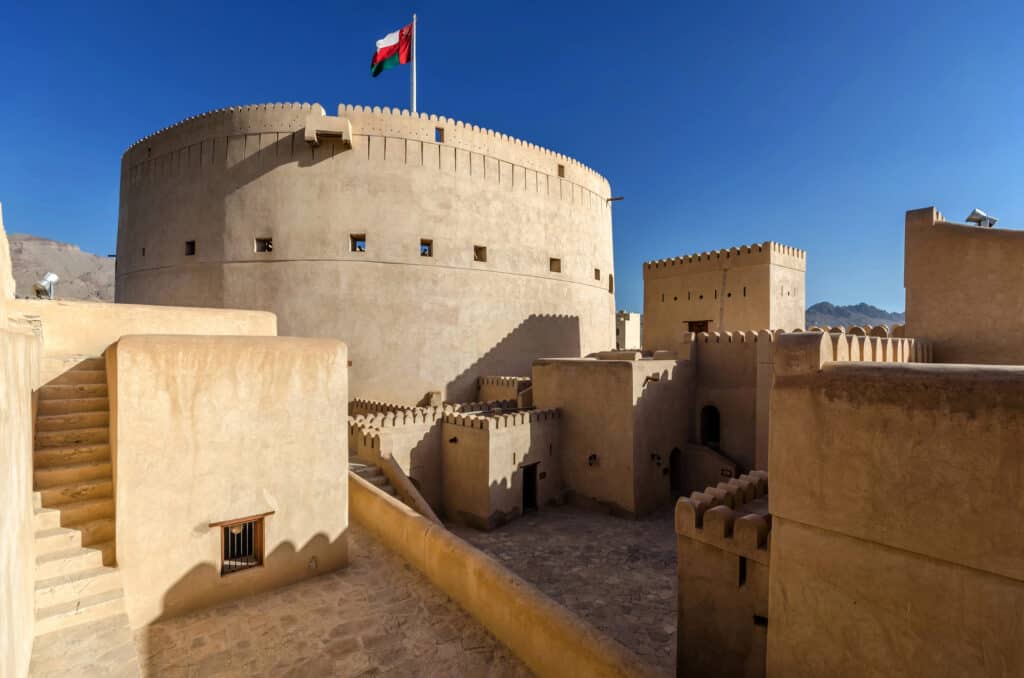
The round tower in Nizwa Fort
Forts are everywhere in Oman. Nizwa fort is a must-see during a visit to Oman.

If there’s one landmark that truly captures Nizwa’s intricate history, it’s Nizwa Fort. More than just a photo stop, the fort embodies the city’s role as a centre of scholarship, defence, and leadership for centuries. Its massive round tower, underground passages, and restored living quarters offer a vivid sense of how people once protected and governed this part of Oman. The perfect place to begin a day devoted to Nizwa’s heritage!

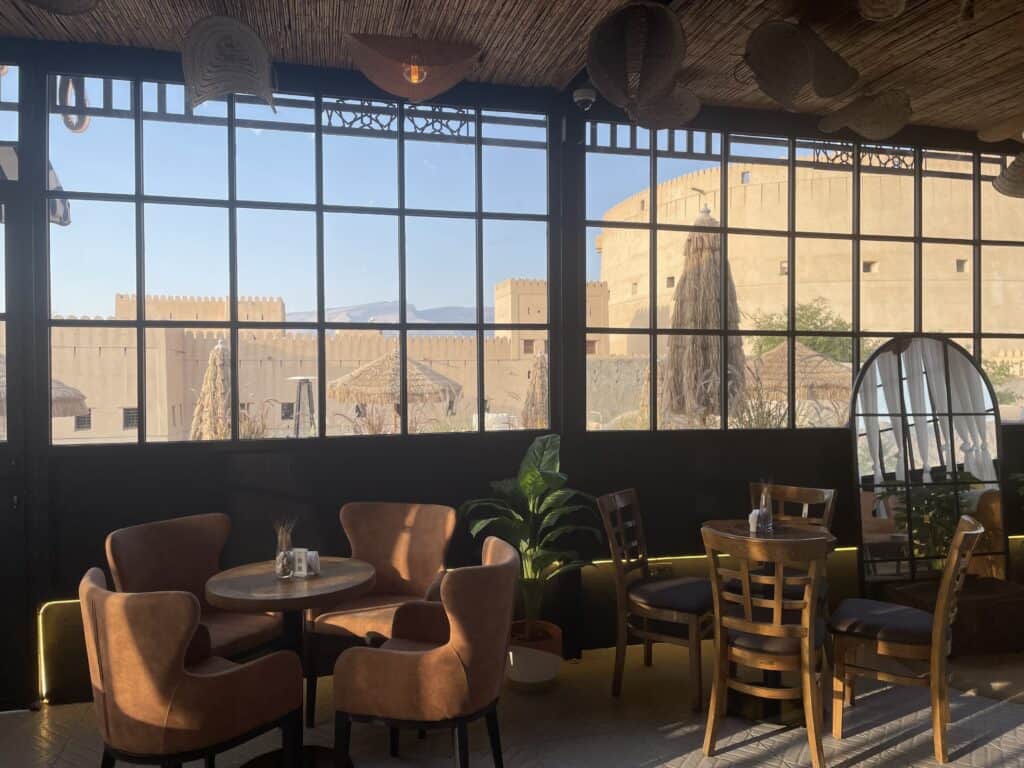
View of Nizwa fort from a beautiful café
View of Nizwa Fort from the stunning café inside Nizwa Museum

Because one of the guides was my former Arabic teacher, I was lucky enough to explore some of the fort’s more hidden corners. I was struck by its stories underlying the ingenuity of its architecture: every element was designed with precision to protect the city. Above the main entrance, soldiers could hurl rocks on intruders through a trap. Further inside, a murder-hole allowed defenders to pour hot oil or date syrup onto anyone forcing their way in. And beyond that, a concealed pit waited to stop anyone who made it through. And this was only the beginning of a remarkably clever – and deadly – defence system!

Second itinerary in Nizwa (Fridays): Experience Local Life & Market Vibes

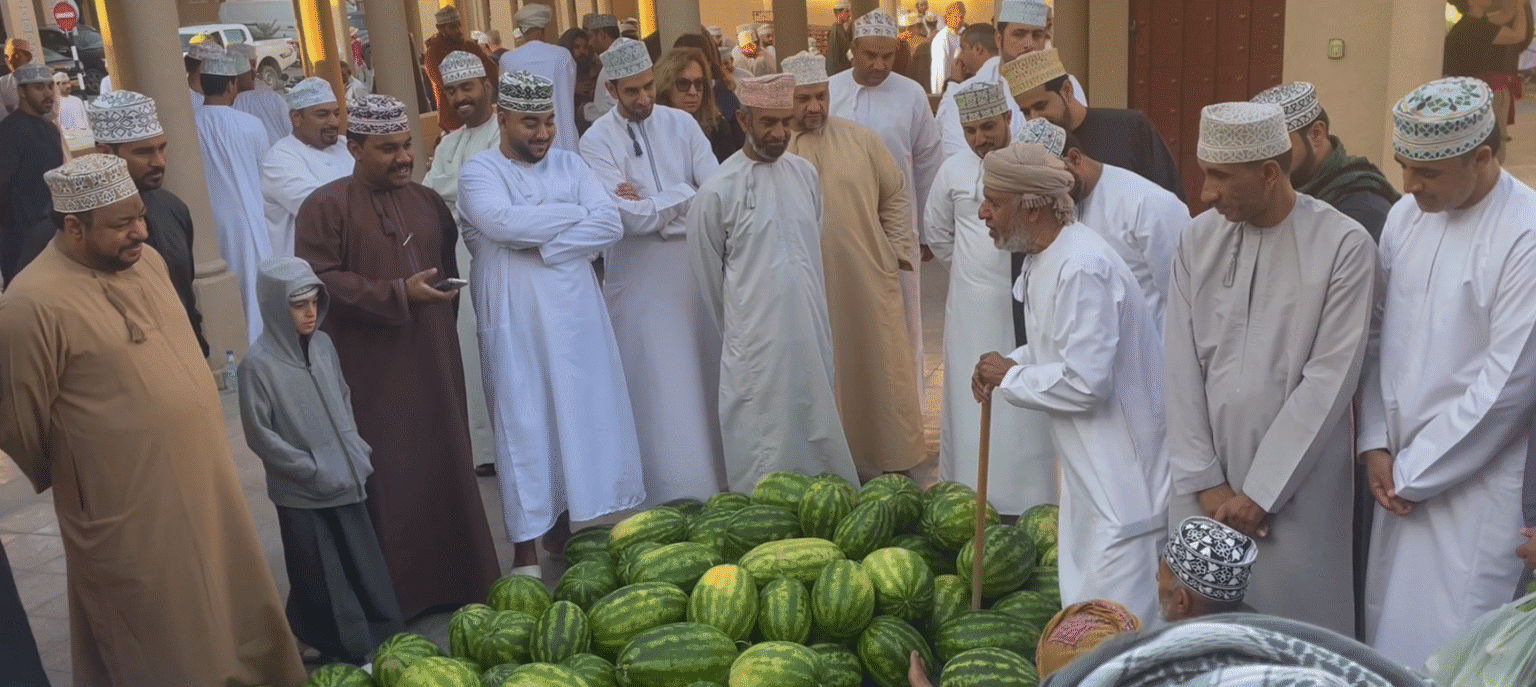
If you love lively markets, everyday encounters, and want to get a feel of local life, this itinerary will show you Nizwa through this lens. It’s best experienced on a Friday, when the city comes alive for the famous Goat Market — one of the highlights of this route.

You should aim to start around 6.00 a.m. to see the Souq.

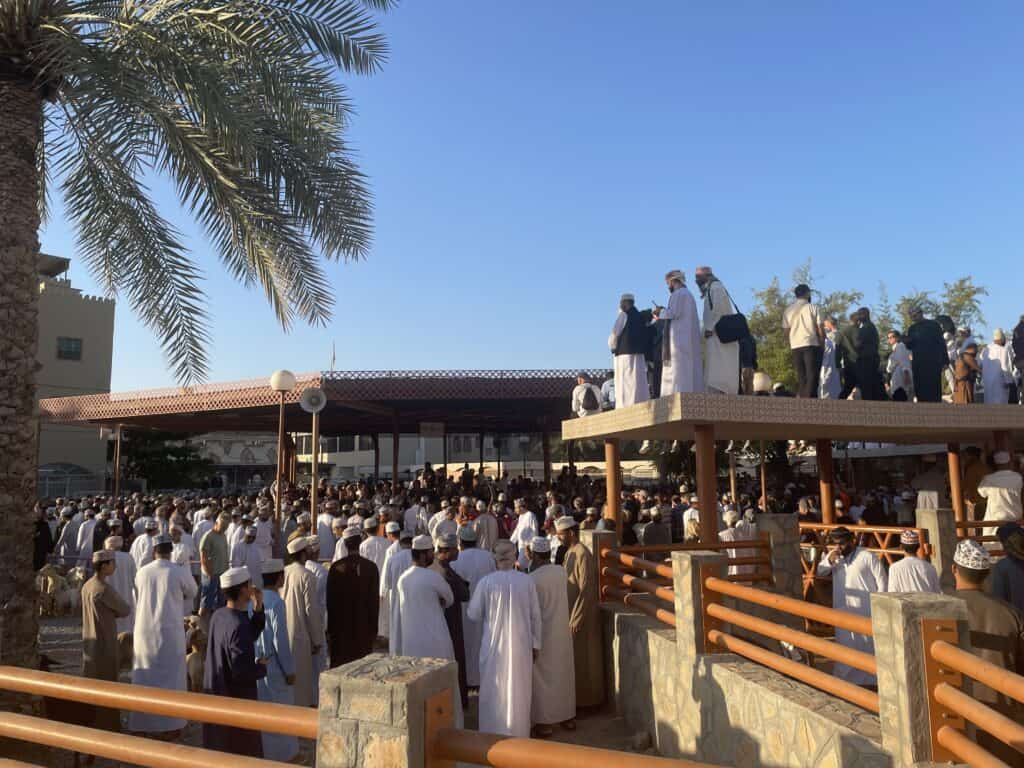
Crowds gathered around the Goat Market
The Goat Market attracts a wide range of visitors

Main steps in the Second itinerary

1. Start in the Antiques Corner of Nizwa Souq

Begin your morning in the quieter antiques corner. Here, you can dig out old finds, vintage objects, and traditional tools. They will give you a fascinating insight into Nizwa’s local life in the past.

2. Breakfast at Mashawi Al Wadi (Opposite the Post Office)

Enjoy a simple local breakfast at Mashawi Al Wadi — freshly made mishkak (barbecue meat) — a great little spot just opposite the post office.

3. Visit the Arms Auction

Stop by the arms auction, a unique glimpse into an old trading tradition that still takes place every Friday.

4. Experience the Goat Market

Head to the Goat Market at the perfect moment: lively, full of movement and voices, and one of the most memorable cultural experiences in Nizwa.

5. Watch the Fruit & Vegetable Auction

After the energy of the Goat Market, take a few minutes to watch the fruit and vegetable auction — a fascinating rhythm of bids and conversations.

6. Explore the Inside Souq (West Wing, East Wing, Dates & Halwa Market)

Wander through the different buildings of the souq, browsing silver shops, incense stalls, perfumes, halwa counters, and a wide variety of dates. Speak with the shop dealers who are proud of their local products.

7. Visit the Pottery Stalls

Finish your market circuit with the pottery area, where shelves of traditional vessels, bowls, and incense burners make great souvenirs.

8. Karak Tea Break

Pause for a cup of karak from one of the market stalls — a small ritual that locals enjoy and a welcome rest after a busy morning.

9. Lunch at Bait Al Arab Restaurant & Kitchen

Enjoy a relaxed local meal at Bait Al Arab Restaurant & Kitchen, a popular spot serving generous Omani and Arabic dishes in a warm, family-friendly setting. This is in Al Farq, a more modern neighbourhood.

10. Explore Nizwa Grand Mall (Modern Local Life)

To cool down, spend a little time wandering through Nizwa Grand Mall — a comfortable way to see the modern side of everyday life in Nizwa, especially useful for families.

If you’d like a deeper look at each corner of the market, you can read my full guide to Nizwa Souq, where I share practical tips and insights from visiting it many times.

The Pottery Tradition Behind Nizwa’s Stalls

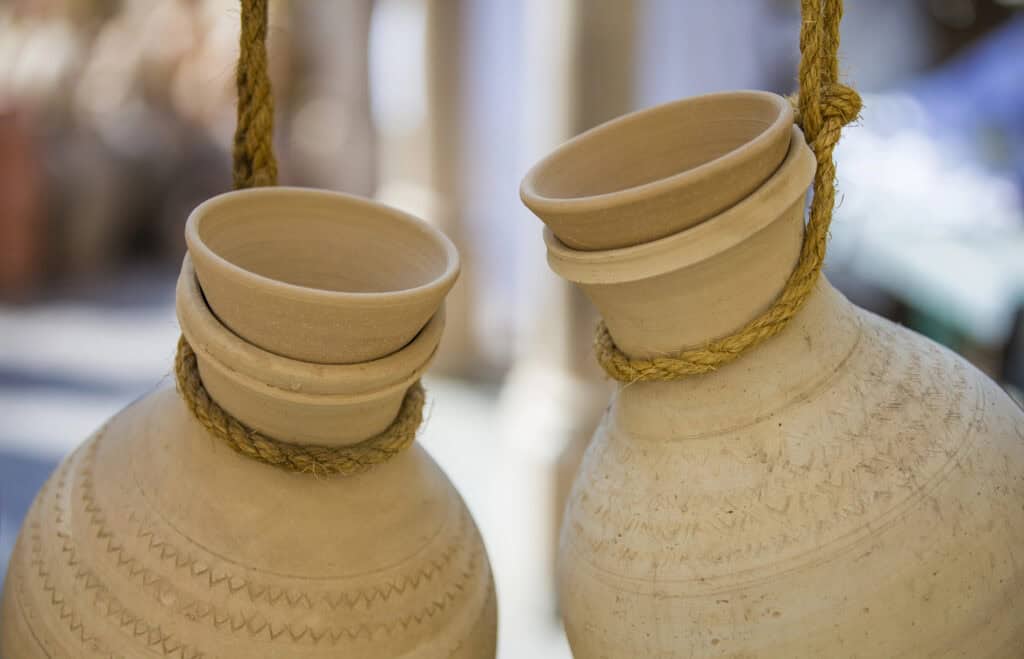
Traditional pottery in Nizwa
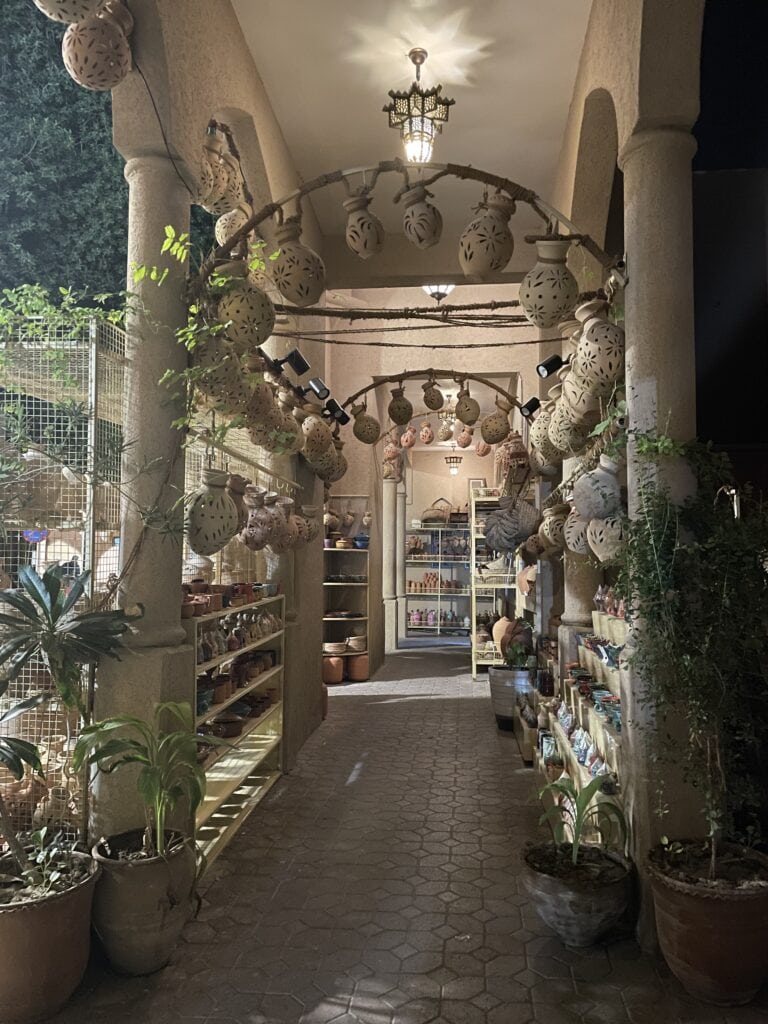
Early morning at Nizwa Souq pottery section, showing hanging clay lanterns, shelves of pottery, and soft shadows across the tiled walkway.
A distinctive part of Nizwa Souq: shelves of pottery, hanging lanterns, and shaded arches that guide you further inside.

Nizwa is also known for its beautiful pottery, displayed in colourful stacks near the souq’s outdoor stalls. While many pieces are now made in nearby towns, the heart of this craft lies in Bahla — Oman’s pottery capital and a UNESCO-listed heritage site. Stopping to admire (or buy) a pot in Nizwa is a lovely way to experience a tradition that stretches straight back to Bahla’s ancient kilns.

Pottery has been part of daily life in this region for centuries, shaping everything from cooking to water storage and ceremonial use. In Bahla, families passed the craft down through generations, working with the area’s rich clay and firing pieces in traditional kilns fueled by date-palm wood. The designs you see today in Nizwa — incense burners, water jars, decorative bowls, and sturdy storage pots — still follow many of those old forms. Even as production has modernised, the shapes, colours, and textures carry the same quiet elegance that has defined Omani pottery for generations.

You can learn more about this craft – and the town – in my detailed guide to Bahla.

Third itinerary around Nizwa: Experience Nature & Surroundings

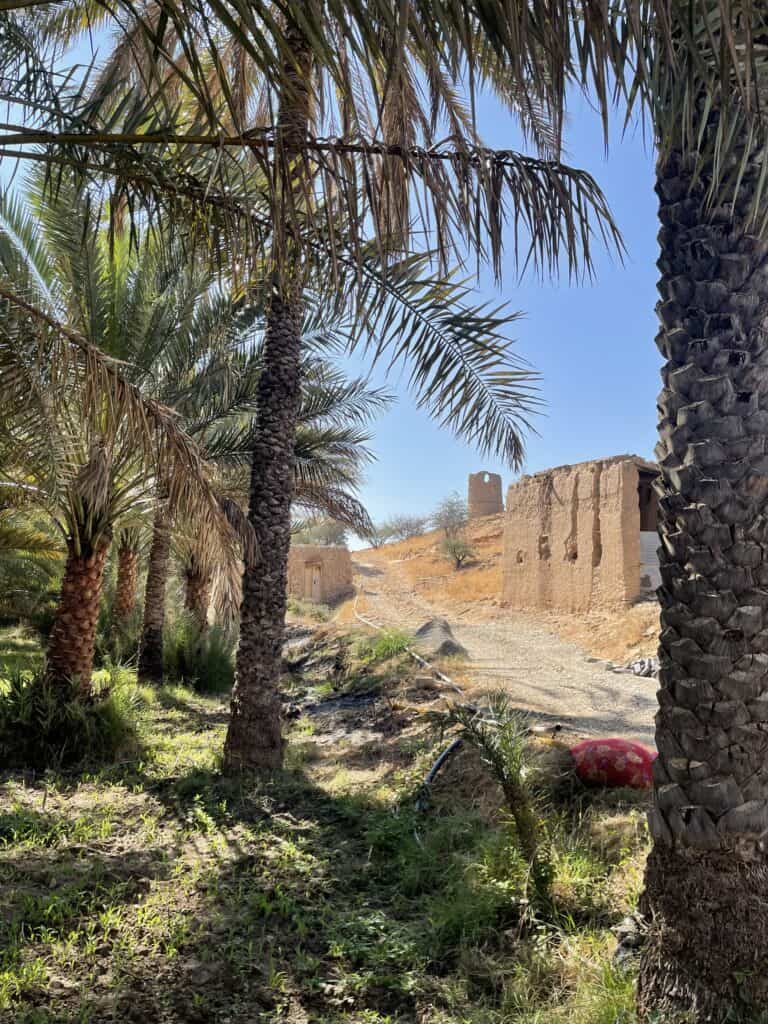
A sunlit path in Birkat al Mouz lined with date palms, leading towards old mud-brick houses and a watchtower on a small hill.
Birkat al Mouz — one of my favourite places for a quiet morning walk among date palms and old mud-brick houses.
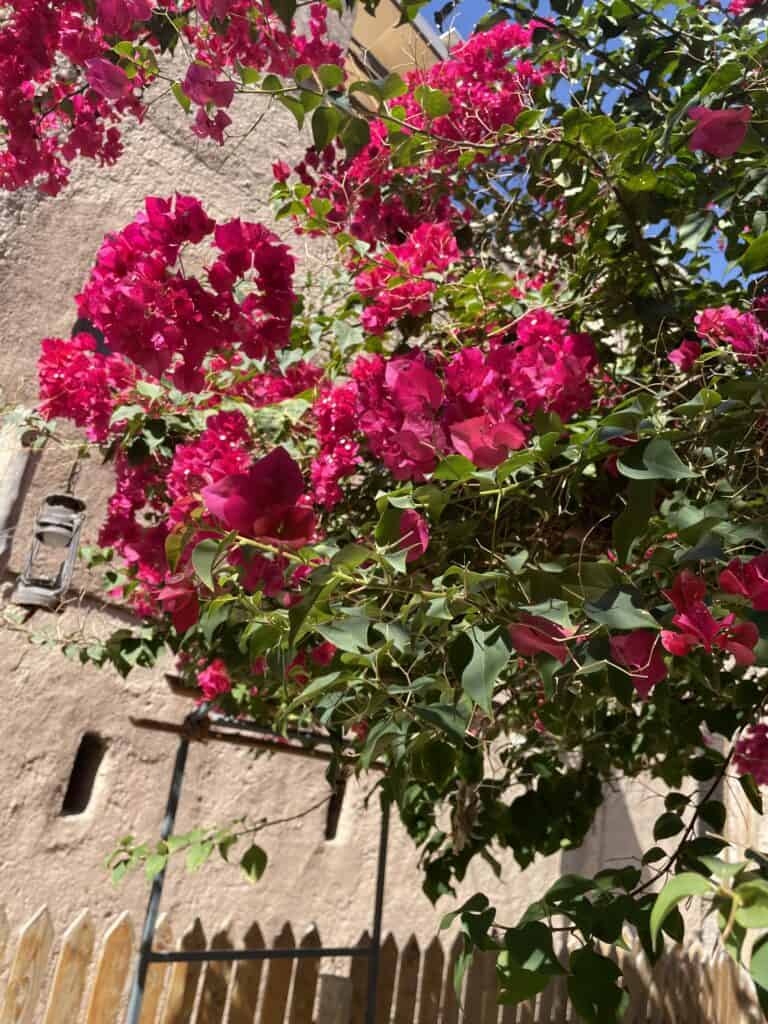
Bright pink bougainvillea blooming in front of a traditional mud-brick house in the Al Sibani neighbourhood of Birkat al Mouz.
Bougainvillea brightening a quiet corner of Al Sibani

If you love mountain views, old villages, and quiet walks between palm trees, this itinerary will take you into the natural beauty around Nizwa.

Main steps in the Third itinerary

1. Birkat al Mouz

Walk through the date-palm gardens and Harat Al Sibani (old mud-brick village). See the falaj channels flowing through the gardens. See my step-by-step guide on Birkat al Mouz for more information.

2. Tanuf Ruins (20-30 minutes)

A short, atmospheric stop on the way to Al Hamra.
Beautiful mountain backdrop, easy to access, and won’t take much time.

3. Lunch in Al Hamra

Al Hamra is perfect for a relaxed, local-feeling lunch. Recommended restaurant: Reem Al Yamen Restaurant (simple, local, reliable).

4. Misfat al Abriyeen (2-3 hours)

Wander the stone lanes and sit by the terraces. You can also follow a section of the falaj, Oman’s traditional irrigation system.

5. Coffee with a View in Misfat (30 minutes)

End your day peacefully with a specialty coffee and a glorious view at Bun Al Hisn Cafe

Misfat al Abriyeen: A Mountain Oasis of Old Stone Paths and Palm Terraces

Aerial view of Misfat al Abriyeen, a traditional Omani mountain village built from stone and surrounded by dense date palm gardens.
Misfat al Abriyeen glowing in the late-afternoon light — a place I’ve visited countless times and still find breathtaking every single visit.
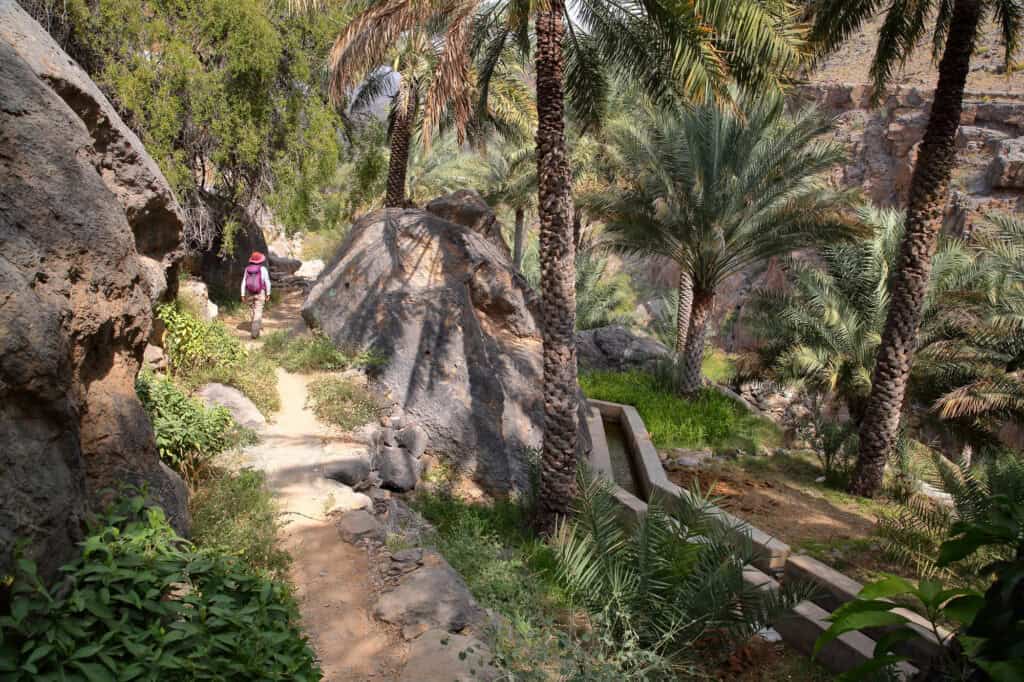
walking along a rocky mountain path lined with palm trees and a falaj water channel in Misfat al Abriyeen, Oman.

Misfat al Abriyeen is one of those places I never tire of. I’ve been there dozens of times, yet every visit feels a little different — wandering between the stone houses, listening to the sound of water moving through the falaj, and the soothing energy of the terraced gardens.

There’s something deeply grounding about this small village. It holds so much character, and it’s one of my favourite places to bring visitors who want to feel a more intimate side of Oman.

Fourth Itinerary in Nizwa: Experience a Family-Friendly Day

If you’re travelling with children or enjoy hands-on experiences, this itinerary offers a fun and relaxed family-friendly day around Nizwa.

Main steps in the Fourth itinerary

1. Morning at the Oman Across the Ages Museum

Begin your day with a short drive to Manah (about 25 minutes from Nizwa) to visit the Oman Across the Ages Museum — one of the most interactive and impressive museums in the country. Kids can touch, explore, press buttons, move objects, and learn through immersive exhibits.
Plan to spend 2–3 hours here.

2. Lunch at the Museum Cafe

The museum café is modern, spacious, and convenient, making it perfect for families. Grab lunch here before heading back to Nizwa.

3. Afternoon Swim at Nizwa Sports Complex

Return to Nizwa for a refreshing break at the Nizwa Sports Complex swimming pool. It’s clean, affordable, and ideal for kids who need to cool off after a stimulating morning. A simple, relaxed activity that families really appreciate.

4. Early Evening Treat at a Family-Friendly Cafe

End the day with something sweet or a fresh juice at one of Nizwa’s family-friendly cafés — either at Nizwa Grand Mall or in the town centre. It’s the perfect low-key way to wind down and enjoy the evening.

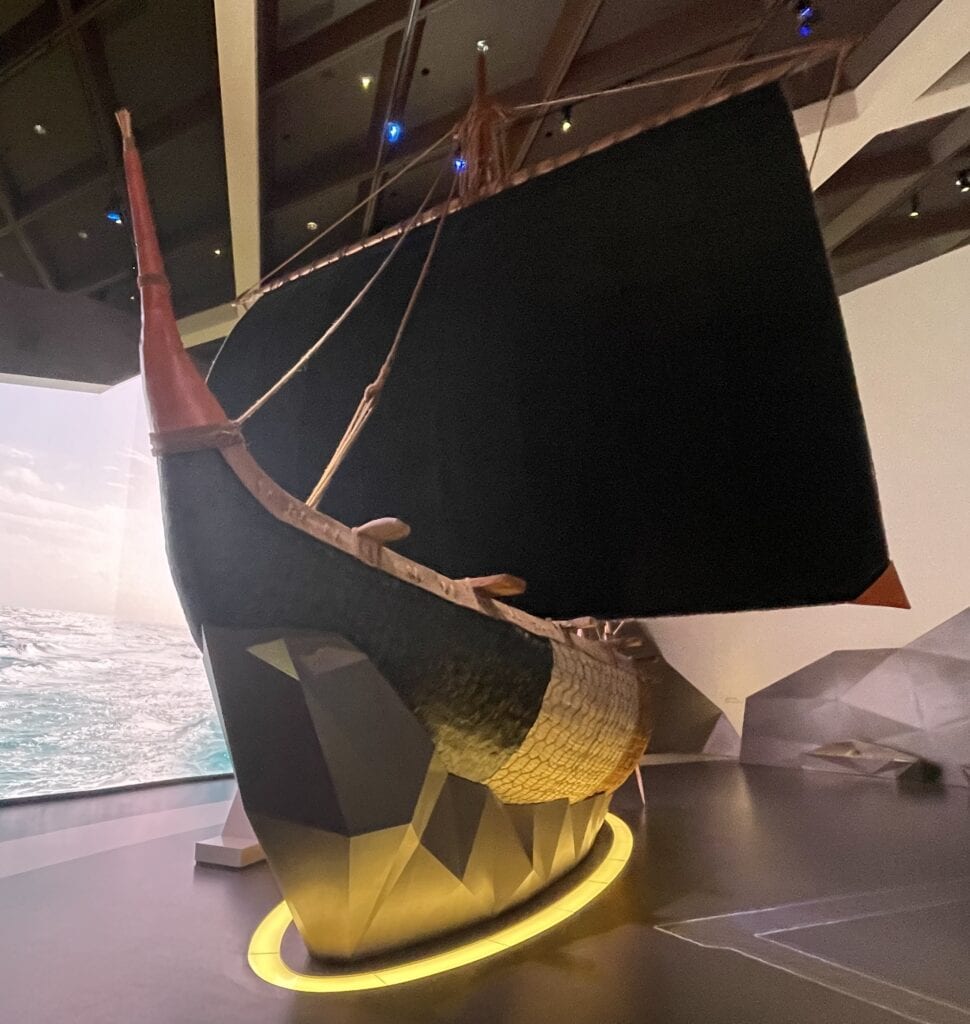
Reconstruction of the Magan Boat in the Oman across Ages Museum.
The lifesize reconstruction of the Magan Boat in the Oman across the Ages Museum is a remarkable tribute to Oman's ancient maritime heritage.

Whichever itinerary you choose, I hope your day in Nizwa leaves you with the same sense of connection and curiosity that kept me exploring this city long after I first arrived.

WELCOME to JOUSSOUR to OMAN!

Hi! I’m Christine, a Franco-British writer and watercolourist living in Oman for the past four years. I share my first-hand experiences to help independent travellers plan an immersive and authentic trip to Oman.

Search the blog
Popular posts
Coming soon

Discover Your Unique Cultural Travel PERSONALITY

Take this quiz to get insight into which of the 12 cultural traveller archetypes you are.

Have you been to Nizwa? I’d love to hear what part of the city stayed with you most — share it in the comments.

Frequently asked questions about Nizwa

What is Nizwa known for?

Nizwa is known for its impressive 17th-century fort, its traditional souq, and its vibrant Friday Goat Market. It’s also famous for its silver craftsmanship, nearby date-palm villages, and its long history as a former capital of Oman.

How many days are ideal for a visit?

You can see Nizwa’s main highlights in one full day, but spending 2–3 days is ideal if you want to explore the nearby villages, forts, mountains, and palm-grove walks at a relaxed pace.

What is the best time to visit Nizwa?

The best time to visit Nizwa is from November to April, when the weather is cooler and drier than in Muscat. Winters can be crisp, summers are very hot, and although rain is rare, it can be heavy when it comes.

What are the timings for the Nizwa Fort and Souk?

Nizwa Fort:
Daily: 8:00 a.m. – 6:00 p.m.
Fridays: 8:00 a.m. – 11:30 a.m., then 1:30 p.m. – 6:00 p.m.

Nizwa Souq:
Open daily from early morning until around 10:00 p.m.
Most shops close after lunch and reopen around 4:00 p.m.
The souq is livelier in the mornings, especially on Fridays.

Do women need to cover their heads in Nizwa?

No, foreign women do not need to cover their heads in Nizwa.
Most travellers simply dress modestly — covering shoulders, chest, and knees — especially when visiting the fort, souq, or older neighbourhoods. A headscarf is only required if you plan to enter a mosque.

Picture of Hello! I'm Christine

Hello! I'm Christine

I live in Oman, care deeply about cultural understanding, and help independent travellers plan more meaningful journeys — and capture them with creativity.

Share it

One Response

Leave a Reply

Your email address will not be published. Required fields are marked *

This site uses Akismet to reduce spam. Learn how your comment data is processed.

Recommended Reads