BestThings to Do in Sur, Oman: A Cultural Guide for Independent Travellers

31st January 2026

Sur is like a little gem glittering on the coast of Oman. It is the maritime soul of the Sultanate.

In this guide, I walk you through the most captivating things to do in Sur, Oman, for independent travellers — from traditional dhow building and local food to small, everyday moments along the corniche and in Al Ayjah village — drawing on local insight and first-hand experience of the town’s maritime heritage.

Sur features as a key stop in my 7-day Oman itinerary which I’ve developed and refined through living in Oman and travelling around extensively. Rather than a checklist of sights, this guide focuses on cultural experiences that help you understand how Sur lives and works today, making it an ideal stop for travellers who enjoy observation, conversation, and creative travel.

Why Visit Sur

Table of Contents

If you’re short on time, these quick answers give you an overview before diving into the details below.

Quick answers for visiting Sur, Oman

Is Sur worth visiting?

If you enjoy the sea, maritime history, and you’re curious to discover everyday-life in a traditional fishing village in Oman, Sur is well worth a visit. Its dhow shipyards, seaside walks, and proximity to turtle nesting beaches give it a unique character.

What are the best things to do in Sur Oman?

The best things to do in Sur Oman include visiting the dhow shipyards, exploring Sur’s old town and forts, walking along the corniche and lighthouse, and taking a guided turtle-watching tour at Ras al Jinz.

How long should I spend in Sur?

Most visitors spend 1–2 days in Sur to explore the city and visit Ras al Jinz. You can fit in a visit of Wadi Shab and the Bimmah sinkhole either on your way to or back to Muscat.

How do you get to Sur?

Sur is around a 2 to 2.5-hour drive from Muscat via the coastal road. It’s easiest to reach by car and fits naturally into a road trip through eastern Oman.

Where is Sur in Oman?

Sur is in Al Sharqiyah region and sits around a two-hour drive southeast of Muscat, along a beautiful coastal route where the sea stays in view and Oman begins to feel shaped by salt, boats, and the Gulf of Oman.

Why Visit Sur?

Sur is small but I think it’s a beautiful stop on Oman’s sun-drenched coast. It’s a world away from the bustle of Muscat, and shows Oman’s diversity!

I’d recommend you take a walk along the Corniche with its stunning turquoise sea, taste fish so fresh it was swimming hours ago, and get lost in Al Ayjah, the cosy fishing village where whitewashed houses huddle around a lighthouse, a watchtower, and a small castle.

Then, step into the legendary dhow factory — the only one of its kind in Oman — and watch artisans build Oman’s traditional wooden boats by hand, a craft that refuses to be shelved in a museum.

The beach in Al Ayjah, where daily life still revolves around fishing and the sea.

TOP THINGS TO DO in SUR

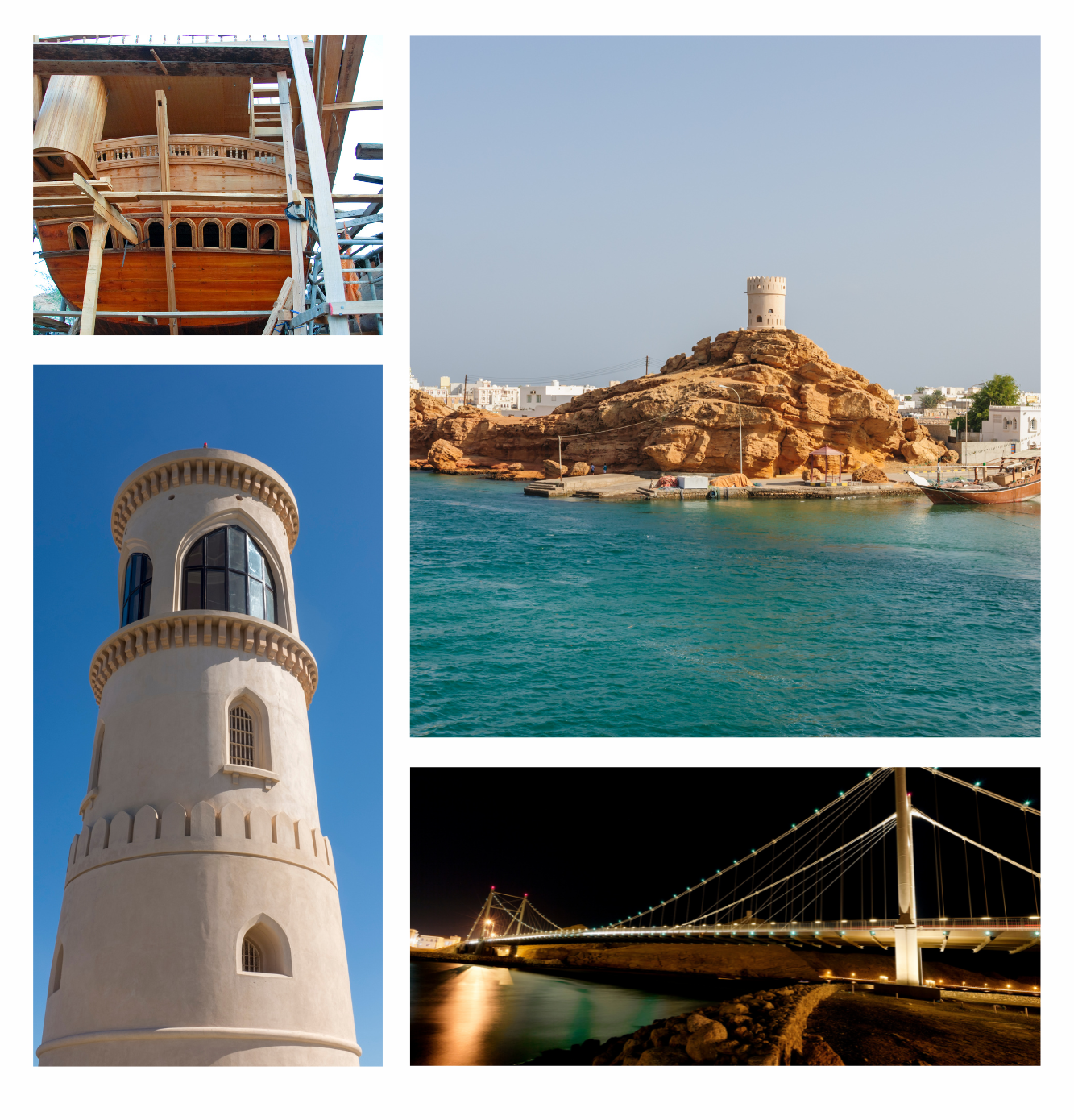
A collage showcasing the best things to do in Sur, Oman, including a traditional dhow under construction, a historic watchtower overlooking the sea, a modern lighthouse, and an illuminated cable-stayed bridge at night.

Try Lola Bread at al HaWash Restaurant

Lola bread served in a restaurant
There is nothing quite like the first bite of warm Lola bread. Soft, slightly sweet, and freshly fried, it’s the ultimate Omani comfort food.
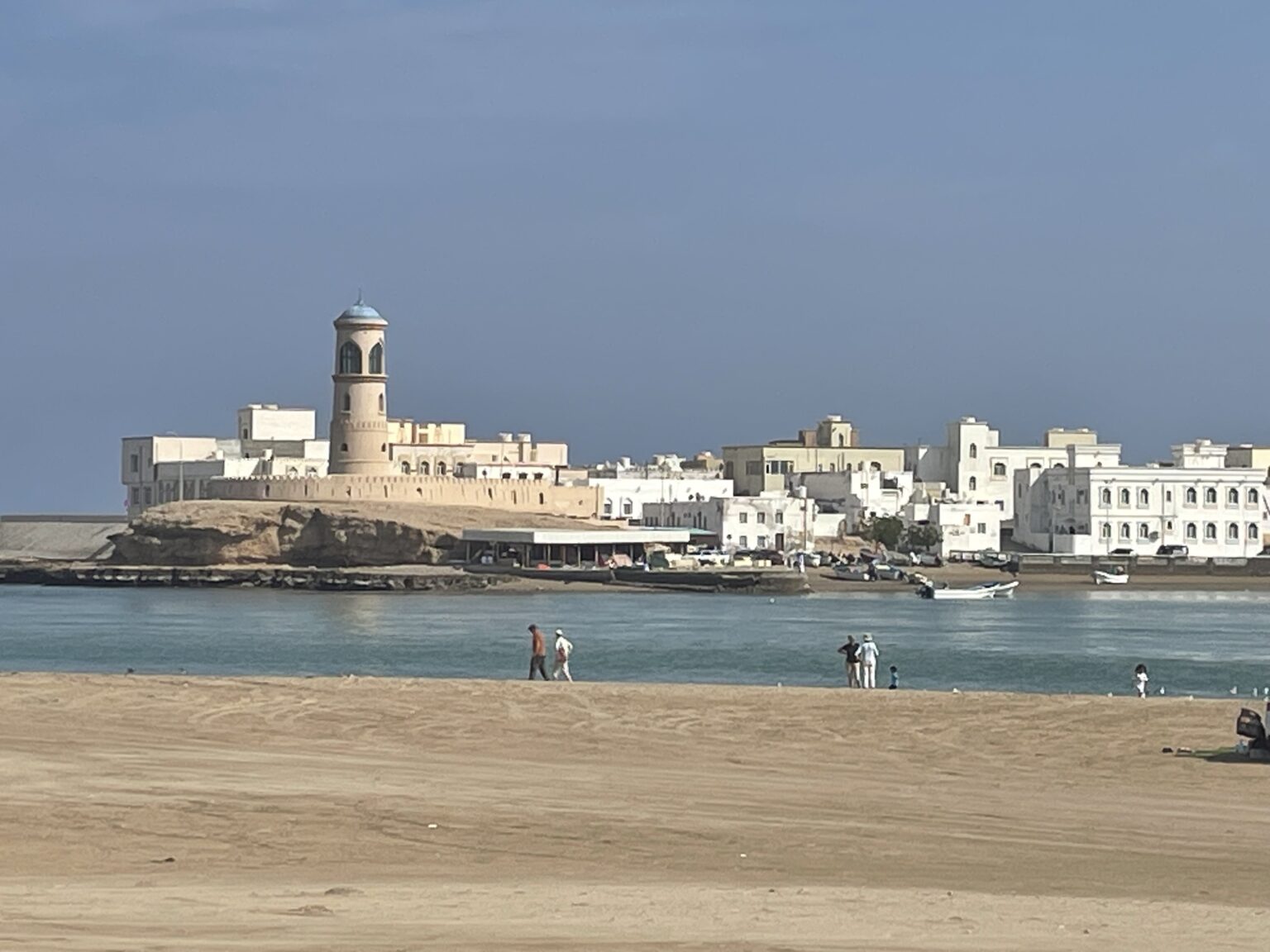
A scenic wide shot from a sandy beach in Sur, Oman, looking across the turquoise water of the inlet toward the Al Ayjah district.
The view from Al Hawash is just as nourishing as the food. A perfect place to soak in the atmosphere of Oman’s most famous seafaring town.

The first time I tasted Lola bread (with honey), I thought I was in heaven! It really is a perfect way to start your day in Sur. Al Hawash restaurant is right next to the beach, on the Corniche, and will offer you a beautiful view on the sea and Al Ayjah lighthouse. You can either have black tea or a coffee to go with it all.

You can enjoy a walk along the Corniche before or after breakfast.

Visit Sur Maritime Museum

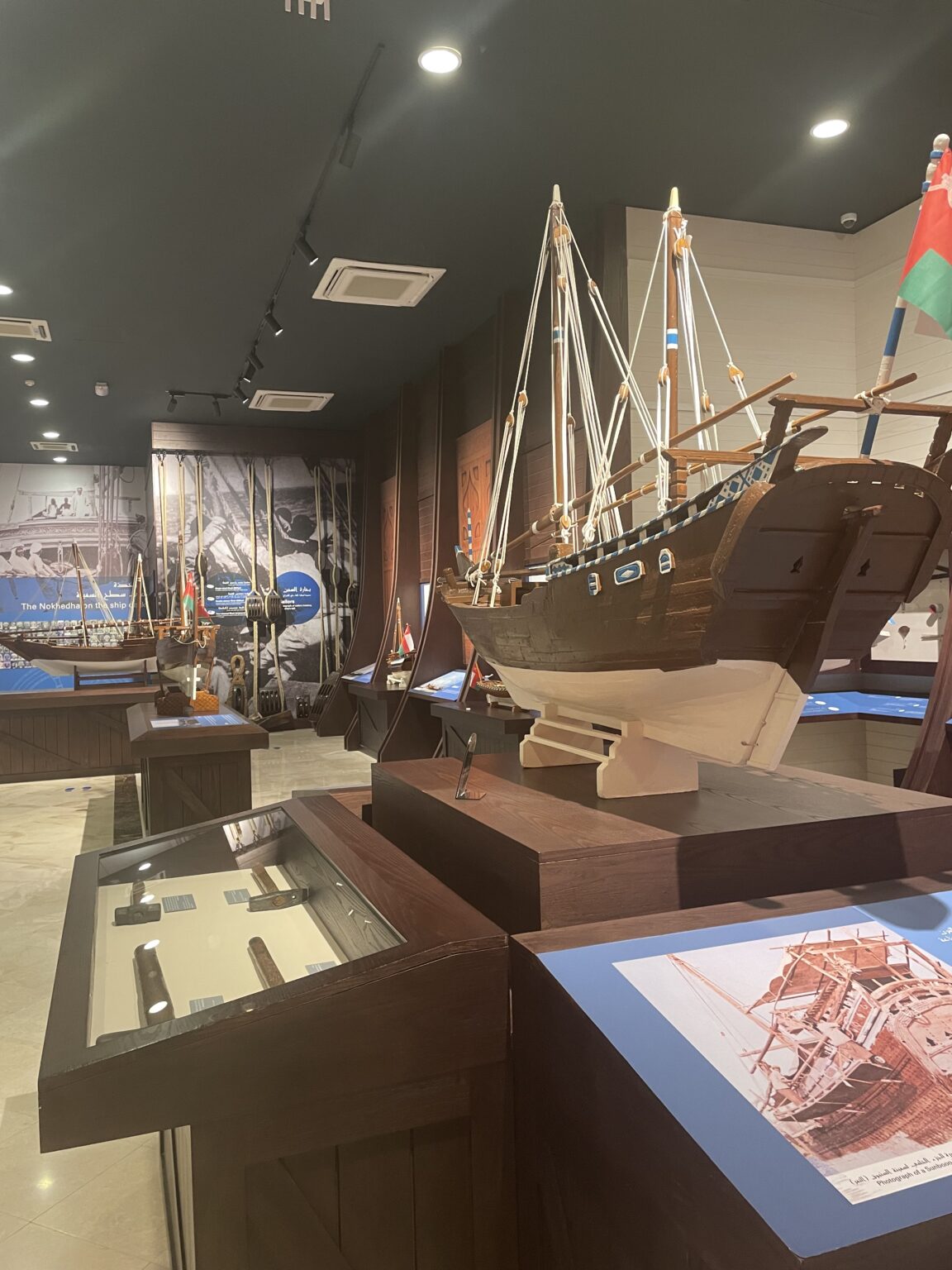
An interior view of the Sur Maritime Museum showcasing a large, detailed wooden model of a traditional Omani dhow with intricate rigging.
These meticulously crafted models tell the story of a town that didn't just build ships, but built a legacy that reached across oceans.

My post-breakfast mission in Sur? Sur Maritime Museum. Seeing the photograhs of the faces of captains and sailors and a real dhow in the courtyard made the town’s rich history feel incredibly personal and alive.

If you want to truly connect with Sur, I wholeheartedly recommend kicking off your exploration here. This museum isn’t just a collection of artifacts; it’s your essential backstory, giving you the fascinating context you need to truly appreciate Sur’s ancient trading links across the Indian Ocean.

Marvel at Sur’s Traditional Dhow Shipbuilding Factory

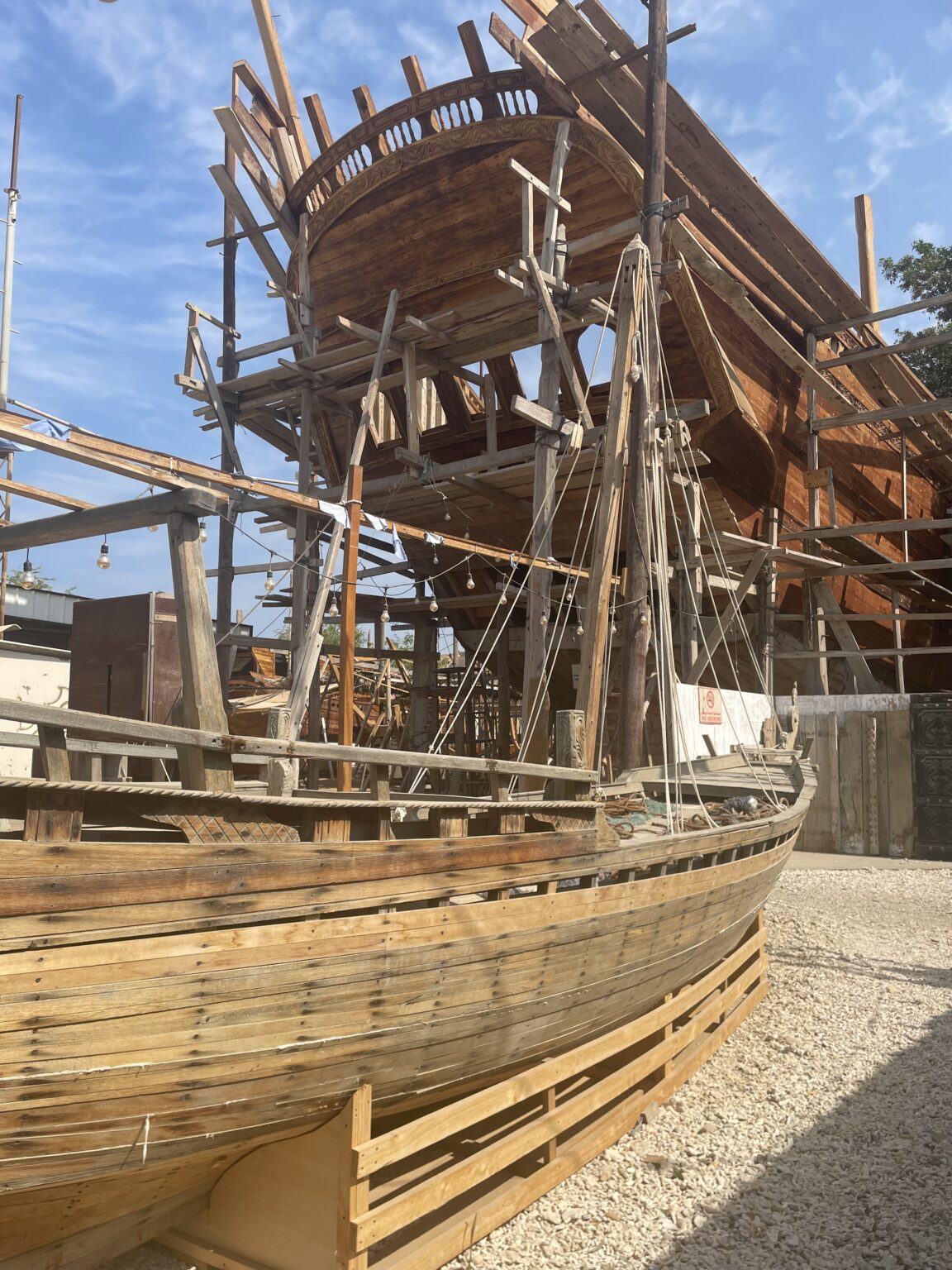
A dhow being built in the Dhow factory in Sur
Dhows at Sur’s dhow factory are still built largely without blueprints, shaped by eye and experience using techniques passed down through generations.
SurFactory2
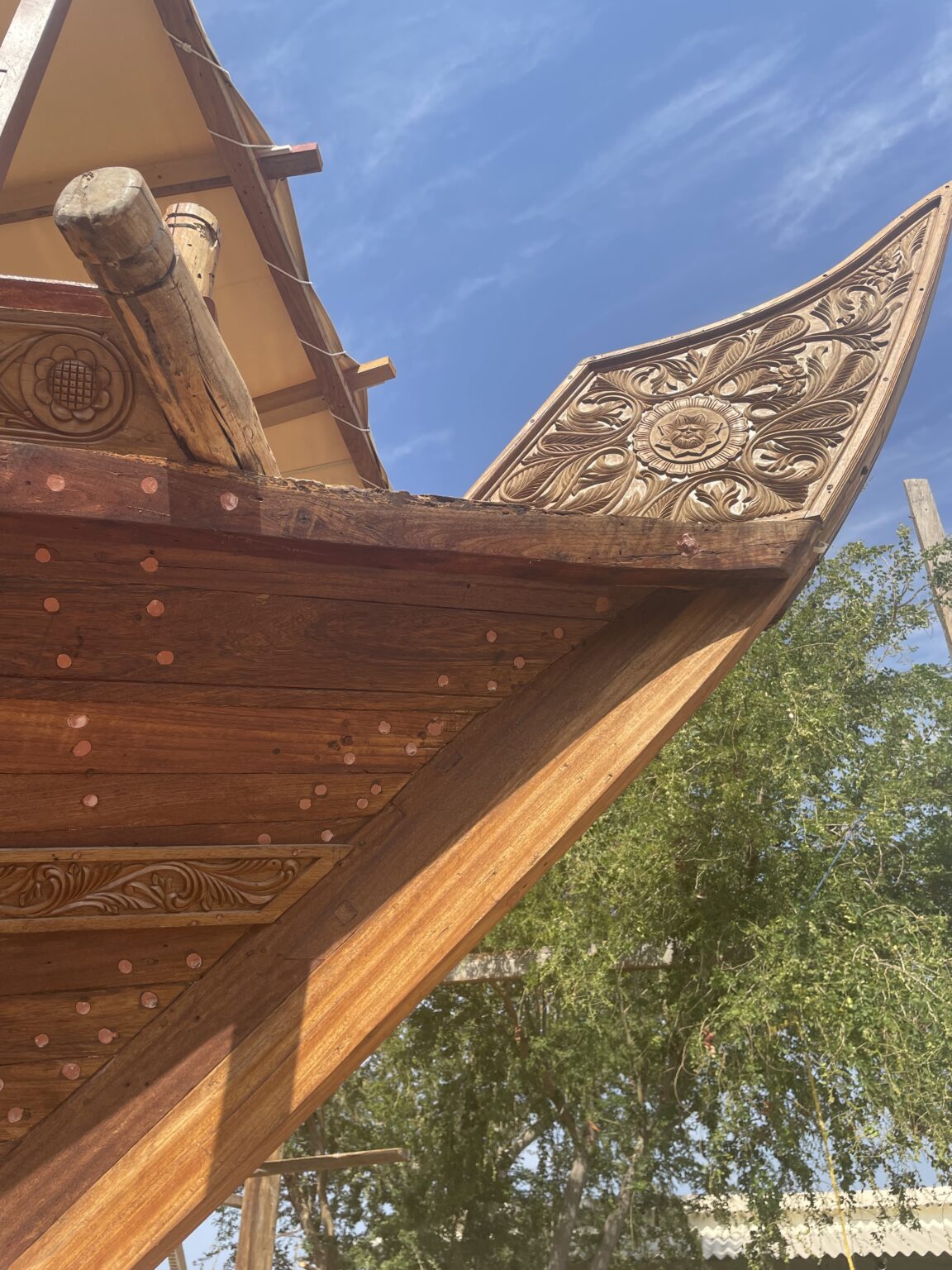
The carved prow of a dhow in Sur, where function and decoration meet in hand-built boats.

Before visiting the dhow factory, you may be wondering, ‘What actually is a Dhow?’ These are traditional wooden boats that have been used across the Gulf, the Red Sea, and the Indian Ocean for centuries — for fishing, trading, and even pearl diving. In Sur, they’re not museum pieces. They’re still being built in exactly the same way as in past centuries.

When I visited Sur Dhow Factory, was one of those moments where everything suddenly made sense. Standing next to a dhow as it slowly takes shape, I was struck by how little depends on drawings and how much comes down to experience. The builders work by eye, shaping planks by hand, adjusting as they go, and reading the boat as it grows. It’s practical, skilled work — and very impressive to watch.

You’ll find the dhow factory just south of the western end of the Khor Al Batah suspension bridge.
A little note about the dhow shipyards

Sur’s dhow shipyards are not a museum — they are working spaces where wooden boats are still built by hand, often out in the open, within sight of the sea.

They offer one of the most direct ways to experience the city’s maritime heritage.

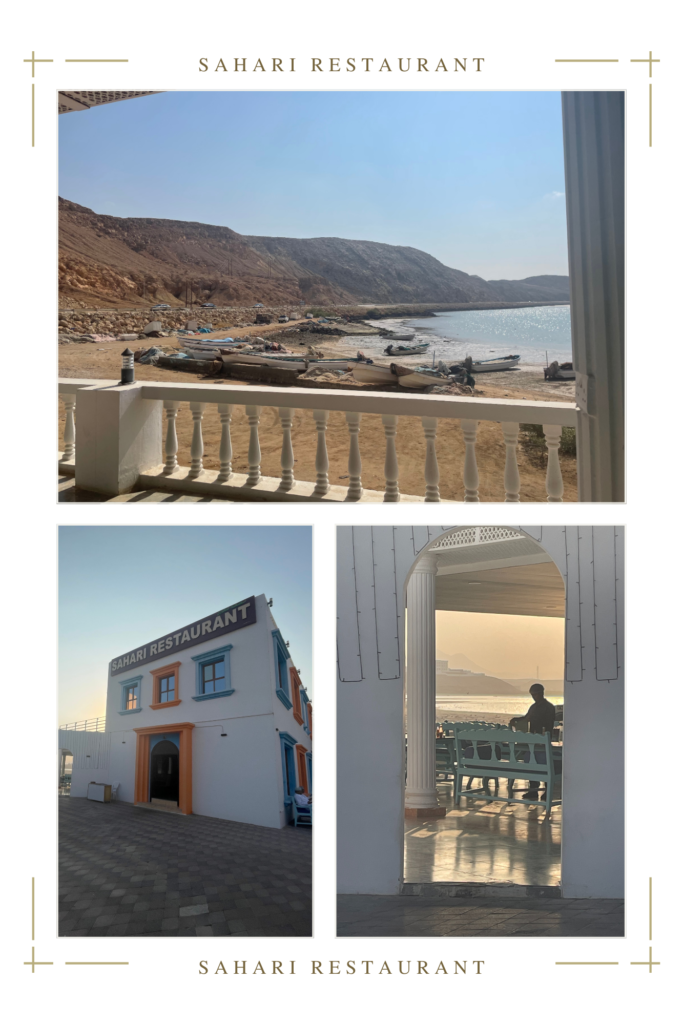
Enjoy Fresh fish at Sahari Restaurant

Sahari Restaurant

Eating at Sahari Restaurant is one of the easiest ways to enjoy Sur at its best. I had beautifully grilled fish here with a fresh salad, and it was exactly what I needed after a morning by the sea.

Portions are generous, so come hungry, and take your time — this is very much a place to linger. You can also smoke shisha here (by the way, in Arabic, people say to drink shisha, which I’ve always found interesting). The restaurant offers beautiful views over the bay. It’s comfortable and well located.

Explore Al Ayjah, Sur’s Historic Fishing Quarter and Lighthouse

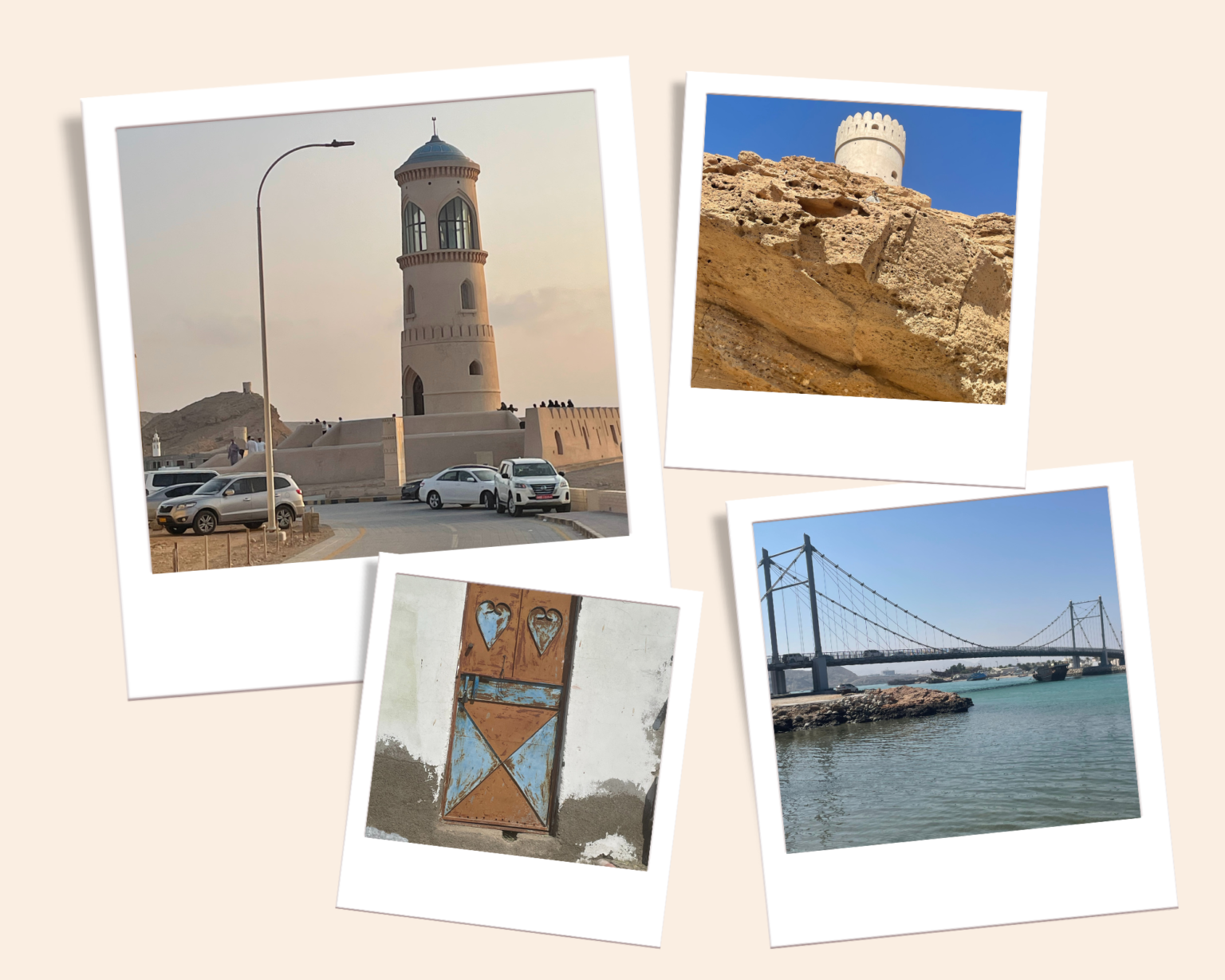
A collage of photographs taken in Al Ayjah, Sur: Ayjah lighthouse, a beautiful door, the watchtower and the bridge.
From Al Ayjah’s lighthouse and hand-painted doors to the main bridge crossing the bay — moments that shape Sur.

Walking around Al Ayjah is one of those experiences where you don’t need a plan — you just follow the lanes along the water and see what catches your eye. I passed small houses with painted doors, fishing boats pulled up close to shore, and people going about their day, with the sea always just a few steps away. The walk naturally draws you towards the lighthouse, which sits right at the edge of the village (based in a place called ‘Ras Almeel‘) and opens up wide views over the bay and the bridge crossing the water. Standing there, it’s easy to understand how much Al Ayjah is shaped by fishing, movement, and life connected to the sea.

Best Day Trips from Sur, Oman: Nearby Nature, Villages & Coastal Stop

Wadi Shab – Hiking, Swimming & Canyon Scenery Near Sur

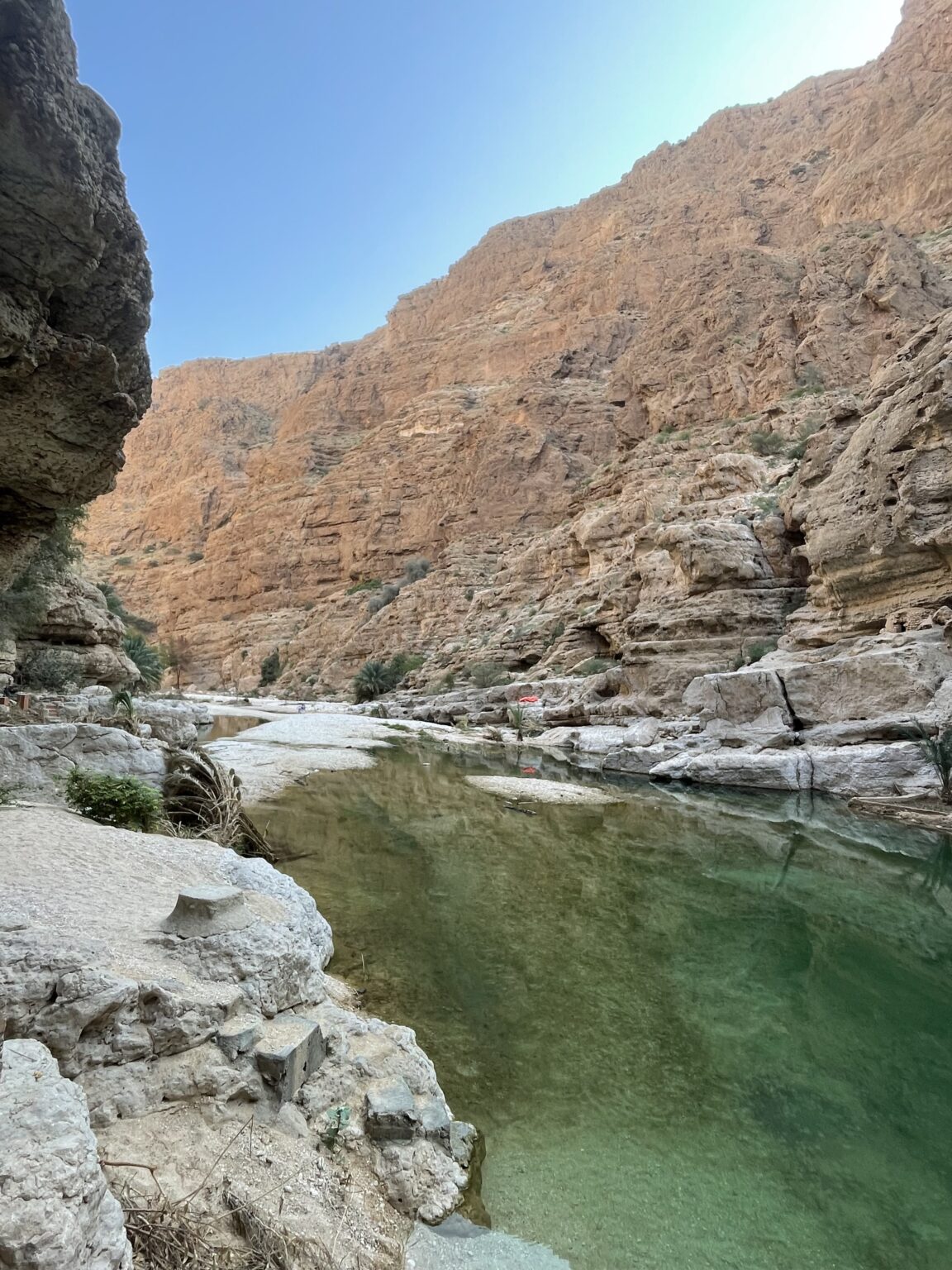
Emerald pools and towering canyon walls at Wadi Shab, Oman, with crystal-clear water reflecting the dramatic landscape
This is what awaits you at Wadi Shab—pristine emerald pools nestled between towering canyon walls.

Distance from Sur

45 minutes by car (approximately 60 km north).

Wadi Shab is one of those places I keep returning to – both with visiting friends and people who live here. 

Wadi Shab is a stunning place! The wadi winds between high cliffs in a series of natural pools, with colours shifting from deep jade to bright turquoise depending on the light. It includes three pools leading to a narrow cave passage.

The experience begins with a short boat ride across the river (around 1 OMR per person, return), which brings you to the trailhead. From there, the hike is gentle and accessible for most people.

Swimming in the pools is very much part of the experience and incredibly refreshing. I usually recommend bringing water shoes or sandals with good grip, a change of clothes, and plenty of water. If you swim, dress conservatively out of respect for local customs — something lightweight you can move in works best.

Practical tips: The best time to visit is between October and March, when temperatures are comfortable for hiking. Arrive early, especially on weekends, as the car park fills quickly. Wadi Shab is at its best when you’re not sharing every pool with a crowd.

Bimmah Sinkhole - The “Sinkhole of the Star” Near Sur

Sink hole in Oman
You can walk down to the Bimmah Sinkhole and dip your feet in it for a refreshing break.

Distance from Sur

Around 1 hour’s drive by car (approximately 80 km north)

I first stumbled on Hawiyat Najm — “the Sinkhole of the Star” — on a road trip down to Sur. It’s a dramatic natural crater in the limestone, just a few minutes’ walk from the parking area, and its colour looks unreal – as you can see on the photograph – against the rugged desert backdrop.

I love the legend that is connected with it! It states that this deep hole was formed when a meteorite fell from the sky, which is why locals call it Hawiyat Najm — “the deep well of the (falling) star.” Geologically it formed from limestone erosion, but the story adds an almost mythic quality when you’re looking at it.

There’s a sturdy stairway down to water level, toilets in the park, and plenty of space for a break before or after Wadi Shab.

Swimming here is wonderfully refreshing or you can just dip your feet in and opt for a free fish pedicure! But it’s worth keeping a few things in mind. The sinkhole gets busier on weekends, so I’ve found early visits are quieter and more peaceful. Bring water shoes if you plan to wade in, and, as mentioned before, it’s best to respect local customs by choosing modest swimwear if there are families and locals around.

Ras Al Jinz Turtle Reserve – Turtle Nesting & Coastal Conservation Near Sur

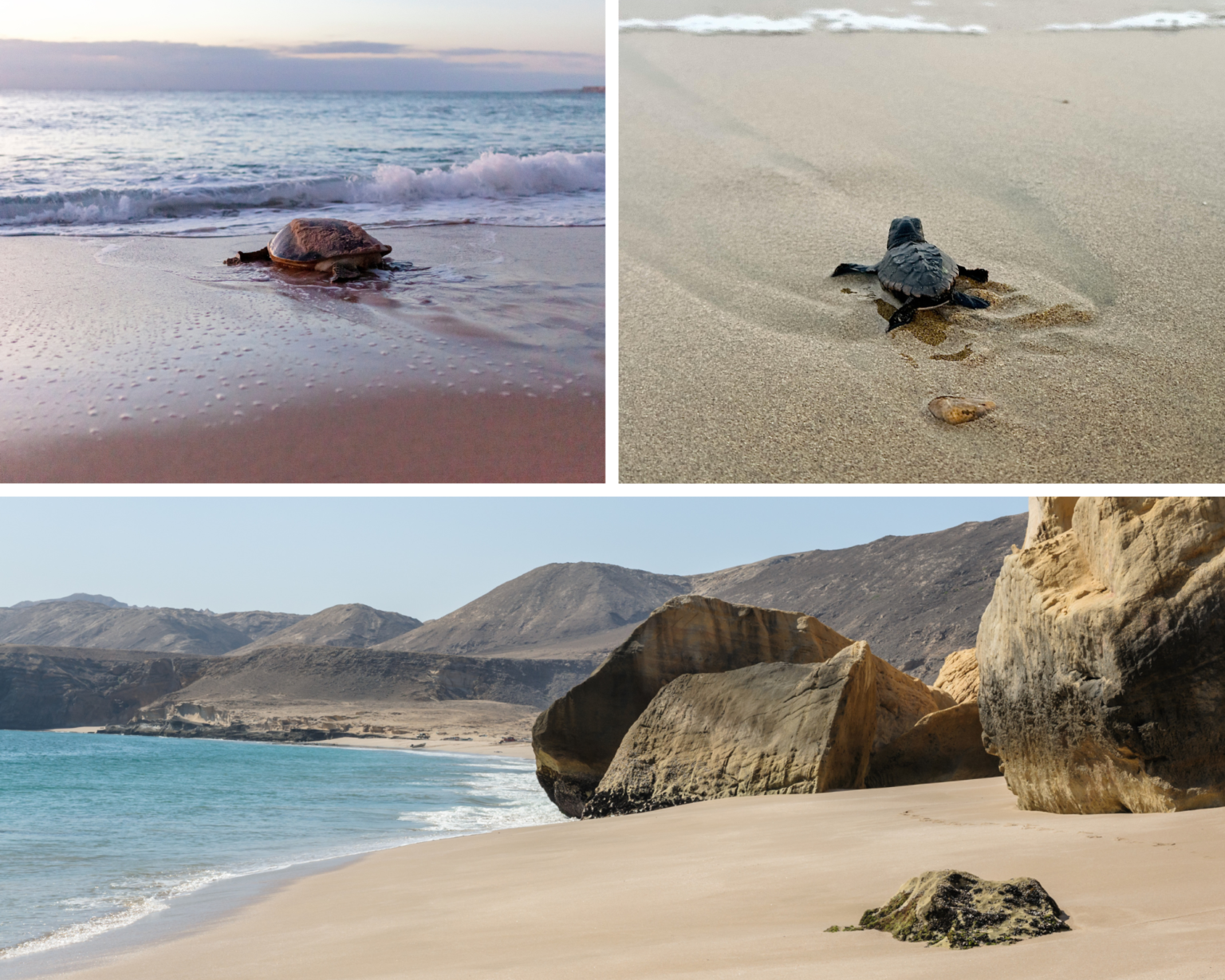
Sea turtle and hatchling on the beach at Ras Al Jinz Turtle Reserve, with rugged coastline and rocky cliffs along Oman’s eastern shore.
Watching sea turtles at Ras Al Jinz helps to understand why this stretch of coast matters so deeply.

Distance from Sur

Around 40 to 45 minutes’ drive by car (45 km)

I visited Ras Al Jinz once in August, right in the middle of the turtle nesting season, and it’s a very different experience from simply turning up at a beach. Turtle visits here are strictly organised and protected, which is exactly why this place matters.

You need to book a time slot in advance, either through the turtle reserve or your accommodation, and visits are carried out in small groups accompanied by a guide. You’re asked to wait quietly until turtles are spotted, and movement, light and photography are carefully controlled.

Practical notes: 

  • Nesting season: Adult green turtles nest mainly between May and September.

  • Hatchling (baby turtle) season: Eggs usually hatch from August to October, with September often being one of the best months to see baby turtles making their way to the sea — though sightings are never guaranteed.

  • Ticket prices: Night or early-morning turtle-watching visits cost for tourist adults – 12 OMR per person (12 & above); tourist children – 6 OMR (6 to12 years old); tourist children – Free of charge (children 0 to 6 years old)

Some Practical Tips about Sur

The following tips will help you plan your own trip to Sur.

How to get to Sur

Getting to Sur by car

Getting to Sur is straightforward and works best if you’re travelling independently. Most people arrive by car from Muscat, which takes around two hours along a well-maintained coastal road that passes beaches, small villages, and rocky headlands. Renting a car gives you the most flexibility, especially if you plan to continue on towards Wahiba Sands or explore nearby coastal stops.

Distances to Sur

  • Muscat → Sur
    ≈ 200 km
    ⏱️ About 2.5–3 hours by car (via the coastal highway)

  • Nizwa → Sur
    ≈ 290 km
    ⏱️ About 4–4.5 hours by car (via Ibra)

  • Salalah → Sur
    ≈ 950 km
    ⏱️ About 11–12 hours by car

Getting to Sur by bus

If you’re travelling without a car, it is possible to reach Sur by public bus — just plan ahead.

The service is run by Mwasalat, Oman’s official bus company. The bus to Sur leaves from Azaiba Bus Station in Muscat and usually runs once a day in the morning. The journey takes around five hours and goes inland via Ibra, so you won’t get the scenic coastal views — but it’s reliable and very affordable.

Tickets cost around 4–5 OMR, and it’s best to double-check times on the Mwasalat app or website before you go, as schedules can change. If flexibility or timing is important, renting a car is still the easier option — but for slow, independent travel, the bus works just fine.

Where to stay in Sur

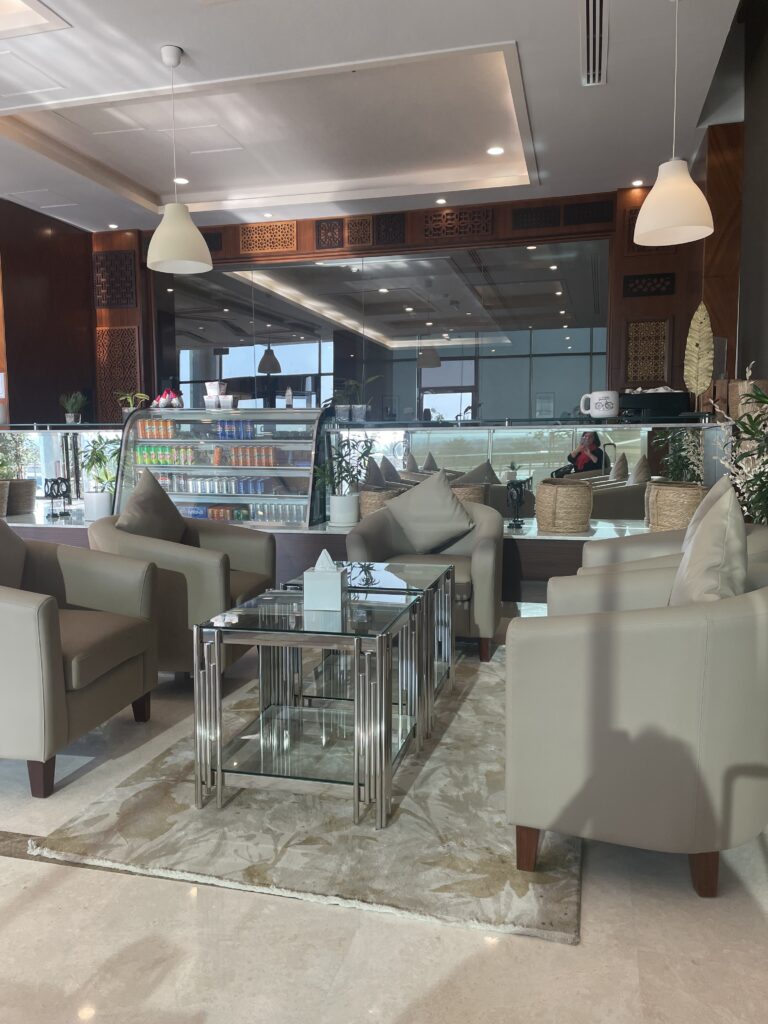
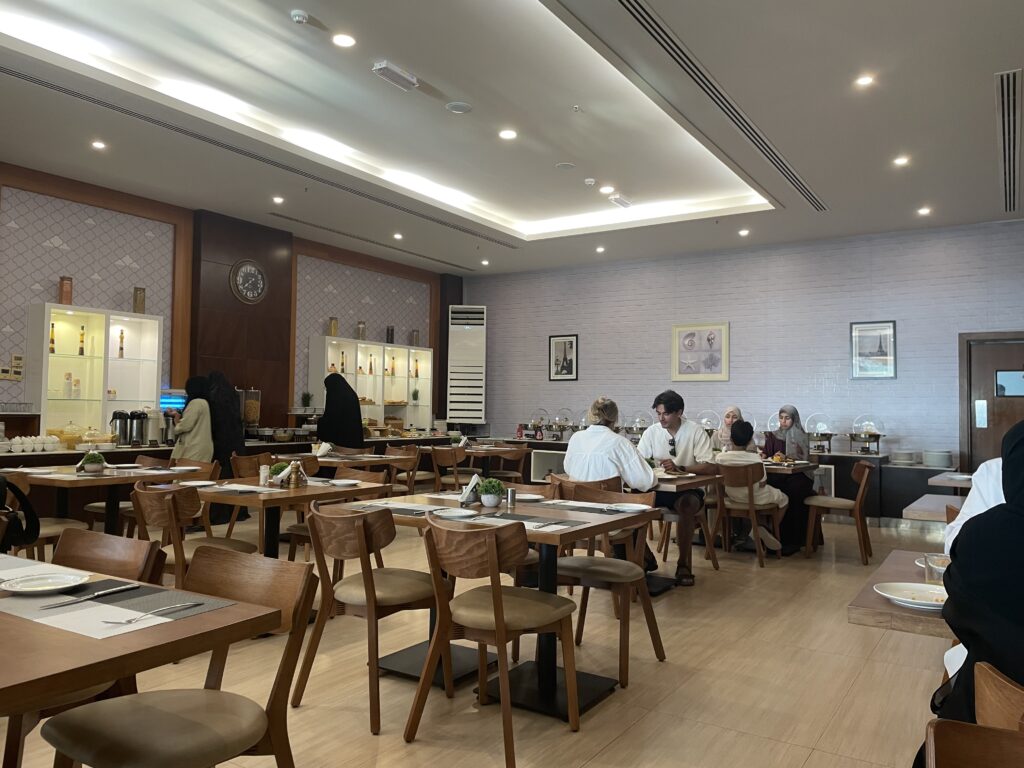
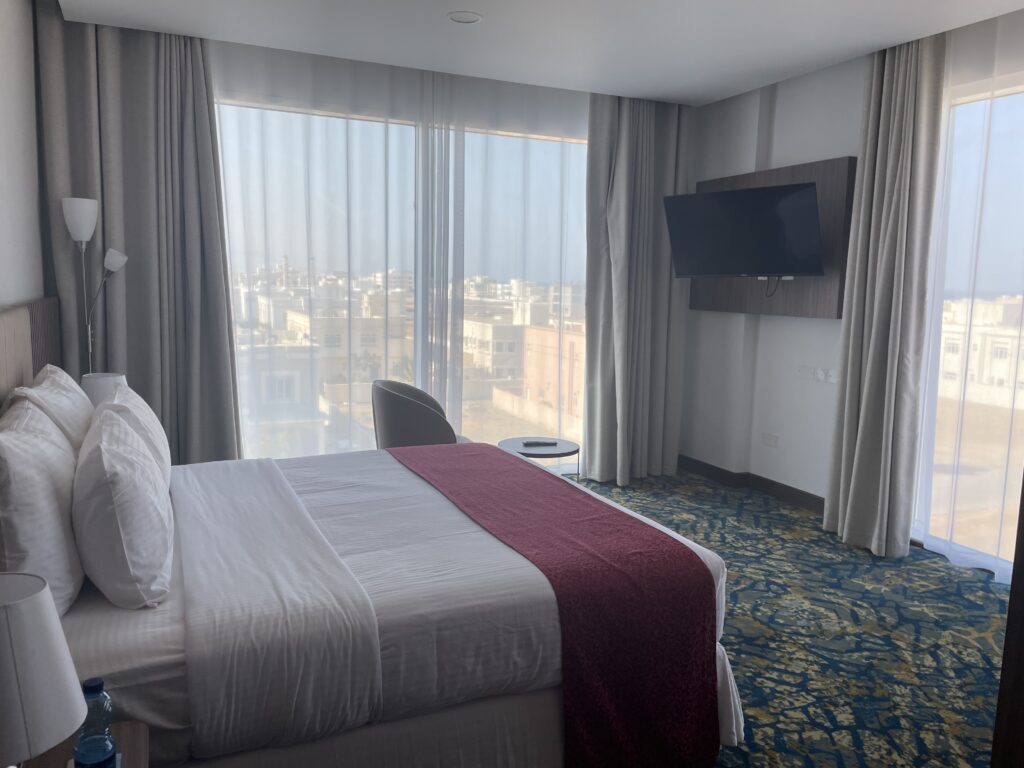
I would particularly recommend Sur Grand Hotel. Great service and spotless rooms – some of which have views on the sea.

Reception area at Sur Grand Hotel in Sur, Oman
SurGrand3
SurGrand

Some other places include: 

Mid-range hotels:

Budget Hotel:

Other places to eat and drink in Sur

Apart from the places mentioned above, other choices include:

  • Zaki restaurant. Based on local knowledge, this is a very popular place in Sur. Offers delicious curries and fresh juices.
  •  Sedrah Restaurant. Specialises in sea food and is located next to the sea.

A Few final words on Sur

Sur is the kind of place that stays with you because of how it feels.

It’s shaped by the sea, by craft, by food cooked simply and eaten with a view, and by neighbourhoods that are still lived in rather than staged.

Whether you’re watching a dhow take shape, walking through Al Ayjah, or sitting down to fresh fish by the bay, Sur will give you a unique experience that will help you to understand Oman’s special connection with the sea.

Frequently asked questions

Is Sur worth visiting in Oman?

Yes — Sur is absolutely worth visiting if you enjoy cultural travel that goes beyond the headline sights. Unlike some larger destinations in Oman, Sur still feels rooted in everyday life. This is a place where traditional dhow building continues by hand, where fishermen shape the rhythm of the corniche, and where meals revolve around fresh fish rather than polished dining concepts.

Sur is especially rewarding for independent travellers who like to slow down, observe, and connect small details into a fuller picture. Walking through Al Ayjah village, watching boats take shape in the shipyards, or sharing a simple meal by the sea offers a deeper understanding of Oman’s maritime heritage.

Late October to early April is the best time to visit Sur, when temperatures are comfortable for walking, coastal drives, and outdoor cultural experiences. For a detailed, month-by-month breakdown of weather, festivals, and cultural events across the country, see my guide Best Time to Visit Oman, which helps you time Sur within a wider Oman itinerary.

Sur is a great stop for families who enjoy hands-on cultural discovery and outdoor adventure. Children love watching wooden dhows take shape in the boatyards, spotting fishing boats along the corniche, and wandering through the lanes of Al Ayjah village. Nearby turtle-watching beaches, short boat trips, sandy shorelines for beach time, and sunset walks by the sea turn Sur into an engaging and memorable family experience.

Most travellers find that one full day or an overnight stay is ideal for visiting Sur. This gives you enough time to explore the dhow yards, walk along the corniche, visit Al Ayjah village, and enjoy fresh seafood by the sea. Staying overnight allows you to experience Sur at a gentler pace and catch early morning activity along the coast.

When visiting Sur, it’s best to dress modestly and comfortably, especially in public spaces and local neighbourhoods. Lightweight clothing that covers shoulders and knees works well for both adults and children. This isn’t about strict rules, but about blending in and showing respect for local life, particularly when walking through Al Ayjah village, along the corniche, or visiting markets.

Share it

Leave a Reply

Your email address will not be published. Required fields are marked *

This site uses Akismet to reduce spam. Learn how your comment data is processed.

Before you keep exploring… Hello! I'm Christine!

My obsession is helping independent travellers move beyond the surface to experience the Oman that happens beyond the guidebooks. I use my background in art and storytelling to give you the creative tools and roadmap you need to capture your journey. I’m thrilled to share this with you!

Recommended Reads