Updated: 22/03/2026

9 Ancient Arabic Beauty Rituals That Work Wonders Today

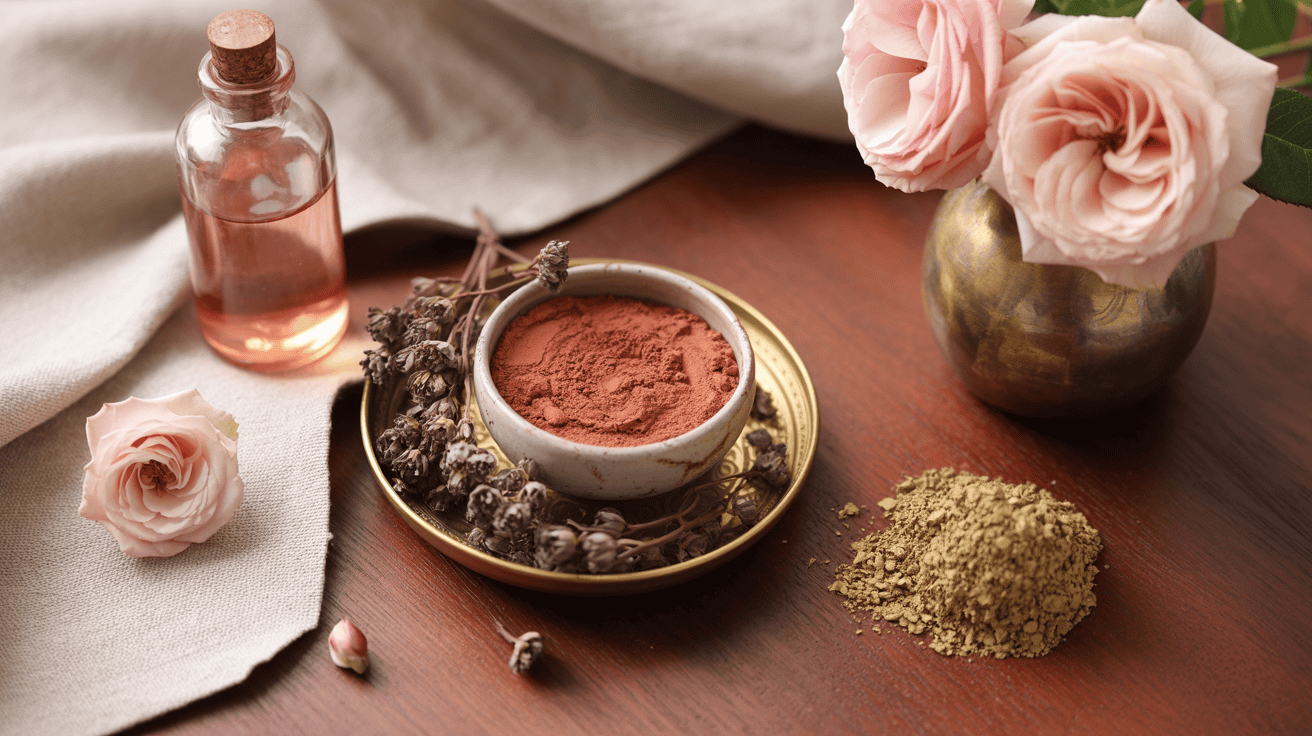
A feminine flat lay showing natural Arabic beauty ingredients including frankincense, rosewater, henna, and clay, styled with soft textiles and warm lighting. Represents traditional Middle Eastern skincare and ancient Arabic beauty rituals using natural ingredients.

Looking for traditional Arabic beauty secrets that use simple ingredients to improve your skin and hair – and smell divine? Here are nine to discover and try at home.

Based on my experience living in Oman, this guide brings together traditional beauty rituals I’ve seen and tried, from frankincense and rosewater to henna and oils—simple practices steeped in history that have worked for generations.

Table of Contents

9 Timeless Beauty Secrets that Arab Women have Trusted: A Snapshot

  1. Frankincense-Infused Oil – The ancient oil that purifies and makes your skin soft.
  2. Kohl – The mineral-rich powder that defines and protects.
  3. Rosewater – The fragrant elixir that refreshes and softens.
  4. Ghassoul Clay Mask – The deep-cleansing ritual from the Earth.
  5. Milk and Rose Body Soak – The luxurious ritual that softens and perfumes.
  6. Henna Hair Gloss – The natural conditioner that strengthens and shines.
  7. Clay and Turmeric Mask – The brightening duo that cleanses and glows.
  8. Omani Myrrh Oil – The healing oil that smooths and rejuvenates.
  9. Sugar Halawa – The gentle method that removes hair naturally.

Beauty rituals tied to culture, nature, and daily life.

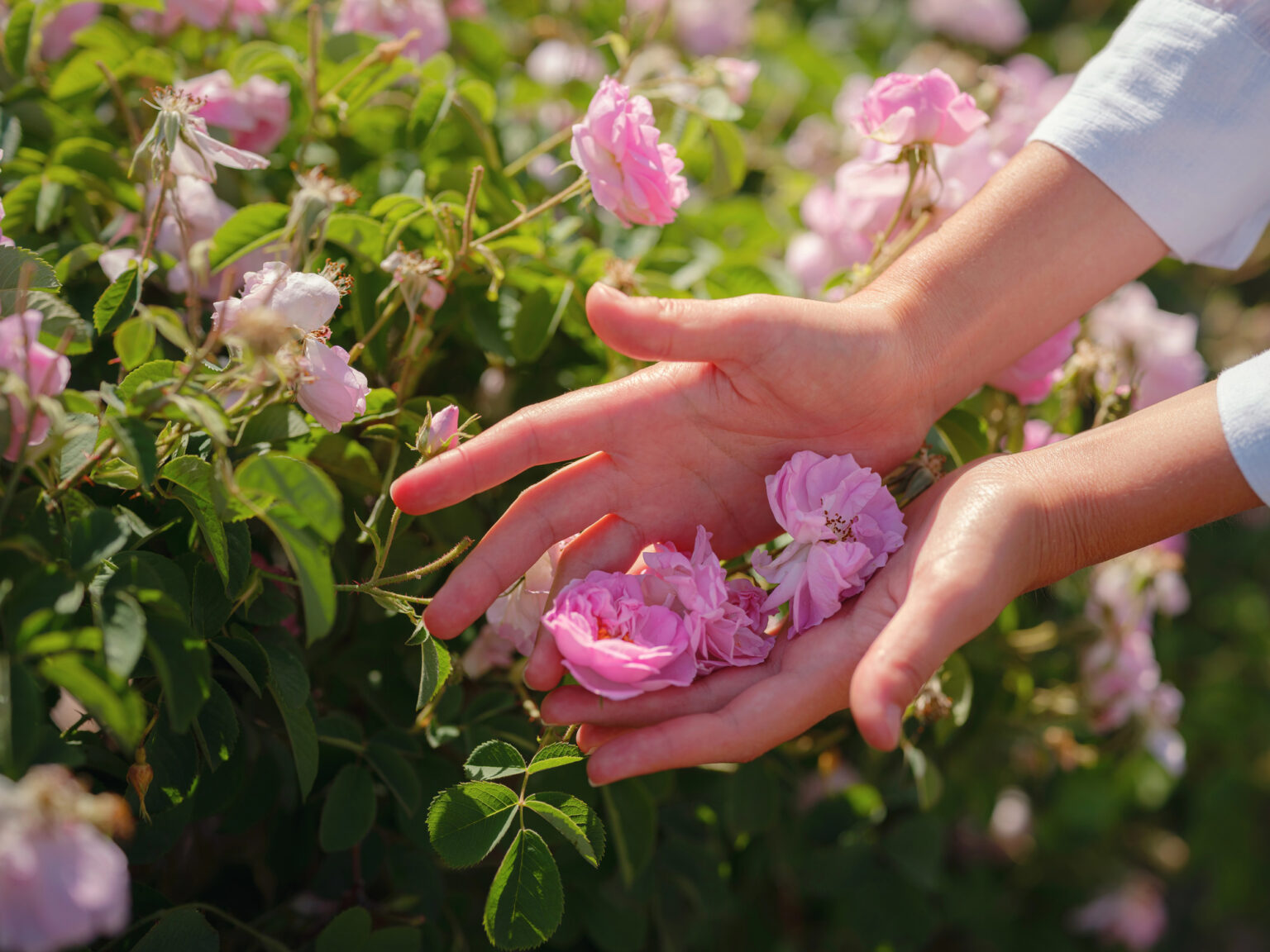
A few years ago, I was sitting in a tiny room in Jabel Al Akhdar – the Green Mountain in Oman. Thousands and thousands of Damask rose petals had been picked from the rose gardens and collected in a woven rose basket. I watched my Omani friend pour them into a Burmah (also called Barama) — a large traditional clay pot. I watched the traditional way of making rose water. The scent filled the space and I felt like I was melting into it.

Rose water has been used here for centuries — as a face mask, a perfume, and even to help with headaches. This moment was my first real glimpse into the world of Arabic beauty rituals.

In Oman, and across the Arab world, beauty rituals are tied to culture, nature, and daily life. From frankincense steam to henna glosses to rose water, these practices are simple, practical, and still used today. In this post, I’m sharing 9 traditional Arabic beauty rituals – Most of them are easy to try at home using simple ingredients.

“Hands gently holding a pink rose in Jabal Akhdar, Oman, representing deep travel, culture, and human connection.

Picking Damask roses by hand in Jabal Akhdar is the first step in the process of making traditional rose water.

Roses 1

9 EASY ARABIC BEAUTY RITUALS

In a world where the latest beauty fad goes viral, these ancient beauty practices may sadly be labelled as ‘old fashioned’ by some. However, their ease to follow and effectiveness have stood the test of time. Generations have used them and continue to.

1. Frankincense: A Traditional Omani Ingredient for Clear, Soft Skin

The Story Behind It

You’ll smell it everywhere in Oman — soft, resinous, slightly citrusy, drifting through homes and clothes. That’s frankincense, called Lubaan in Arabic. It is resin from the Boswellia Sacra tree in Dhofar, southern Oman. 

It’s been part of daily life here for centuries, not just as a scent, but as something people turn to for cleansing and care. Traditionally, it was infused into oils and balms, used to smooth the skin, help it recover, and bring back a sense of clarity.

If you go back to classical Arabic remedies, you won’t find complicated skincare routines — just frankincense ground down and stirred into oils or balms, used in a straightforward way to help the skin stay smooth and even.

Frankincense is a resin that comes from a tree.
Frankincense resin, known as Luban (لبان) in Arabic, was traded along the Silk Route for centuries.

How to make 🌿 frankincense-Infused Oil

What it does: Helps soften the skin and improve its texture, leaving it feeling smoother and more even. It is anti-aging.

What you need: 

  • High-quality golden-brown or white resin tears (approx. 120 grams).
  • 355 ml of organic olive oil, jojoba oil or sweet almond oil
  • Equipment: Glass jar (also called mason jar), cheesecloth or fine mesh metal strainer (a coffee strainer will do), mortar and pestle OR – my preferred version – a coffee grinder, storage bottles. You will also need a heavy saucepan.

Instructions to make it:

  • Put the resin in the freezer overnight. This will make it easier to grind up.
  • The next day, grind the resin into powder (make sure it is all ground!). The powder must be dry. Put it into your glass jar.
  • Pour the oil into the jar and mix with the resin powder.
  • Take your heavy saucepan and place a cloth at the bottom. Place your glass jar with resin mix on the cloth in the saucepan. Add enough water to reach 3 quarters of the height of the jar. You don’t want to get water into the jar so be careful.
  • Boil the water on low heat for 3 or 4 hours. Add water regularly.
  • Strain the oil into a clean jar with a lid, Add a label.
  • If you have a sensitive skin, you may need to use a diluted form. Always avoid contact with your eyes.

2. Kohl: The Original Eyeliner of the Arab World

Arabic woman wearing black khol eyeliner
Khol eyeliner has been used in the area of West Asia for thousands of years.

The Story Behind It

A few fun facts:

  • Kohl was the original sunglasses… well, kind of!
    Long before modern lenses, people in Egypt and across the Arabian Peninsula used kohl to reduce the glare of the sun. The dark line around the eyes helped soften the brightness—similar to the black streaks athletes wear today.
  • It’s where we get the word “alcohol” from.

    Believe it or not, your Friday night cocktail shares a linguistic root with this traditional eyeliner. The Arabic word al-kuḥl (الكحل) originally referred to the fine powder used for eye makeup. Over time, the term was adopted by medieval scientists to describe any highly refined substance—before eventually coming to mean the distilled liquid we now call alcohol.

  • Kohl was believed to protect against the evil eye. In parts of the Middle East, North Africa, and South Asia, it wasn’t just about appearance—it carried meaning. In some traditions, small dots of kohl were applied to babies to help protect them from the “evil eye,” a belief linked to harmful or envious gazes.

  • It was gender-neutral. While modern marketing often pitches eyeliner primarily to women, historically, kohl was for everyone. Men, women, and children all wore it. Whether you were a powerful king, a desert nomad, or a young child, rocking a bold, dark eye was a familiar part of life—valued for health, protection, and style.
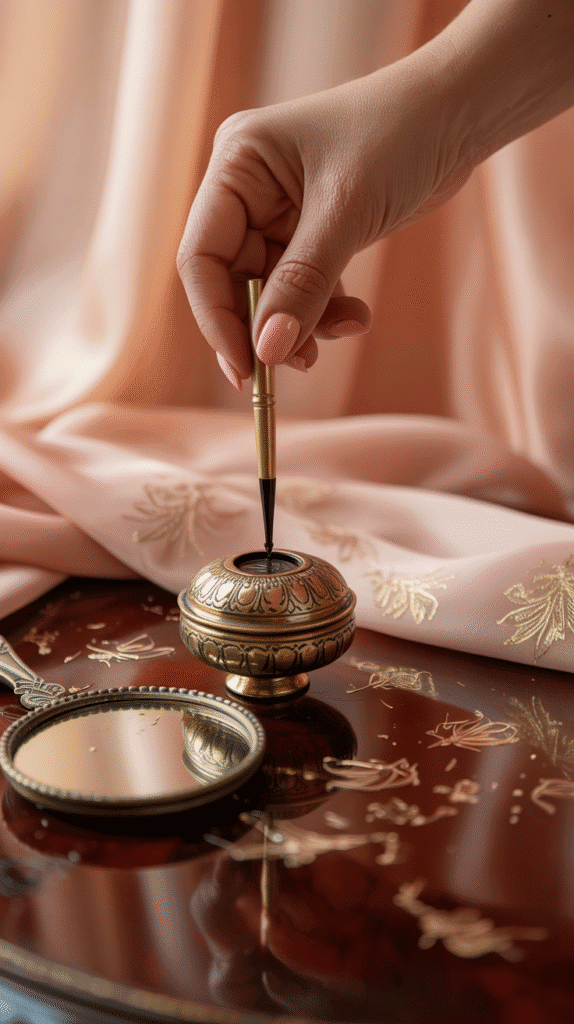
a traditional kohl applicator above a decorative tin. Background includes a small mirror, henna designs, and soft fabrics. Feminine, vintage Middle Eastern vanity feel.

How kohl is traditionally made in Masirah (a process from the sea)

I’ve taken the real, documented Masirah process and shaped it into a clear 5-step structure. Masirah is an Omani island.

1. Let the shark rest
The process begins with a freshly caught shark. It is stored for about two days, away from sun and dust. During this time, the liver settles and becomes ready for extraction.

2. Extract and prepare the liver
The shark is cut open and the liver is removed, cleaned, and stripped of its bitter parts. This is the core ingredient—the source of the deep, rich black that Masirah kohl is known for.

3. Melt it into oil
The liver is then cooked over fire. As it heats, it slowly releases oil, which is carefully collected and filtered to remove impurities.

4. Burn to create the kohl
This is where it gets fascinating. The oil is burned with cotton inside a container, covered with a shell. As it burns, smoke gathers and leaves behind a fine black residue—this is the kohl itself.

5. Purify and shape
The kohl is then mixed with water to separate out impurities. The pure kohl rises to the top. It can be dried into a powder or mixed with ghee and shaped into small balls, ready to be used.

A small note:
While the Masirah method uses shark’s liver oil (it’s highly unlikely you will have this!), you can recreate a similar process at home by dipping the cotton in olive oil instead. As it burns, it produces the same fine black soot that forms kohl.

Make sure everything is clean and safe before using anything near your eyes.

3. Rose Water: A Cooling Touch for Skin and Senses

The Story Behind It

A few fun facts:

  • It was the original hand sanitiser (but way more glamorous). Long before we were all carrying little bottles of alcohol gel, Arab hosts had a much more elegant solution. It is a deeply rooted tradition in Arab hospitality to sprinkle guests’ hands with rose water from an ornate copper flask as soon as they arrive. It was the perfect way to say “welcome,” cool them down after a hot journey, and leave them smelling absolutely divine
  • Distillation changed everything. Rose water as we know it today became possible thanks to advances in distillation, developed and refined in the medieval Islamic world. This allowed people to extract the delicate essence of roses into water—creating something light, pure, and perfect for both beauty and daily use.

  • It’s one of the oldest “toners” (without the label). Before the word “toner” existed, people were already using rose water to gently cleanse and refresh their skin. It’s a reminder that some of the simplest beauty practices have been around for centuries—no branding required.

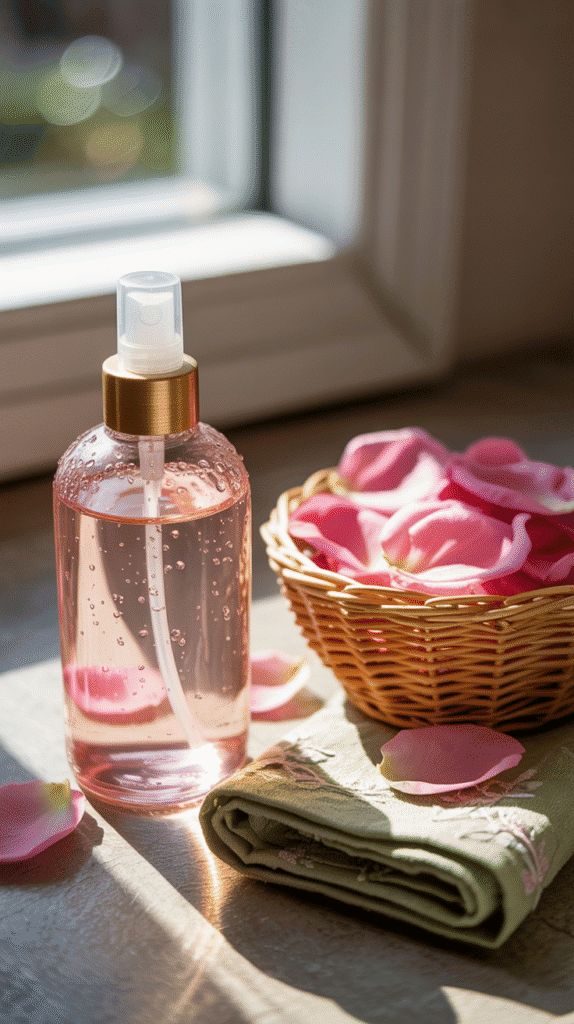
Rose water or rose oil next to a basket full of rose petals.

The following video from the ‘Dream Team Travels’ Youtube Channel gives a really good idea how Rose Oil and Rose Water are made traditionally in Jabel Akhdar in Oman.

How to make rose water

1. Start with good roses
Pick fresh roses from your garden if you can. Late morning is a good time, when they’re open and fragrant but not past their best. Aim for blooms that are about halfway open—not tight buds, not tired flowers. You can use dried roses, but fresh ones will give you a better result.

2. Let the petals breathe (and the insects leave!)
Find a shady, sheltered spot outside and spread the petals out on a clean cloth. Leave them for 30 minutes to an hour. This gives any tiny insects time to crawl away—something you’ll be glad you did.

3. Set up your pot (this is the important part)
Place a heavy saucepan on the stove.

  • Put a folded cloth at the bottom (this protects everything from direct heat)
  • Place a heatproof bowl on top of the cloth
  • Then place a second small heatproof bowl inside it—this is where your rose hydrosol will collect.


4. Add the petals and water
Scatter the rose petals around the bowls, filling the pot about halfway up the sides.
Pour in cold water until the petals are just submerged.

5. Flip the lid and start heating
Place the lid on the pot upside down. This helps the steam condense and drip into your bowl.
Bring the water to a gentle simmer—not a hard boil.

6. Encourage the condensation
As the pot heats, you’ll see droplets forming on the lid.
You can place ice on top of the lid to speed this up. As the ice melts, spoon off the water and replace it with fresh ice.
Let this process continue for about 20–30 minutes.

7. Let it cool, then collect your rose water
Turn off the heat and allow everything to cool.
Carefully remove the small bowl inside—it now contains your rose water.
Pour it into a clean bottle.

4. 🏺 Ghassoul Clay: A Deep-Cleansing Ritual from the Earth

The Story Behind It

  • This clay has a passport (and it only bears a stamp from Morocco). Ghassoul isn’t just “a type of clay.” It comes from one specific place in the Atlas Mountains—and that’s it. People have been digging it out of the same region for centuries.
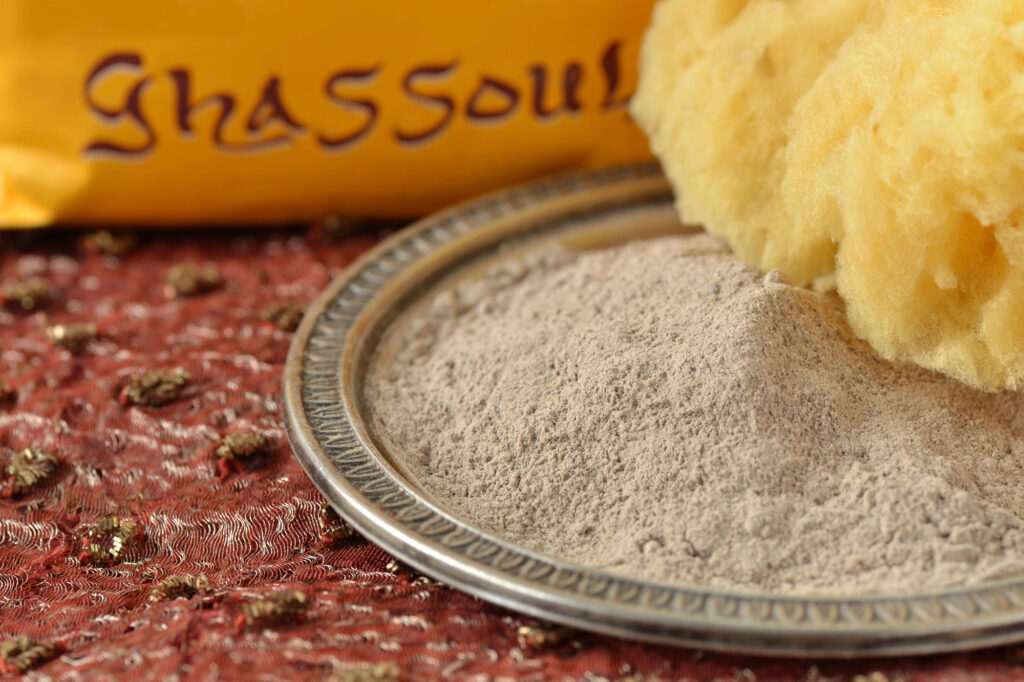
Ghassoul clay in a Moroccan plate.
Ghassoul clay comes from a specific region in the Atlas Mountains of Morocco.
  • It was part of a full-on spa day (before spas were a thing). Ghassoul didn’t work alone. It showed up as part of the hammam ritual — steam, scrubbing, rinsing, and then this smooth clay going on the skin. Not rushed, not clinical… more like a proper reset for your whole body.
  • It never needed a rebrand. While modern skincare keeps reinventing itself every five minutes, ghassoul has stayed exactly the same. Mix it with water, apply it, rinse it off. That’s it. No “advanced formula,” no 12-step routine—just something that worked then and still works now.

The transformative practice

What is the ritual?
A mineral clay mask that deeply cleanses the skin while keeping it soft.

What are the benefits?

  • Draws out impurities without drying
  • Leaves skin smooth and balanced
  • Can also be used on hair for a natural cleanse
  • Gentle enough for regular use.

What you need: 

  • 1–2 tablespoons ghassoul clay (powder or small chunks)
  • Water (or rose water if you want a softer scent and feel)

How to do it (step-by-step):

  1. Place the ghassoul clay in a small bowl.
  2. Add water slowly and mix until you get a smooth, creamy paste (not too runny).
  3. Apply a thin layer to clean, slightly damp skin.
  4. Leave it on for about 5–10 minutes—just until it starts to dry slightly (don’t let it fully crack).
  5. Rinse gently with warm water, using your hands to massage lightly as it washes off.

Optional (but lovely):
Add a few drops of argan oil after rinsing to keep your skin soft and hydrated.

5. Milk and Rose Body Soak (Desert Spa Ritual)

This is a common pre-wedding ritual in Oman, especially in rural areas. The idea is to smell nice and feel soft.

Why it’s powerful: Omani women traditionally use natural ingredients like rose petals and milk to soften and perfume the skin — especially before weddings or special events.
Modern twist: Add powdered milk, dried rose petals, and a few drops of rosewater to a warm bath for a luxurious DIY soak.
Accessible items: Powdered milk, dried rose petals (or tea), rosewater
How to use it at home: Add everything to the bath, soak for 20 minutes, and rinse with clean water.
Why it works: Lactic acid in milk gently exfoliates the skin while rose soothes and leaves a lasting scent.

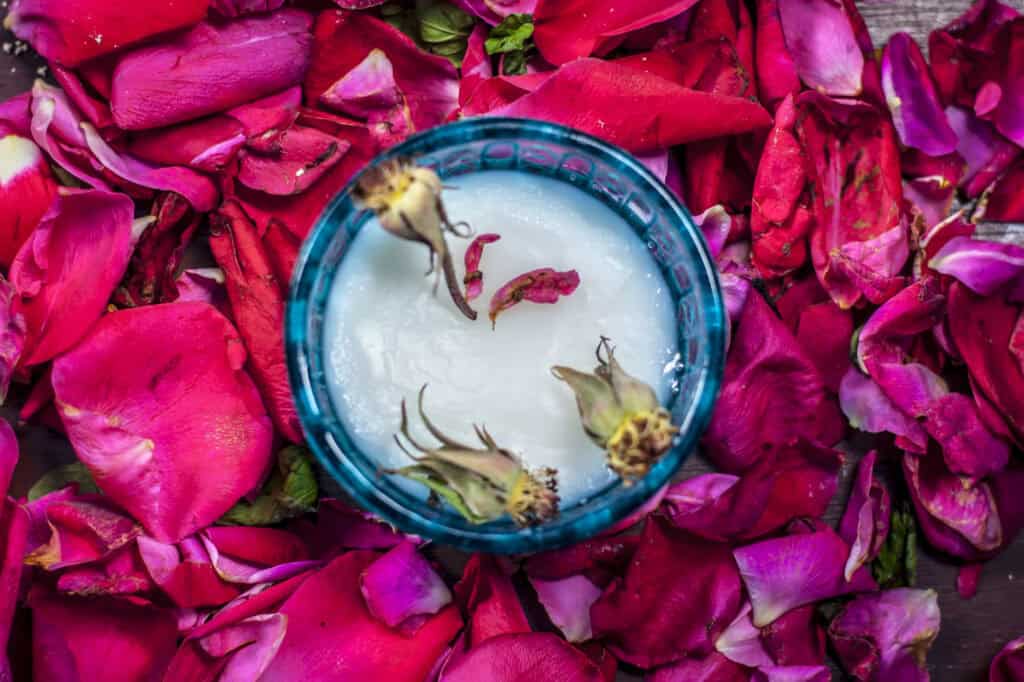
Rose petals with a bowl of milk in the middle.
Milk cream and rose petals make the skin soft.

6. Henna Hair Gloss with Hibiscus

Most people associate henna with hair dye or wedding designs, but it’s also a deep conditioner when used the right way.

Why it’s powerful: Henna has deep roots in Omani beauty — not just for dyeing, but for nourishing the scalp and strengthening hair.
Modern twist: Mix henna with hibiscus powder and yoghurt for a deep-conditioning gloss.
How to use it at home: Mix into a paste, apply to clean hair, leave for 30–60 minutes, and rinse well.

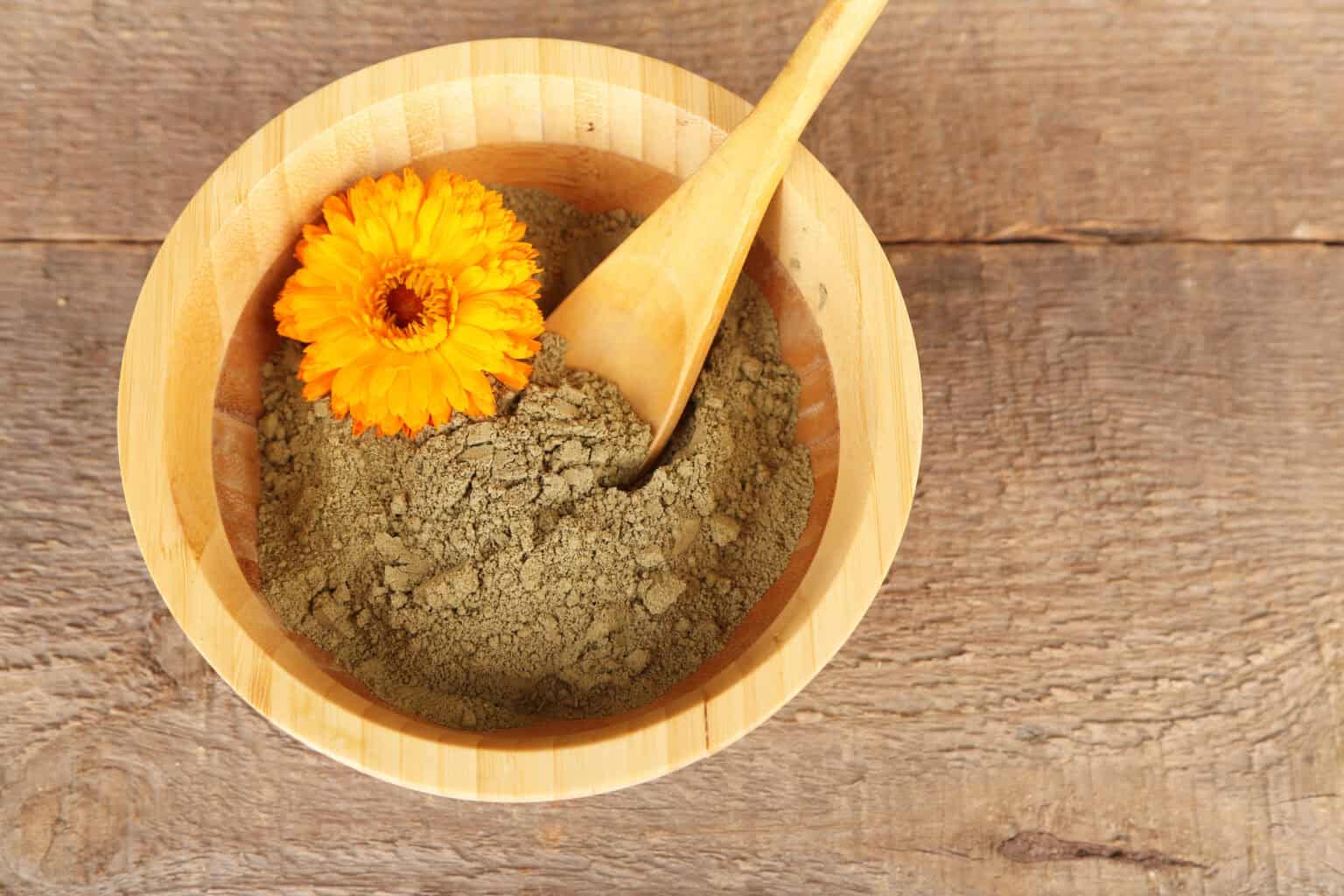
Dryhenna
Dry henna powder.

7. Clay and Turmeric Brightening Mask

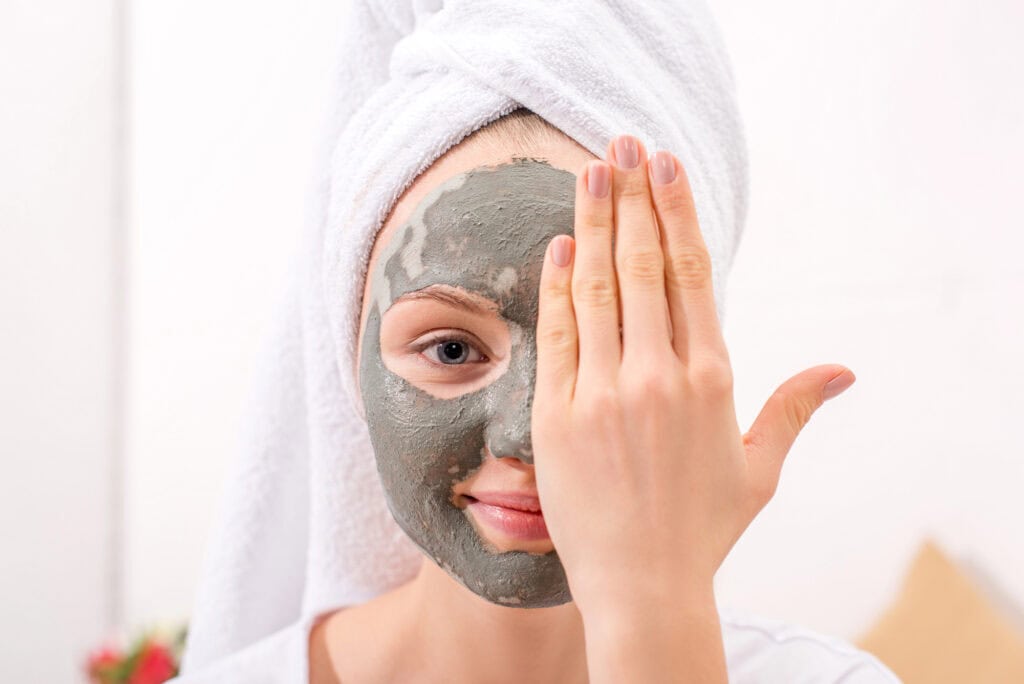
A young woman with a towel on her hair and clay mask on her face

You’ll often find these ingredients sold side-by-side in traditional markets — used for everything from face masks to scrubs.

Why it’s powerful: Clay (especially rhassoul or Multani mitti) and turmeric are traditional ingredients used to cleanse and brighten the face.
Modern twist: Blend with rosewater and honey for a glowy face mask.
Accessible item: Clay powder + turmeric + rosewater/honey
How to use it at home: Mix into a thick paste, apply to clean skin, leave for 10–15 minutes, and rinse.

8. Omani Myrrh Oil for Wrinkle Care

Myrrh is often overshadowed by frankincense, but in Oman, both are used — sometimes blended together in homemade oils.

Why it’s powerful: Myrrh (like frankincense) is native to Oman and often used in perfumery and skin healing.
Modern twist: Add a drop to face oil or night cream for anti-aging benefits.
Accessible item: Myrrh essential oil (blended or diluted in carrier oil)
How to use it at home: Add one drop to your usual night oil or moisturiser and apply to the face before bed.

9. Sugar Halawa for Hair Removal

This is one of those things most women here just know how to do — it’s passed down casually, like how to brew tea.

Why it’s powerful: Sugaring (halawa) is an ancient Arabic method of hair removal using boiled sugar, lemon, and water.
Modern twist: Gentle on the skin and can be made at home.
Accessible item: Sugar + lemon + water (easy DIY recipe)
How to use it at home: Heat equal parts sugar and lemon juice with a little water until thick and golden. Let it cool slightly, roll into a ball, and use to remove hair like wax.

Arabic beauty rituals are simple, natural, and still effective. You don’t need expensive products — just ingredients like rosewater, clay, or frankincense, and a few minutes. These timeless treatments are easy to try at home and still hold their place in modern skincare.

Pick one to try this week — and if you do, I’d love to hear how it went.
 

Further reading – or watching:

If you’re interested in delving deeper into the traditions and ingredients behind these beauty practices, here are some additional resources:

HI, I’M CHRISTINE

Picture 1 copy
Picture 2 copy
Picture 3 copy
Picture 4 copy
Me

I’ve been living in and exploring Oman for the past five years. I love coffee (probably too much!), dancing and watercolour painting. My passion? Helping others explore Oman and the Middle East beyond the stereotypes.

Search the blog
Popular posts
Coming soon

Discover Your Unique Cultural Travel PERSONALITY

Take this quiz to get insight into which of the 12 cultural traveller archetypes you are.
Picture of Author: Christine van den Hogen

Author: Christine van den Hogen

Hi, I’m Christine. I’ve lived in Oman for over four years and spent that time travelling across the country - from desert camps to remote mountain villages. Joussour to Oman is where I share practical guides and honest tips for experiencing Omani culture, nature, and daily life. This list is based entirely on places I’ve visited myself - often more than once.

Leave a Reply

Your email address will not be published. Required fields are marked *

This site uses Akismet to reduce spam. Learn how your comment data is processed.

Recommended Reads